Dance styles5 minutes

Forró in Munich: The Brazilian partner dance by the Isar

By Mary De LucaUpdated

In a nutshell
  • Forró is a syncopated partner dance from northeastern Brazil, characterized by a close embrace and simple basic steps.
  • Unlike Samba or Lambada, Forró is more down-to-earth, easier to learn, and avoids complex acrobatics.
  • In Munich, there is a growing community with weekly parties, courses, and summer outdoor gatherings by the Isar.
  • You can find the current dates for courses and socials near you directly below in the course finder.

Find your Forró community in Munich

On udansa connect you will meet other dance enthusiasts from the Bavarian capital who share your passion for Brazilian rhythms. Simply sign up, create your profile, and find the perfect partner for your next night of dancing.

Find your Forró community in Munich

Forget your stressful everyday life and dive into a dance that thrives on genuine closeness and infectious music. Forró brings the warmth of the Brazilian northeast directly to the Bavarian state capital.

DefinitionForró

Forró refers to both a musical style and the corresponding partner dance from the northeast of Brazil. The dance is based on a characteristic sliding step and is usually performed in a very close, warm embrace.

Brazilian zest for life in the heart of Bavaria

When you think of Brazilian music, you often immediately picture the fast, energetic Samba. But Brazil has much more to offer in terms of dance, and a very different, particularly warm-hearted movement has been growing in the Bavarian state capital for years: the Forró scene. In contrast to the fast-paced Samba, often presented as a solo dance, or the acrobatic Lambada, Forró captivates with its approachability and its warm, earthy atmosphere. It is a partner dance that gets by without any airs and graces. The steps are easy to learn, which is why the barrier to entry for beginners is extremely low.

In Munich, one of the most vibrant communities in Germany has formed around this dance. If you explore dance styles in Munich, you will quickly realize that the local community is known for its openness. People don't meet to show off, but to have a good time together. The music, characterized by accordion, triangle, and the Zabumba drum, immediately casts a spell on you and brings a piece of northeastern Brazilian joy of life directly to the Isar.

The zabumba drum sets the heartbeat, while the accordion carries the melody and leads the dancers across the floor.

The different styles and how you learn them

Forró is not just Forró: the dance has evolved significantly over the decades and today presents itself in various facets that you can experience in Munich's dance schools and at socials. The traditional style, often referred to as Pé de Serra, is danced very closely and intimately. Here, the focus is on the deep connection within the couple and swaying together to the rhythm. If you are looking for a dance course in Munich in the Bavarian capital, you will quickly come across the more modern style called Universitário. This opened up the dance to younger generations and brings more turns, open figures, and playful footwork with it.

No matter which style you prefer, learning it in Munich is straightforward. Many dance enthusiasts start with free trial classes before the weekly parties or book specific workshops. Since the scene is very well connected, there are regular guest teachers from Brazil who pass on their knowledge directly in Munich studios. This way, you learn the right technique from the start without missing out on the fun.

How to get started in the Munich scene

Correct

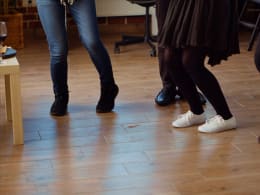
  • Dance in flat shoes with smooth soles
  • See the close embrace as an invitation to connect
  • Actively approach other dancers at socials

Wrong

  • Dancing in chunky street shoes with a lot of grip
  • Forcing your dance posture or gripping too tightly
  • Waiting to be asked to dance exclusively

Forró is not about perfect moves, it is about the feeling and the connection with your partner. As soon as the triangle starts playing, you forget about everyday life.

Forró instructor, Munich

Where the Munich community comes together

The heart of the Munich Forró scene beats at regular socials and dance evenings. While cozy halls and cultural centers serve as meeting points in winter, the action moves outdoors in summer. The community then uses the warm evenings for spontaneous outdoor dance sessions by the Isar, in the English Garden, or on the city's cultural terraces. If you want to go out in Munich and dance, you will find a wonderful, alcohol-free alternative to classic clubbing here.

What makes these gatherings special is the distinct culture of welcoming. It is perfectly common to show up without a fixed partner. Dance roles are flexible, and everyone asks everyone else to dance. This relaxed atmosphere makes it incredibly easy to make connections and quickly become part of the local Forró family. The weekly meetings are the perfect place to try out what you have learned in class in a relaxed setting.

Two facets of the same rhythm

Traditional

Forró Pé de Serra

The traditional way to dance

The traditional style is danced very closely, hip to hip. The movements are gentle, swaying, and focus entirely on the connection between the partners and the earthy rhythm of the triangle.

Modern

Forró Universitário

The dynamic dance style for clubs

This modern style originated at universities in Brazil. It brings energy to the dance floor: with sweeping turns, open hand holds, and playful steps for both roles.

Frequently Asked Questions

  1. No, you absolutely do not need a fixed partner. In the courses and at the socials in Munich, partners are rotated constantly, so you will quickly find people to dance with.

Learn Forró in Munich

Find the right course now and become part of the Brazilian community.

View all matching courses

Read more