Get started with a dance connection
On udansa, you can find people in Paris who are looking for a dance partner. Arrange a short first dance session before committing to learning together.

By Bernhard De LucaUpdated
On udansa, you can find people in Paris who are looking for a dance partner. Arrange a short first dance session before committing to learning together.
A first meeting doesn’t have to feel like a test or turn into an entire evening together. A low-key setting gives you room to get a sense of the other person, instead of staying longer than you want out of politeness.
When you meet a new dance partner in Paris, trust doesn’t come from a long list of figures you’ve mastered. You notice it in how the person handles small uncertainties: Do they wait until you’re ready? Do they let go of your hand when you pause? Do they stay friendly when you don’t find a shared rhythm at first?
A dance practice isn’t a promise to meet again. It gives you a small glimpse of how you dance together. Nerves, unfamiliar shoes or a song you don’t know can make the first try more difficult. That’s why a missed step doesn’t say much, but ignoring a stop does.
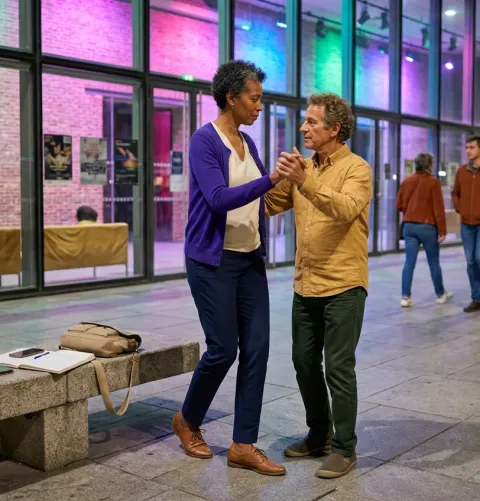
The setting also matters: a busy entrance is a good place to say hello, but not to dance in the way of passersby. You need a permitted, clear space for the practice, with a floor free of tripping hazards. A publicly accessible place doesn’t guarantee safety, but it makes it easier to reach other people.
The guide to finding a dance partner in Paris can help with your search. If you’re considering taking a class together after you meet, you’ll find your next step under dance classes in Paris. For this first meeting, a brief, clearly bounded encounter is enough.
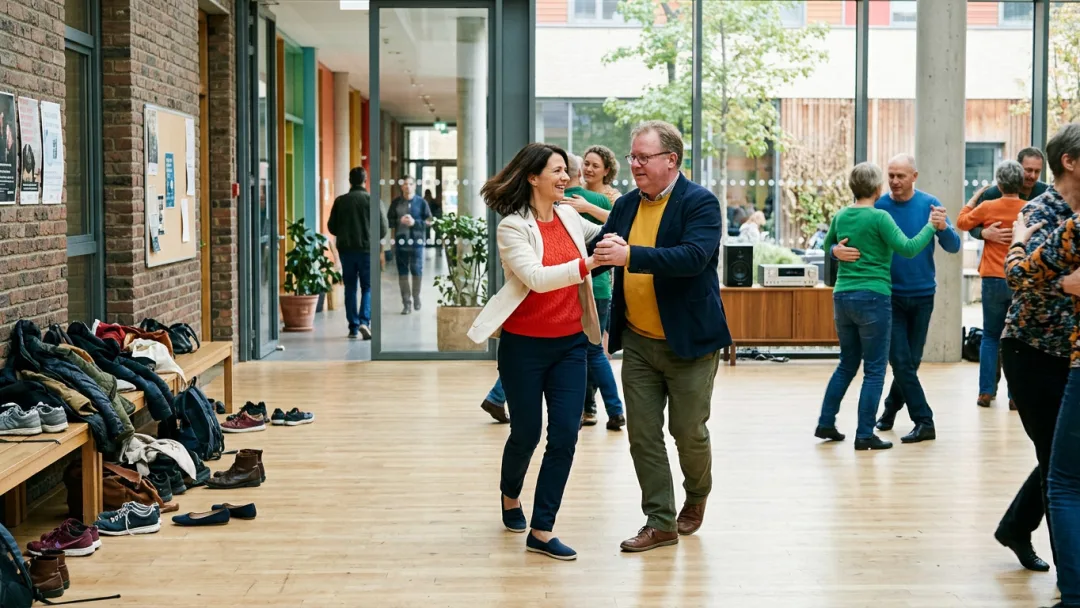
Write something like: “Let’s plan for 30 minutes: a quick chat and one song to dance to together.” Add the exact meeting place, start time and end time. Agree on a basic step you both know, so no one expects a performance.
Choose a publicly accessible place where other people are present. Name a visible entrance or reception area rather than just a building. Don't meet for the first time in a private home or secluded room.
Tell someone you trust who you're meeting, where you are, and when you'll check in afterward. Plan your own way home and keep your phone, keys, and money with you. This applies regardless of how nice the person seems.
Greet the person at the agreed meeting point and briefly go over the plan. Don’t spontaneously move to a private alternative location. If the designated area isn’t suitable, keep talking or end the meeting without trying out a dance.
Ask before touching: “Is this hand position comfortable for you?” Agree that “Stop” means an immediate pause. Start with some distance and without a firm grip; hands should be able to separate at any time without anyone grabbing again.
First, listen to the beat and start with your shared basic step. Keep to small weight shifts and skip turns in a confined space. Stop immediately if there's pain, uncertainty, or too much pressure. You don't need to justify stopping.
Thank them and mention a specific observation, such as: “The slow tempo felt comfortable.” Say whether you’d like to decide later about meeting again. Say goodbye at the agreed time and check in with someone you trust afterward.
If the short trial works for you, you can find courses in Paris on udansa as a way to learn together.
Do this
Don't do this
Preparation
Arrival
Wrap-up
For a first try, you can plan for about 30 minutes. This is a suggestion, not a strict rule: there’s time for a short conversation, one song, and a goodbye. Agreeing on an end time in advance means you won’t have to come up with a reason to leave during the meetup.
Stick to getting to know each other, or end the meetup without trying out any dancing. A public place isn’t automatically suitable for dancing: walkways, wet floors, and closely spaced furniture rule out a practice session. You don’t have to move to a private location instead or force yourselves to dance among other people.
Yes, you can bring someone you trust, and let the other person know in advance. They can be there when you meet or stay nearby, without commenting on your dancing. Their role isn’t to evaluate your dancing skills. You still decide for yourself about contact, duration, and when to leave.
No, counting together is enough for the first weight shifts. This is especially helpful if you want to try out the handhold before you start. Use music only where it’s allowed, and keep it quiet enough that you can talk to each other. Playing music loudly in a public space isn’t necessary.
End the meetup and go to other people or staff. You don’t have to discuss repeated holding, pressure, or someone ignoring you when you say stop. Skip a planned goodbye line if it delays you. If you’re in immediate danger, get help: your safety comes before politeness.
Having your pauses respected and feeling comfortable with the contact are better indicators than getting a move perfect. After the meetup, note whether you felt free to say no and comfortable with the pace. A clumsy practice session can get a second chance, but you’re not obligated to give it one.