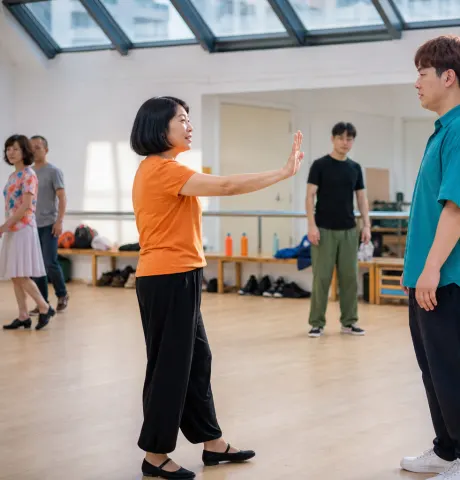
Dance Partner5 minutes

How to Approach a Dance Partner as a Beginner in Shanghai

By Mary De LucaUpdated

In short
  • As a beginner in Shanghai, you can look for someone who is curious and patient when practicing, not necessarily at exactly the same level.
  • Say early on what you can already do and what you still feel unsure about.
  • A good start to practicing consists of small, repeatable movements and honest feedback.
  • If you learn at different speeds, talk about pace and breaks instead of comparing your skills.

Your first attempt at dancing rarely shows how well you’ll practice together later. It’s more likely to show whether you let each other make mistakes, can ask questions, and both see it as learning together.

DefinitionPractice partner

A practice partner is someone you repeat and try out movements with, without needing to be a regular dance couple. What matters is that you agree on the goal and pace.

Beginner status is information, not a flaw

In Shanghai, finding a practice partner can feel especially daunting when you’re new to the city and don’t yet know how others talk about their skills. But “beginner” is not a judgment of your suitability. It describes what you need right now: time, repetition, and the chance to ask questions.

A common misconception is that a suitable partner must be able to do the same steps just as confidently. But when learning together, what matters more is whether you can talk openly about your differences. A more experienced person can help you organize the sequence; another beginner might share the same uncertainty. Either can work, as long as you don’t secretly expect the other person to take over teaching or immediately bring you up to speed.

A simple self-introduction can help: What have you tried, what would you like to practice, and what makes you nervous? If you’re not yet sure how to assess your level, the guide to dance course levels in Shanghai can give you the vocabulary. This page focuses on meeting other learners, not choosing a course.

A brief pause in the middle of a step can build more trust than a perfectly executed basic step.

The first try is a conversation in motion

A first step together is not a secret test. As you dance, you’re observing not only the movement but also how you communicate with each other: Can you ask to slow down? Does the other person check whether the explanation was clear? These small signals say more about whether you can learn together than a single flawless run-through.

So don’t start with a long combination that neither of you knows confidently. Choose a simple movement you can both repeat, then briefly discuss what was clear. If you receive a correction, you can ask for a specific example. If you give a tip yourself, describe the movement rather than the person: “That step feels a little too fast for me right now” is more helpful than “You’re doing it wrong.”

If you’re nervous about the first conversation, you can start by thinking about what information really matters: beginner status, your preferred pace, and a specific idea for practicing. For help with the wording of a first message, there’s also the guide to messaging a dance partner online in Shanghai. Here, the focus is on how you can avoid hiding behind a seemingly confident front while learning together.

It's okay to be seen as a beginner

Do this

  • Say at the beginning which movement you already know
  • Ask them to demonstrate slowly if you lose track
  • Agree on short repetitions with brief breaks
  • Name one specific thing that feels good or difficult

Not like this

  • Pretend you already know the move well
  • Keep nodding even though you haven't understood the sequence
  • Practice for a long stretch even when your concentration starts to fade
  • Judge yourself or the other person after a failed attempt

At first, what helps isn't the most difficult figure, but a move that lets both partners ask again without hesitation.

Dance instructor for partner dancing

Compatibility shows in how you handle mistakes

Mistakes when learning to dance aren’t caused only by forgetting steps. Sometimes an explanation is too long, the rhythm is too fast, or a movement still feels unfamiliar to one person. If you treat these differences as normal cues, you can adjust the exercise instead of immediately doubting your partnership.

Pay attention to recurring situations: Is your request for a break respected? Can you ask questions without anyone getting impatient? Can you listen when the other person experiences a movement differently? These aren’t criteria for a perfect practice partner, but signs that you can learn together. One awkward attempt doesn’t prove either that you’re a good match or that you shouldn’t practice together.

If you notice that you keep getting stuck at the same point, agree on a small change: fewer repetitions, a simpler movement, or a short break to talk it over. If you want to clarify personal boundaries or safety concerns, you’ll find specific tips in how to meet dance partners safely in Shanghai. For day-to-day learning, the right practice situation may feel unfinished, but it shouldn’t become humiliating.

Two sides of the same exercise

Beginner

Confidence through clear questions

You can help set your own learning pace.

A specific question like “Can we just repeat the weight transfer?” makes your uncertainty clear. That way, the other person can respond without having to guess what you need.

Partner

Support without judging

Patience gives both of you room to learn.

A brief tip or a slow demonstration can make it easier to get started. It’s just as important to let your partner try the move themselves afterward and not comment on every mistake right away.

Frequently Asked Questions

  1. No, you don't have to be at the same skill level, as long as you agree on a suitable pace. Someone with more experience can break down movements clearly, while you ask questions and share feedback. The important thing is that neither of you treats the practice as a test.

Dance classes in Shanghai

If you're looking for a guided introduction as well as a practice partner, compare suitable classes in Shanghai.

Learning rarely starts perfectly

On udansa, you can discover dance connections and suitable options in Shanghai. Be honest that you're just starting out, so your first conversation starts without false expectations.

Learning rarely starts perfectly