Teen Dance6 minutes

Choose the right dance workshop for teenagers in Stuttgart

By Mary De LucaUpdated

In brief
  • Choose your dance workshop in Stuttgart based on a specific learning goal rather than just the dance style.
  • A technique workshop explores movement details, a choreography workshop connects steps, and improvisation trains you to make your own movement choices.
  • Use the focus, age group, and prerequisites on udansa to choose a suitable intensive session.
  • Plan to attend the entire session, then choose an exercise to help you review what you've learned.

An impressive video clip shows the result, but rarely the learning journey behind it. When choosing your workshop, what matters is finding a challenge that pushes you without leaving you behind at the very first change in movement.

What you need for your selection

  • A free time slot for the entire workshop session
  • A short list of your previous dance experience
  • A movement detail you’d like to improve
  • A set budget, including travel costs
  • For minors: help with booking

An intensive session needs a clear focus

At a dance workshop in Stuttgart, you learn within a set time slot or across a series of consecutive sessions. The warm-up, learning and repetition build on one another. Arriving late can therefore mean missing exactly the movement element you need for the rest. A workshop is not a test of how quickly you can pick up as many steps as possible.

The name of the focus helps you understand what to expect: technique focuses on execution, choreography on a sequence, and improvisation on your own decisions. A technique workshop might focus on weight changes or controlled stops. In choreography, sequence, direction of movement and musical cues come together. Improvisation uses prompts and constraints, for example working only with changes of direction instead of following a set sequence.

Your experience also needs to match the pace. Recalling a familiar movement confidently under time pressure is more demanding than copying it slowly. Intensive also does not mean dancing every repetition at maximum effort. Learning how to pace your effort while dancing is especially helpful during unusually long sessions. To get a useful result, you need a small practice task afterward. A short practice plan between lessons can also be useful after a single workshop.
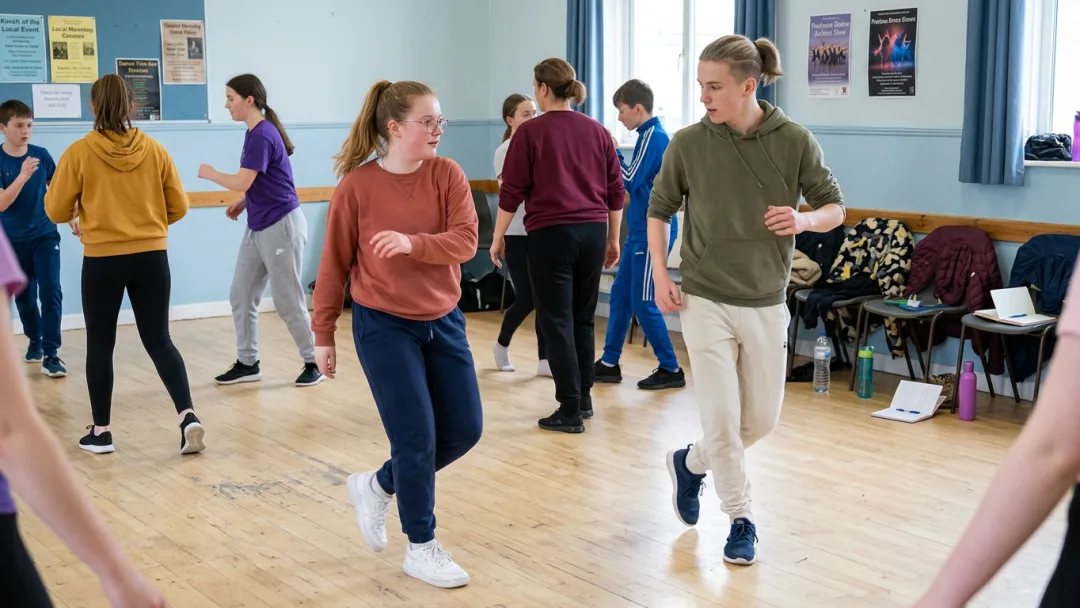
A brief note also preserves the correction that isn't visible in the finished dance video.

Seven steps to finding the right class

  1. Note down your starting point

    Write down which movements you can repeat without a demonstration and where you still hesitate. “I’ve been dancing for a while” says less than “I can keep the basic rhythm, but lose the timing when changing direction.”

  2. Set an observable learning objective

    Write a sentence describing a visible action: “I want to change direction and then keep moving to the beat.” Avoid goals like “dance better.” Your sentence should be testable at the end of the session with a brief repetition.

  3. Choosing the Right Focus

    Match your goal to a way of working: movement quality belongs to technique, a connected sequence of steps to choreography, and your own movement ideas to improvisation. If you want to learn a sequence, choose a manageable passage instead of trying to tackle expression, speed, and difficult tricks all at once.

  4. Compare the details on udansa

    Filter workshops in Stuttgart on udansa and check the focus, age group, required experience, number of sessions and costs together. “Open Level” does not describe a uniform level of difficulty: the stated movement requirements are what matter. If details are missing, the offering is not yet a reliable choice.

  5. Plan to attend the entire workshop

    Add your travel time, return trip, and the entire workshop period to your calendar. Set aside time to change before it starts. An intensive session isn't a good fit if you'd regularly have to leave before the final recap or miss the start.

  6. Complete the booking

    Book the selected session with help from your parents or guardians, if needed to register. Use the location and start time from the booking confirmation. Pack clothes and shoes suitable for the dance style, as well as water, and avoid buying unfamiliar specialist equipment just in case.

  7. Lock in your progress after the workshop

    Repeat your learning goal slowly once after the session and note the most important correction. Write down which transition goes well and where you hesitate. This gives you your next short practice exercise, rather than trying to recreate the whole choreography from memory.

This keeps your selection realistic

Do

  • Use a clip as an example for movement ideas
  • Make a movement smaller if you're unsure
  • Accept corrections to your own dancing
  • Only film other participants with their consent

Don't do this

  • Treat a clip as a guarantee of your results
  • Force yourself to do jumps or tricks because of peer pressure
  • Copy only the pace of the most experienced person
  • Film others in the background without asking

Your checklist for the appointment

Before booking

Selection

Before You Get Started

Preparation

After the Session

Application

Frequently Asked Questions

  1. Yes, if the class is explicitly designed for people with no prior experience. You don’t need to know any set sequences, but you should be able to follow movements and repeat short exercises. An intensive introduction covers a lot of new information at once. A focused goal, such as confidently keeping a simple rhythm, is more suitable than learning a long choreography.

Leave with a clear learning goal

On udansa, you can find dance workshops for young people in Stuttgart and focus your next session on a specific movement task. With udansa connect, you can find people to keep practicing the sequence you learned with.

Leave with a clear learning goal