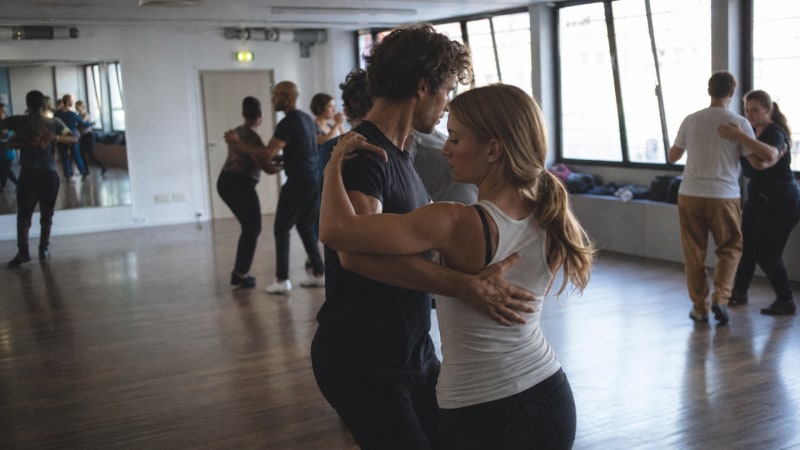
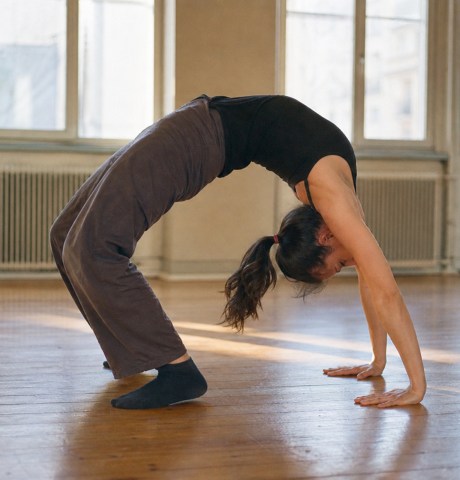
Two worlds with seemingly identical movements
Anyone doing a cartwheel or a handstand for the first time usually thinks immediately of classic gymnastics in a gym. However, in the dance studio, completely different rules apply to the same physical movements. The fundamental difference between acrobatics and gymnastics lies in the overarching intention. While floor gymnastics, as an Olympic discipline, aims for maximum precision, strength, and the exact adherence to a fixed set of rules, Acro Dance uses acrobatics as an extended means of expression. The movement does not exist for its own sake here, but serves to convey an emotion or a story within a choreography.
A striking feature of floor work in dance is the adaptation to the surface and the aesthetics. Gymnasts work on sprung floors or thick mats that cushion extreme jump heights and hard landings. In the dance studio, however, performers usually move on flat wooden floors or dance mats. This requires a completely different landing technique, where the energy is not abruptly absorbed, but fluidly channeled into the next dance movement. If you are interested in the basics of this dance-based movement art, the guide for learning Acro Dance: The guide for floor elements in dance offers an ideal introduction.