Find your flow together
On udansa you can find like-minded people for contemporary dance projects as well as suitable courses in your area to take your floorwork to the next level.

By Mary De LucaUpdated
On udansa you can find like-minded people for contemporary dance projects as well as suitable courses in your area to take your floorwork to the next level.
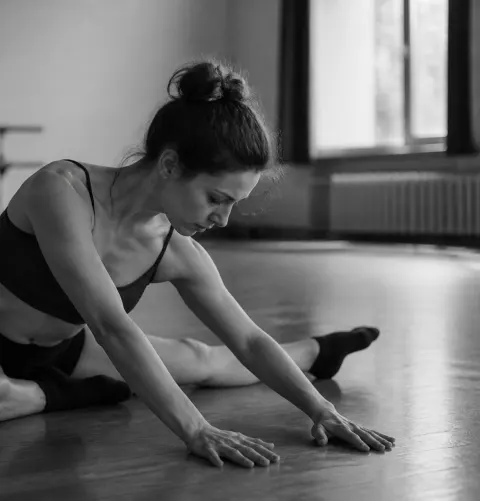
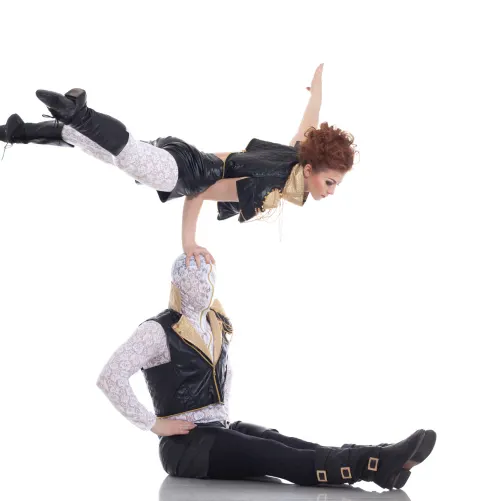
In contemporary dance, the boundaries between art and athleticism merge. While classical ballet often emphasizes the vertical axis and the striving upwards, contemporary dancers are magically drawn into the depths. This is where dance acrobatics-contemporary fusion comes into play: Acro Dance provides the technical foundation to seamlessly integrate spectacular acrobatics into artistic expression. It is not about stringing together isolated tricks, but about using physical laws like momentum and gravity for emotional movements. A smooth roll over the shoulder or a sudden handstand thus become part of a fluid narrative, instead of appearing like foreign objects.
The fusion of gravity in dance and acrobatic elements requires a deep understanding of your own body. In contrast to traditional gymnastics, where rigid lines and firm landings count, contemporary floorwork with acro elements thrives on constant change and the soft catching of your own weight. Anyone who masters this fusion does not use the floor as a hard boundary, but as a partner for dynamic choreographies.
Discover professional dance studios and learn the art of fluid floor acrobatics.
No courses for this dance style here yet
 festivalOnly 5 spots leftModern Dance
Use a targeted warm-up for your wrists, shoulders, and spine. Only a flexible body can softly cushion the forces upon landing.
Learn how to roll your weight over your shoulder blades and upper back without your bones hitting the floor hard. This protects you from bruises.
Perform simple transitions from standing to a push-up position or to all fours. Make sure the movement feels like a continuous flow.
Connect an acrobatic element directly with a subsequent turn or a soft gesture. The trick must not remain isolated.
The difference lies in the flow of movement. While floor gymnastics evaluates hard landings and rigid holding positions, Acro Dance in Contemporary uses the momentum of the acrobatics to transition directly into the next dance movement.
Safety comes first. Beginners should first practice the basics of rolling and correct weight distribution on a soft mat before transferring the elements to a hard dance floor.
Clothing should be form-fitting but elastic to guarantee maximum freedom of movement. Many dancers use special socks or train barefoot to have optimal grip on the floor.
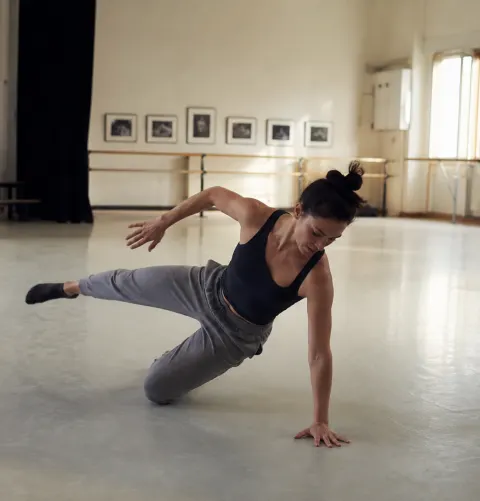 Learn Acro Dance: The guide to floor elements in dance
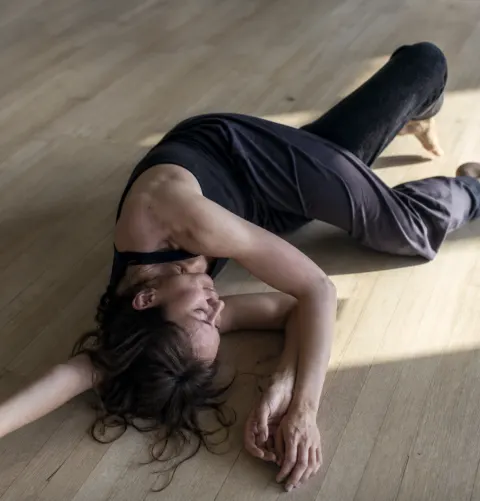 Acro Dance Trends 2026: The Latest Solo Floorwork
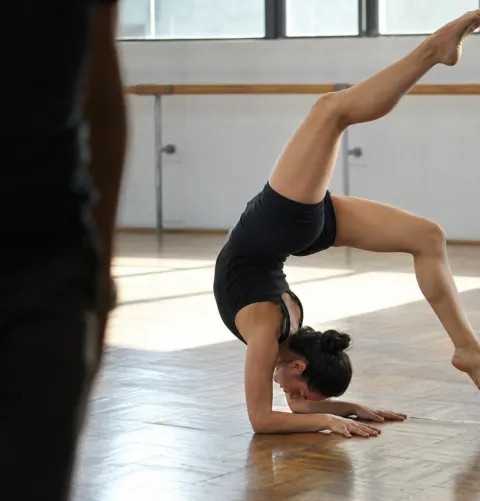 Learning the forearm stand in dance: Balancing on your forearms
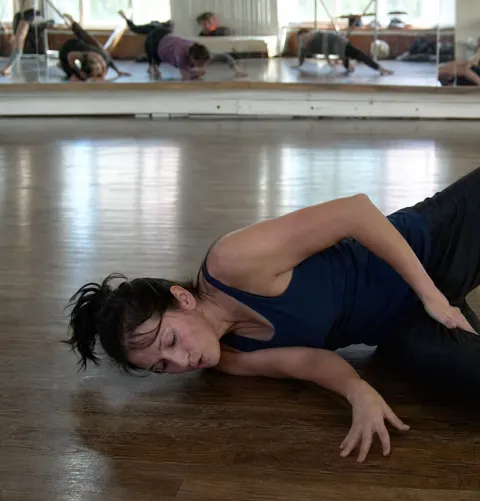 Transitions in floor acrobatics: 5 tips for a fluid flow
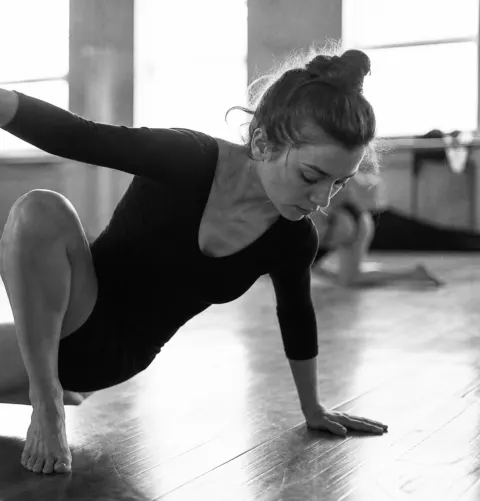 Space usage in Acro Dance solo: Floor work techniques
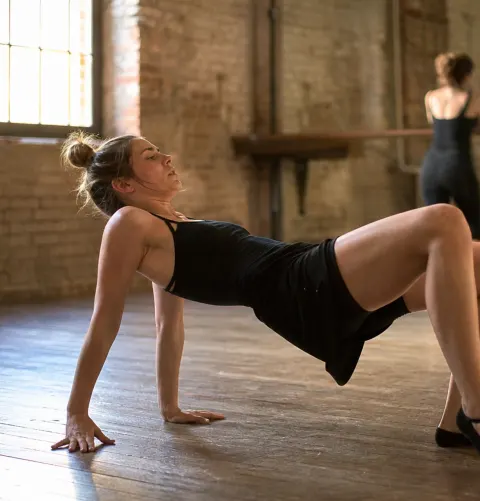 Acro Dance moves for beginners: The best floor elements
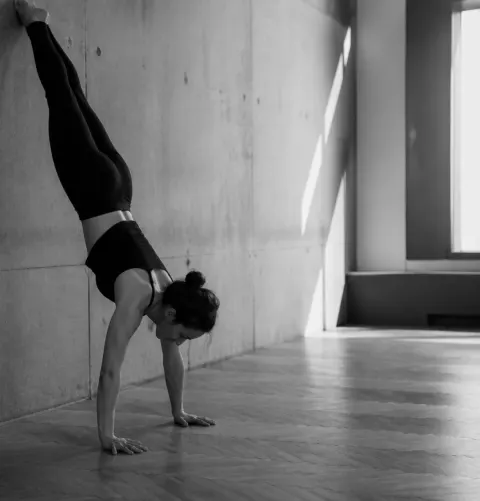 Learning the handstand for adults: step by step to success