Dance physics5 minutes

Gravity in dance: consciously using weight while standing

In a nutshell
  • Gravity in dance serves as a natural propellant, as you consciously release your body weight into the floor instead of fighting it.
  • Lowering your center of gravity into your pelvis generates kinetic energy, which enables fluid movements while standing without excessive muscle power.
  • The principle of controlled falling uses gravity for dynamic changes of direction and organic swings from a standing position.
  • Targeted release of muscle tension in the upper body is the prerequisite for allowing weight to flow and be released.

If you are looking for lightness in contemporary dance, you must first learn to be heavy. The conscious play with your own body weight while standing opens the door to a completely new quality of movement.

DefinitionWeight release

Weight release in contemporary dance describes the conscious letting go of muscle tension to surrender one's body weight to gravity. This creates a deep connection to the floor, which serves as a foundation for dynamic movements.

How gravity drives your movements

In contemporary dance, gravity is not an obstacle to be laboriously overcome, but a constant partner. While classical ballet often strives for weightlessness, modern dance consciously utilizes the physical laws of gravity. To use gravity in dance efficiently, you must learn not to fight your own body weight, but to release it purposefully. When you understand your pelvis as the true center of your body, you can use the force of attraction to build momentum, dynamics, and a deep connection to the floor.

The conscious play with body weight begins in an upright stance. By consciously yielding in the knees, often referred to in dance as "plie" or "release," you lower your center of gravity. This vertical weight shift creates kinetic energy that you can redirect into horizontal movement without additional muscular effort. Anyone who wants to use gravity and create fluid transitions in modern dance works with the body's natural pendulum principle. Each descent prepares for the next ascent, without any artificial exertion.

The principle of controlled falling while standing

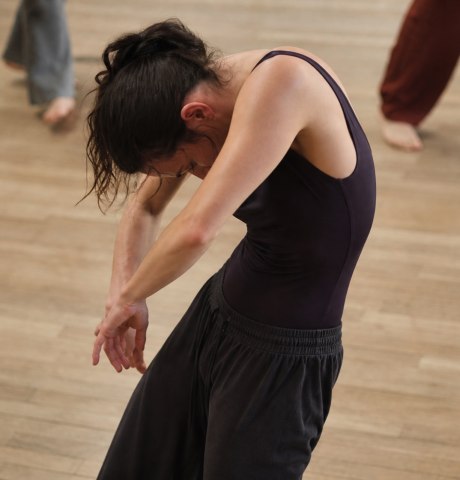
A common misconception among beginners is the belief that controlled dancing requires constant muscle tension. The opposite is true: to transfer weight in dance, you must learn to deliberately release unnecessary tension in your shoulder girdle and neck. Only then can your body mass follow gravity and create genuine dynamics. If you stiffen up, you block the natural flow of movement and often appear wooden or unstable while standing. Learning the Graham technique, for example, shows how breathing supports this relaxation in the upper body.

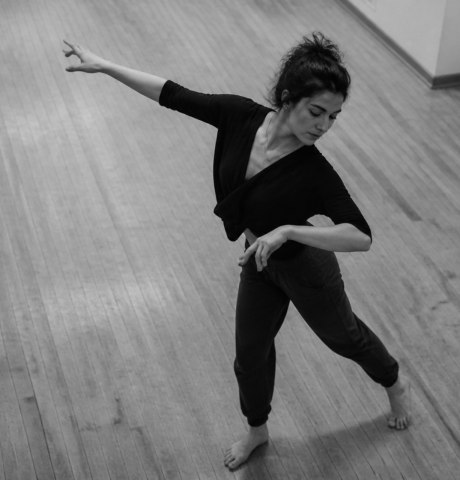
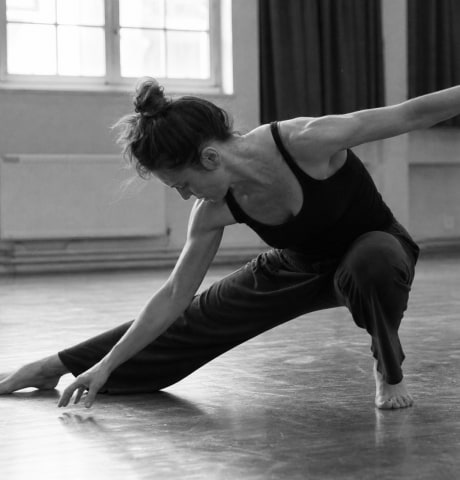
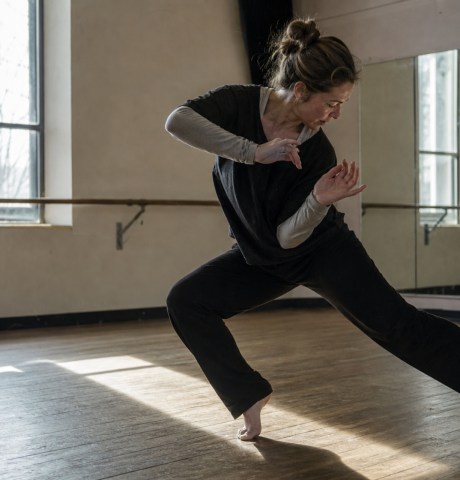
Physically speaking, we use the principle of controlled falling when dancing while standing. When you move your upper body out of alignment, gravity pulls you downward. Instead of catching this fall with force, you gently catch your weight via a lunge and use the momentum for the next turn or a change of direction. This controlled instability gives contemporary dance its typical, organic aesthetic. It is a constant negotiation with gravity, where you lose your balance while standing in order to elegantly regain it the next moment.

The right way to handle gravity while standing

Correct

  • Bend your knees and lower your center of gravity
  • Consciously release muscle tension in your upper body
  • Use your pelvis as a stable anchor point
  • Use the momentum from falling for new steps

Wrong

  • Working against gravity with stiff knees
  • Keeping the entire body under constant tension
  • Completely losing the vertical axis while standing
  • Forcing every upward movement with pure muscle power

Anyone who learns to release their own weight into the floor no longer dances against physics, but flows with it. This saves energy and creates space for genuine expression.

Dance instructor for contemporary dance, Hamburg

The vertical axis as an anchor for your own weight

To truly internalize the physical principles in dance, it helps to imagine a direct connecting line between your pelvis and the center of the earth. This energetic alignment gives you the necessary security, even in moments of extreme weight loss. If you let your head or arms sink heavily downwards, for example, your pelvis remains the stable anchor. Through this play with contrasts, where parts of the body yield to gravity while others hold the vertical axis, fascinating visual dynamics are created.

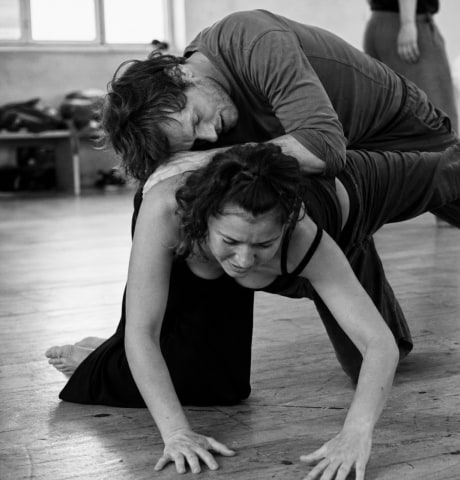
This play with gravity can be learned excellently in Contact Improvisation, where weight is shared not only with the floor but also with a partner. But even in solo dancing while standing, conscious yielding trains your kinesthetic perception. You learn how much strength is actually needed to execute a movement and where you can simply let physics work for you. This protects your joints and gives your dance an effortless, flowing quality.

The two phases of weight shifting while standing

Sinking

Releasing your weight into the floor

Gathering energy through gravity

You actively use gravity to build momentum. By deliberately releasing your weight into the floor, you generate the energy needed for dynamic movements while standing.

Rising

Using the gained energy

The lightness of the upward movement

You use the momentum from the descent to move upwards elastically. The rising movement feels light because it uses the kinetic energy of the fall.

Frequently Asked Questions

  1. By consciously letting go of unnecessary muscle tension in your neck, shoulders, and pelvis. Imagine your weight flowing like a heavy liquid through your legs and into the floor.

Contemporary and Modern dance courses near you

Find the right course on udansa now and learn how to use your weight perfectly in dance.

View all matching courses

Experience gravity together in dance

Find like-minded dance partners and the best courses in your area on udansa to try out the physical principles of contemporary dance together in the studio.

Experience gravity together in dance