Dance history5 minutes

History of expressionist dance: A portrait of Laban and Wigman

In a nutshell
  • European expressionist dance emerged at the beginning of the 20th century as a radical liberation from the rigid rules of classical ballet.
  • Rudolf von Laban established a systematic theory of movement that defined space, time, weight, and flow as universal means of expression.
  • Mary Wigman focused on emotional depth, working with gravity, and the abandonment of music in favor of rhythmic breathing.
  • The philosophy of both pioneers forms the theoretical and practical foundation for today's contemporary dance.

How European expressionist dance broke the chains of classical ballet and paved the way for modern movement art. A journey to the roots of Laban and Wigman.

DefinitionExpressionist dance

Expressionist dance refers to a dance style that emerged in Europe at the beginning of the 20th century, which opposed the academic rules of ballet. It focused on individual emotional expression and free body movement.

Freeing the body from the classical corset

At the beginning of the 20th century, a silent revolution took place on European dance stages. Many artists felt that classical dance, with its strict geometric lines, tight corsets, and the fixed steps of classical ballet, was a restrictive corset for the soul. They sought an art of movement that no longer just told decorative stories, but carried the inner truth of the human being outward in an unadulterated way. From this rebellion emerged European expressionist dance, which was to change the dance world forever.

At the center of this movement was the liberation of the body. The pioneers abandoned rigid step sequences and the hierarchies of classical ensembles. Instead, they declared gravity, breath, and emotion to be the new tools of creation. Dance was understood as an independent art form that needed no literary template and often not even music to unfold a profound effect. This new philosophy laid the foundation for what we know today as contemporary dance and modern dance theater for adults.

Rudolf von Laban and the geometry of movement

One name is inseparably linked to the theoretical and practical understanding of this new era: Rudolf von Laban. As a visionary choreographer and movement theorist, he dedicated his life to researching human dynamics in space. The Rudolf von Laban dance was not a rigid system of poses, but a profound movement analysis. He examined how the body moves through space and which energetic qualities are released in the process.

Laban developed the concept of the kinesphere, that space which surrounds the body and can be reached with the limbs without changing one's location. His theory of effort distinguishes the factors of space, time, weight, and flow. Through the conscious play with these elements, such as the change between direct and flexible spatial orientation or sudden and sustained duration, dancers received a universal vocabulary for improvisation. His work helped dancers to develop a deeper body awareness in dance and to understand movements beyond predetermined patterns.

From ballet to free movement: the new udansa philosophy

Correct

  • Let movement emerge from the breath
  • Consciously use gravity as a partner
  • Allow emotions to be felt in the body without filter
  • Explore the space in all directions

Wrong

  • Clinging rigidly to classic poses
  • Fighting against your own body weight
  • Hiding feelings behind a mask of perfection
  • Limiting yourself only to predetermined lines

Dance is a language that people speak when they want to express themselves beyond words, and they need nothing more than their own body to do so.

Dance educator, Dresden

Mary Wigman and the ecstasy of raw emotion

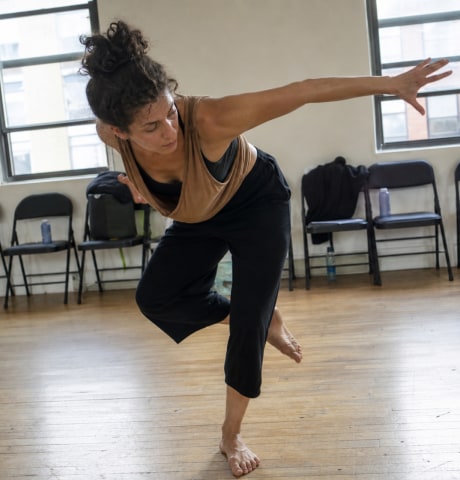
While Laban analyzed the structural and spatial laws of movement, Mary Wigman gave expressionist dance its dramatic, emotional soul. As a student of Laban, she developed a unique, radical aesthetic. The Mary Wigman method placed pure feeling and existential experience at the forefront. Wigman often danced barefoot, used masks, and frequently dispensed with music entirely in her choreographies to follow only the rhythm of her own breath and heartbeat.

For Wigman, dance was a ritual act of self-encounter. She used the polarity of tension and relaxation to make emotional states such as fear, grief, or ecstasy physically tangible. Her movements were often earthbound, angular, and unvarnished, a conscious counter-design to the weightlessness of classical ballet. This uncompromising focus on the inner necessity of a movement continues to shape training in modern dance to this day. Anyone improvising in a contemporary class today is, often without knowing it, using the creative freedom that udansa once laboriously fought for.

Two poles of a revolution: structure versus emotion

Structure

The order of space

The movement theory according to Rudolf von Laban

He analyzed movement scientifically and spatially. His theories on space and dynamics gave free dance a clear, teachable structure beyond pure emotion.

Feeling

The power of emotion

The expressive power according to Mary Wigman

She sought emotional and ritual depth in dance. Her method emphasized earthiness, ecstasy, and breath as a direct channel for the human soul.

Frequently Asked Questions

  1. European expressionist dance emerged at the beginning of the 20th century as a counter-movement to classical ballet. Dancers sought ways to bring real human emotions and inner states onto the stage without the corset of academic step sequences.

Discover modern dance near you

Find the right course and feel the freedom of movement in your own body.

View all matching courses

Find your expression through dance

On udansa you can find dance schools, workshops, and like-minded people to experience the freedom of contemporary dance and the traces of expressive dance in the studio.

Find your expression through dance

Read more