Expressive dance5 minutes

Dance theater for adults: expression and dance

In a nutshell
  • Dance theater for adults combines contemporary movement with theatrical elements of acting.
  • The focus is not on technical perfection, but on personal expression and honest emotion.
  • The training develops stage presence and uses everyday gestures as a starting point for artistic choreography.
  • Adults of all ages and without prior experience can learn expressive dance through creative improvisation.

Dance theater combines the depth of acting with the freedom of contemporary dance. Here, it is not perfect lines that count, but the honesty of your movement and the stories your body tells.

DefinitionContemporary Dance Theater

Contemporary dance theater refers to a performing art form that combines contemporary dance with the expressive means of theater and acting. It uses the human body and its movements as the primary medium to portray stories, emotions, and abstract concepts on stage.

Where movement becomes a story

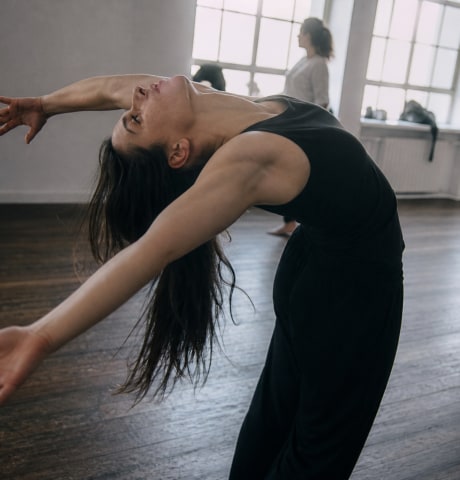
If you choose dance theater for adults, you enter a space where classical perfection gives way to make room for real feelings. In contrast to purely technical dance classes, which focus on the correct execution of pirouettes or jumps, the focus here is on the intention behind the movement. Every gesture, every step, and even the conscious act of standing still tells a story. It is not about how high the leg can be stretched, but rather what emotion this stretch conveys.

This art form combines the tools of acting with the dynamics of the body. If you appreciate improvisation in contemporary dance, you will find a deepening in dance theater. Here, you use your own life experiences to give movements a personal touch. The body becomes an instrument that brings inner conflicts, joy, sadness, or social issues to the stage without words. For adults, this offers a wonderful opportunity to rediscover yourself and give feelings a physical channel.

The conscious gaze and body tension in the space create a presence that captivates the audience, even before the first step is danced.

The connection between acting and dance

In contemporary dance theater, the boundaries between disciplines merge. A strong focus is placed on developing stage presence as a dancer. Presence is not created through loud actions, but through absolute clarity in the moment. In training, you learn to consciously perceive the space, maintain eye contact, and not lose tension even in moments of silence. This presence is closely linked to techniques from acting, which focus on the inner motivation of a movement.

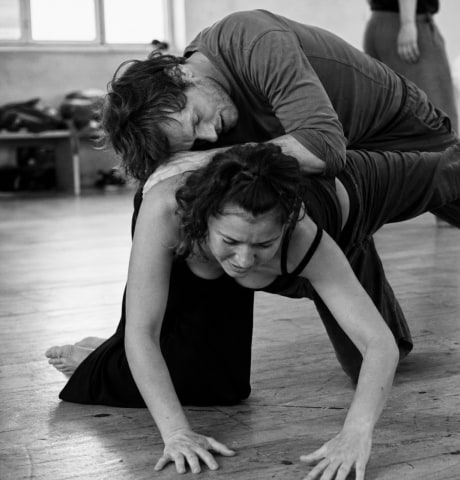
A typical element in these courses is working with everyday movements that are alienated, slowed down, or rhythmically repeated. A simple handshake or adjusting glasses transforms into a dance sequence through targeted abstraction. If you have already gained experience, for example by learning Contact Improvisation, you know how much expression lies in pure physical interaction. In dance theater, this interaction is expanded by the performative intent and theatrically charged.

The path to true expression on stage

Authentic in dance theater

  • Let movements arise from a genuine inner motivation
  • Use everyday gestures and transform them artistically
  • Bring in your own personality and life experience
  • Have the courage to embrace gaps and imperfect, but honest movements

Common misconceptions

  • Focusing only on the flawless execution of steps
  • Faking emotions or acting in a cliché way
  • Comparing yourself to others or wanting to seem younger than you are
  • Hiding behind a purely technical mask

Dance theater is the art of making the invisible within a person visible through a movement that no longer needs translation.

Dance educator, Hamburg

Learn expressive dance without performance pressure

Many adults hesitate to start dance theater because they believe they are not flexible enough or lack acting training. However, exactly the opposite is the case: dance theater thrives on the diversity of bodies and life stories. A mature body brings a completely different depth and authenticity to the stage than a young, purely academically trained body. If you want to learn expressive dance, you start exactly with what you bring with you right now.

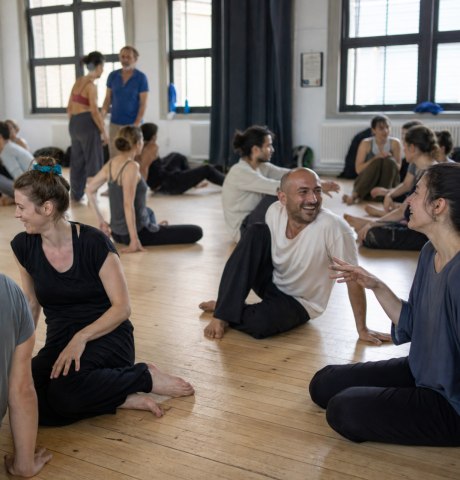
The classes are usually structured so that creative improvisation tasks are given after a gentle warm-up. You will be introduced to movement in a playful way and develop a fine sense for your body over time. It is about breaking down mental blocks and trusting your movement impulses. At the end of a session, there is often a small, jointly developed sequence that shows how a powerful group image can emerge from individual impulses. It is a liberating process that goes far beyond simply learning steps.

Two sides of a movement: theater versus dance

Performance

Expression and emotion

Focusing on the story

The focus is on your inner attitude and intention. Every movement stems from a feeling or thought that you want to convey to the audience. Technical elements serve purely as tools for expression.

Movement

Form and dynamics

The body in flow

Movement is guided by physical flow, gravity, and space. It is about dynamics, floorwork, and the free flow of energy, often detached from a specific theatrical role.

Frequently Asked Questions

  1. No, you do not need any previous dance or acting experience for the dance theater for adults. The courses meet you exactly where you are and use your natural everyday movements as a basis for artistic expression.

Contemporary and dance theater courses near you

Discover courses that challenge your body and let your creativity run free.

View all matching courses

Find your stage with udansa

On udansa, you can find like-minded people for creative projects, suitable courses for contemporary movement, and workshops that combine acting and dance. Make connections and bring your stories to the stage.

Find your stage with udansa