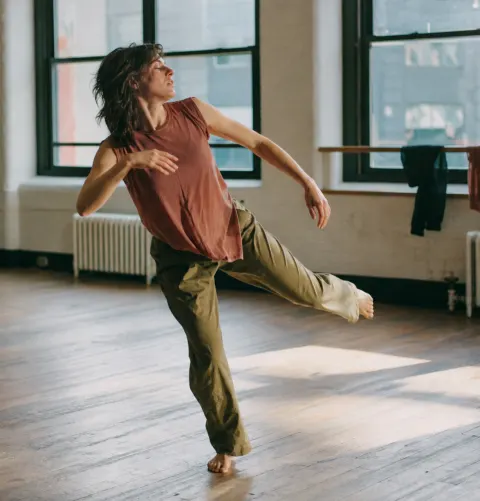
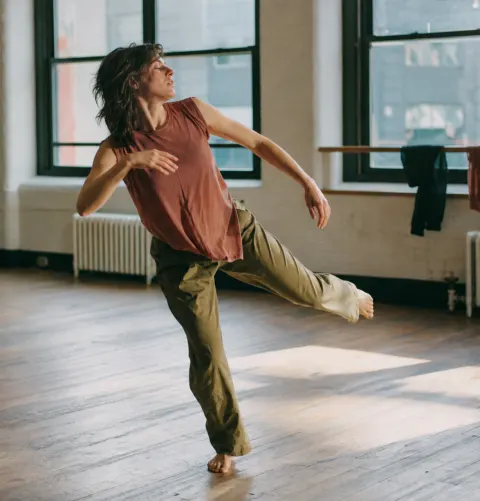
Dance together without restrictions
On udansa you find like-minded people for your next improvisation session, suitable dance partners for Contemporary Dance, and exciting workshops in your area.

By Mary De LucaUpdated
On udansa you find like-minded people for your next improvisation session, suitable dance partners for Contemporary Dance, and exciting workshops in your area.
The leap into free movement does not need a fixed plan, but it does need a safe framework. With the right preparation, your jam becomes a place where bodies can communicate with each other playfully and safely.
A Contact Improvisation Jam differs fundamentally from classic partner dance events. There are no predefined step sequences, no fixed direction of dance, and no separation into leaders and followers. Instead, the free dance scene jam forms a protected space where people meet on equal terms to use shared body weight, gravity, and physical contact as impulses for spontaneous movement. When you organize such a contemporary jam session, you create a place of mindfulness and creative expression.
To make it easier for all participants to get started, it is recommended to offer a short, guided warm-up before the free dancing. Anyone who has never engaged with this dance form before can get valuable tips for physical preparation in the guide Contemporary Dance: Prepare optimally for your first class. A clear structure at the beginning reduces nervousness and prepares the body for rolling, falling, and lifting.
Choose a room with a clean, shock-absorbing floor, ideally parquet or a sprung floor. Remove all obstacles and clean the area thoroughly, as there is a lot of rolling on the floor.
Create a playlist that starts calmly, builds up dynamically in the middle, and becomes softer again towards the end. Avoid loud, continuous techno beats to keep the focus on body awareness.
Welcome all participants in a circle and briefly explain the most important principles: mindfulness, the right to say no, and avoiding jewelry or zippers to prevent injuries.
Lead a short warm-up where the joints are mobilized and the participants develop a feeling for their own weight on the floor. This removes any shyness about the first physical contact.
Open the free jam phase, where dancers decide for themselves whether they want to dance solo, start a duet, or sit on the sidelines and simply watch attentively.
End the jam with a short, shared circle. A simple, quiet sit-together or a brief sharing of experiences rounds off the improvisation dance meeting harmoniously.
Find exciting jams, workshops, and dance meetups on our platform.
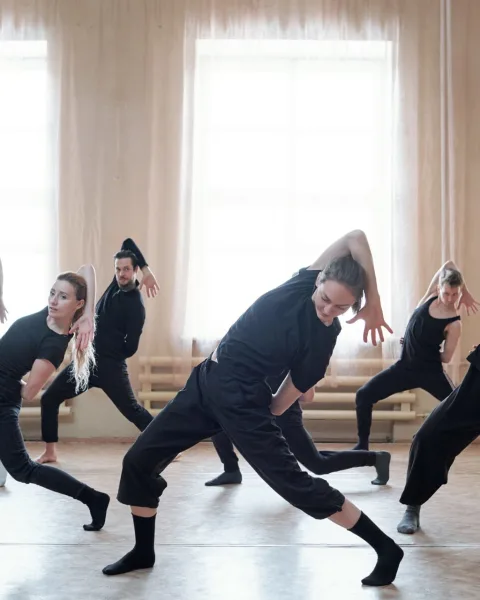 festivalOnly 5 spots leftModern Dance
Correct
Wrong
Preparation
Arrival
During
A typical contact jam session usually lasts between two and four hours. It begins with a 20 to 30-minute warm-up, transitions into the free jam phase, and ends with a short closing circle to reflect on the experience.
No, live music is not a must for a successful improvisation dance meeting, but it enriches the atmosphere enormously. A well-curated playlist with flowing, atmospheric sounds without dominant beats serves the purpose just as well.
Safety is created through clear communication before starting. Remind the participants that every touch is based on mutual consent and that one may end a dance at any time without justification by using a simple gesture.
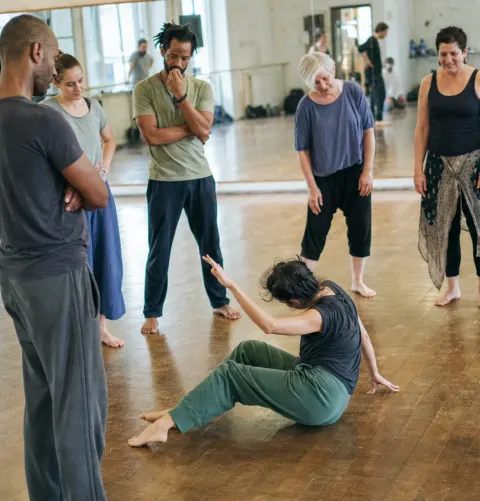 Contemporary dance improvisation: finding your own movement
 Contemporary dance trends: New paths in movement
 Contemporary Dance Musicality: Moving beyond the beat
 Best dance improvisation exercises at home
 Setting boundaries in Contact Improvisation: Mindful dancing
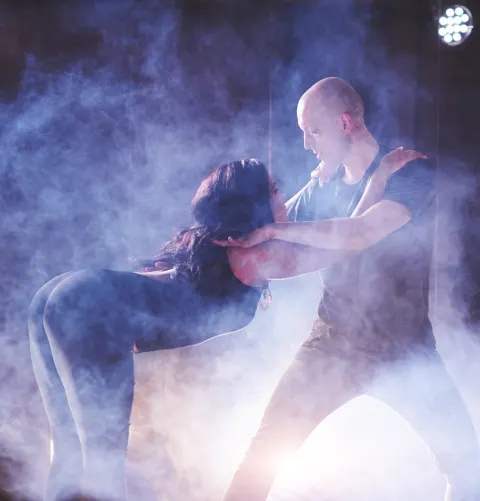 Instant Composition in dance: Spontaneous art on stage
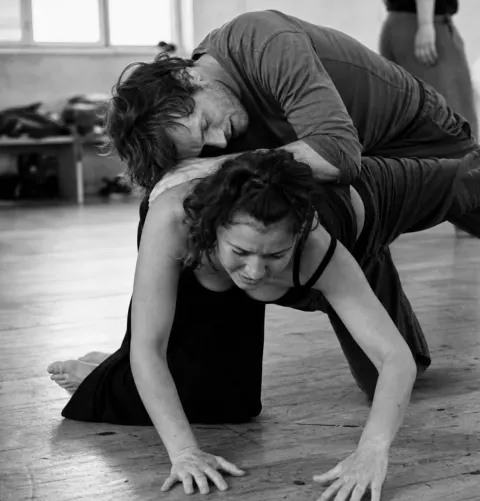 Learn Contact Improvisation: Your Start