Contemporary5 minutes

Setting boundaries in Contact Improvisation: Dancing mindfully

In a nutshell
  • Setting boundaries in Contact Improvisation is allowed at any time and ensures the creative freedom of everyone involved.
  • Communication of boundaries usually happens non-verbally through weight shifting or gently releasing the point of contact.
  • A clear verbal stop is absolutely legitimate on the dance floor and is respected by the community.
  • Mindfulness while dancing means continuously perceiving your own needs and your partner's signals sensitively.

Contact Improvisation opens up spaces for deep dance encounters. Learn here how to perceive your own boundaries, communicate them clearly, and create a safe space for creative movement through mindfulness.

DefinitionConsent in dance

Consent in dance refers to the mutual, voluntary agreement of all participants regarding the nature, intensity, and duration of physical touch during improvisation.

The sensitive dance of physical closeness

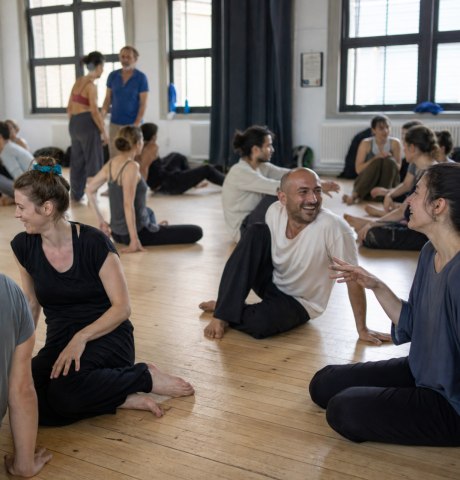
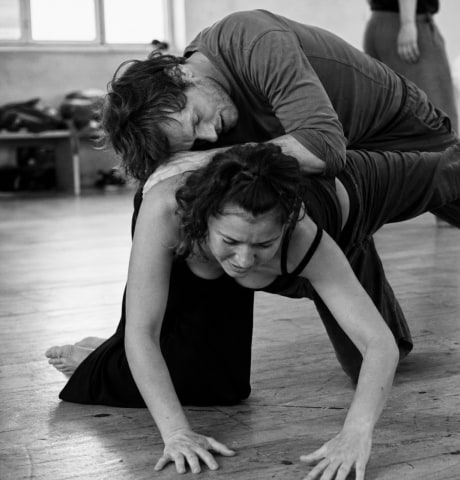
Contact Improvisation is a unique form of movement based on physical contact between two or more bodies. Unlike classic partner dances, there are no fixed steps, no rigid leading roles, and no predetermined distance. You share body weight, roll over your partner's back, or let yourself glide gently to the floor. This intense touch in contemporary dance requires a high level of mindfulness while dancing, as the entire body becomes a contact surface. Because the physical closeness is so immediate, mutual consent forms the supporting foundation of every movement.

For many beginners and experienced dancers alike, however, the question arises of how to maintain one's own boundaries in this dynamic flow. A respectful handling of muscle tension helps you to remain flexible in contact while simultaneously protecting your own axis. Only when you feel safe in the dance space can you truly engage in the creative play with gravity. The most important rule is therefore: You decide for yourself at any time how much closeness and what weight feel good to you.

Why saying no protects the dance

A common misconception is the assumption that you must unconditionally accept every movement or touch offered during an improvisation. However, the opposite is true. Contact Improvisation thrives on dialogue, and a real dialogue includes the right to say no. Setting boundaries in Contact Improvisation does not mean disrupting the flow of the dance, but rather making it safe and enjoyable for both sides in the first place. If you feel that a weight shift is becoming too heavy or a touch is uncomfortable, you are allowed to withdraw at any time.

This non-verbal negotiation of proximity differs fundamentally from the etiquette of classic dance evenings. While social politeness is often the priority there, the Contact Improvisation etiquette requires radical honesty towards your own body. You do not have to endure any movement just to avoid offending your dance partner. A mindful withdrawal or the gentle redirection of a movement impulse is a sign of professionalism and self-care that is highly valued in the udansa community.

Safety and consent on the dance floor

That's how it works

  • Feel your own body and take signals seriously
  • Release contact points consciously and gently
  • State a clear stop, if necessary
  • Read your partner's body tension sensitively

Not like this

  • Tolerating uncomfortable touches out of politeness
  • Moving away abruptly or hurtfully
  • Ignoring or overriding the other person's signals
  • Letting yourself fall into contact without any body tension of your own

Only when we learn to say no clearly and without a guilty conscience, does our dance-related yes in connection gain a real, deep meaning.

Instructor for contemporary dance, Berlin

Practical ways to clear communication without words

Confident improvisation begins with the inner clarity you bring into the room. Before you seek physical contact, a short phase of arriving solo helps you feel your own center. When you try your hand at contemporary dance, for example in the lateral entry for adults, you quickly learn how important this grounding in your own body is. From this stability, you can signal much more clearly where your comfort zone ends.

Communication on the dance floor usually happens without words. A gentle but firm pressure with your hand, changing your own angle, or consciously releasing the contact point are clear signals that your partner should understand immediately. If non-verbal communication is not enough during an intense jam, a spoken word is also absolutely allowed and encouraged. A short stop creates immediate clarity and ensures that the shared improvisation remains an enriching, creative experience for everyone involved.

The two pillars of mindful dancing

Self-care

Maintaining your own boundaries

Keeping your own needs in focus

Pay attention to your inner impulses and take the space you need. You decide for yourself in every moment about the intensity of the contact and the shared weight.

Respect

Respecting the boundaries of others

Reading your partner's signals sensitively

Observe the body tension and the subtle signals of your partner. Respect every withdrawal immediately and adapt your movements sensitively to the feedback.

Frequently Asked Questions

  1. You set boundaries primarily non-verbally by changing your muscle tension, gently shifting the point of contact, or consciously rolling out of the movement. Your partner will feel this resistance or space and should react to it immediately.

Modern dance and improvisation near you

Find the right course to move freely and mindfully through the space.

View all matching courses

Find dance partners who respect your boundaries

On udansa connect, you will meet like-minded people who appreciate contemporary dance just as much as you do. Find people here for your next jam who share your values of mindfulness and consent.

Find dance partners who respect your boundaries