Dance improvisation4 minutes

Instant composition in dance: Spontaneous art on stage

By Bernhard De LucaUpdated

In short
  • Instant composition in dance refers to the creation of a finished choreography directly on stage in front of an audience.
  • This art form differs from classical rehearsals by the absence of fixed step sequences.
  • The dancers use clear, pre-agreed rules and concepts to compose together in the moment.
  • It requires a high level of body control, spatial awareness, and the ability to make immediate decisions.

Anyone who steps onto the stage without knowing what will happen in the next moment experiences the pure essence of dance. It is the leap into the creative abyss that turns movement into true art.

DefinitionInstant Composition

Instant Composition in dance is the art of composing movements, spatial paths, and temporal structures in the very moment of performing for an audience. It combines the freedom of improvisation with the formal requirements of a finished choreography.

The art of real-time composition

In contemporary dance, the stage is often not a place for rigid routines, but a living laboratory. The method of instant composition in dance goes far beyond mere experimentation in the quiet of a studio. While private training primarily serves to learn techniques, real-time creation throws you straight into the deep end in front of an audience. Every step, every shift in weight, and every pause for breath emerges in the here and now before the eyes of the spectators. There is no going back, no correcting, and no deleting.

This form of stage improvisation in contemporary requires extreme presence from the dancers. You must not only master your own body, but simultaneously perceive the space, the light, the music, and your fellow dancers. The challenge lies in immediately pouring your own impulses into a readable, aesthetic form without falling into banal everyday movements or learned clichés.
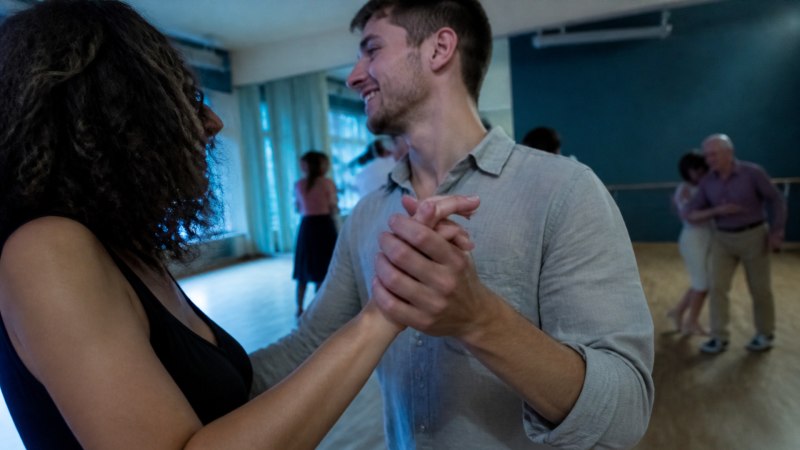
The empty space becomes a canvas: In real-time composition, a fraction of a second determines the next form in space.

The path to a successful performance

How to succeed

  • Scan the room and the other dancers attentively
  • Make clear, conscious decisions for stillness or movement
  • Use mistakes as a creative detour and a new opportunity

What holds you back

  • Only selfishly reeling off your own favorite moves
  • Falling into hectic actionism to fill gaps
  • Getting annoyed about a wrong step and losing focus

The biggest challenge is not moving, but standing still at the right moment and letting the space have its effect.

Contemporary dance instructor, Berlin

How to master your entry into the performing arts

Many people think of improvisation as absolute, rule-free freedom. However, without an invisible framework, a spontaneous choreography on the dance stage quickly collapses into chaos. Professional ensembles use complex scores. These define who dominates the space and when, how the dynamics change, or which physical principles are in focus. You can, for example, use gravity in contemporary dance to establish falling and catching movements as a leitmotif for a piece.

The audience immediately senses whether a performance seems arbitrary or whether the dancers are following an inner necessity. A successful performance is characterized by the actors reacting like a single organism. They compose the image on stage together by creating contrasts, picking up on the movements of others, or consciously setting pauses to maintain tension.

The two poles of stage presence

Spontaneity

Intuition on reception

The power of the moment

You react in the moment to the impulses of the room, the music, and your dance partners. Every movement is an honest response to the now.

Composition

Structure in chaos

An eye for the big picture

Despite all the freedom, you keep the aesthetic laws in mind. You subordinate yourself to the overall image and make conscious design decisions.

Frequently Asked Questions

  1. No, absolute freedom usually leads to arbitrariness. Successful performances use so-called scores, which are rules or concepts that define the framework for movements and interactions.

Contemporary courses near you

Find the right course to develop your own movement language and learn the art of improvisation.

View all matching courses

Experience the freedom of the stage

Here you will find like-minded people who share your passion for contemporary dance, as well as professional courses and workshops in your area.

Experience the freedom of the stage