The origin of the kinesphere by Rudolf von Laban
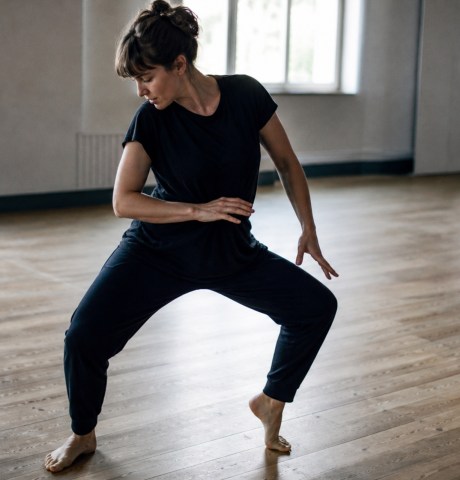
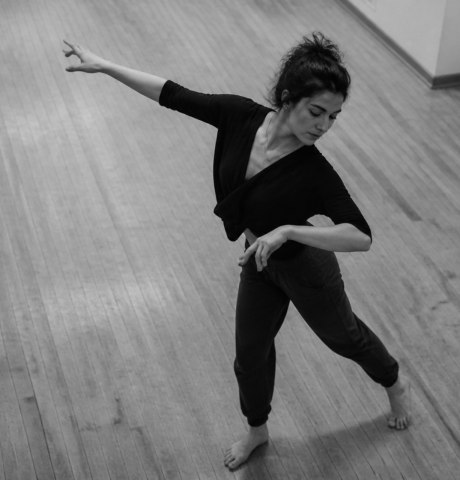
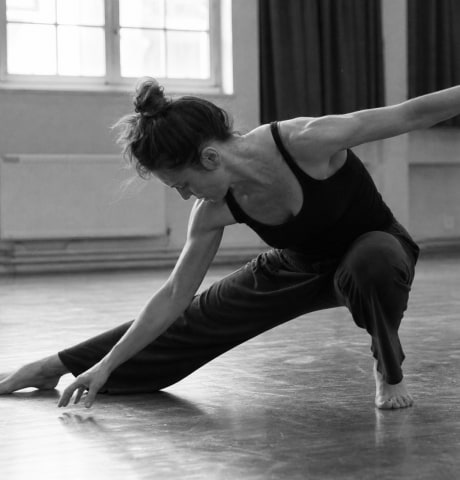
The term kinesphere goes back to the Hungarian dancer, choreographer, and theorist Rudolf von Laban. In the first half of the 20th century, he developed Laban Movement Analysis, a groundbreaking system for describing and structuring human movement in space. Within this theory, the kinesphere describes the space that immediately surrounds the body. You can imagine it as an invisible, three-dimensional sphere, the center of which is formed by your own center of gravity in the pelvis. The outer boundary of this sphere is defined by the maximum reach of your arms and legs, without you leaving your standing position.
In Laban Movement Analysis, this personal space is measured with geometric precision. Laban used the model of the icosahedron for this, a regular solid with twenty triangular faces. By orienting themselves to the corners and edges of this geometric body, dancers can precisely define directions and orientation in space. For modern dance, this means: space is not an empty, unused background, but an active partner that you structure, divide, and shape with your limbs.