Modern Dance4 minutes

Cunningham technique: precision and coordination in dance

In a nutshell
  • The Cunningham technique in dance is based on the strict isolation and independence of the different body parts from one another.
  • The spine moves in five defined positions, while the legs maintain precise ballet lines.
  • Through this training, coordination in contemporary dance as well as core stability are massively improved.
  • Adult dancers benefit from increased body awareness and excellent spatial orientation.

The Cunningham technique challenges both mind and body equally. It breaks with classical patterns and shows you how to move your spine completely independently of your legs in space.

DefinitionCunningham technique

The Cunningham technique is a training method for modern dance developed by Merce Cunningham, which is based on the independence of the torso and legs as well as extreme spatial precision.

Training the independence of the upper body and legs

Anyone engaging with the Cunningham technique in dance for the first time encounters a clear, almost mathematical aesthetic. The US choreographer Merce Cunningham revolutionized Modern Dance and Contemporary for adults by viewing the body as an architectural element in space. At the center of this school is the absolute independence of individual body parts from one another. While the legs trace precise, almost classical ballet lines, the upper body moves in completely different directions. This conscious isolation requires enormous core stability and a deep understanding of one's own anatomy.

For adult dancers, this approach offers a fascinating way to grasp movement in a completely new light. It is not about visualizing emotions dramatically, but rather about exploring the pure physics of movement. The spine forms the central axis that bends, stretches, rotates, and tilts, while the pelvis remains stable. Anyone who masters this coordination in contemporary dance trains their kinesthetic intelligence to a whole new level and gains an extraordinary presence on the dance floor.
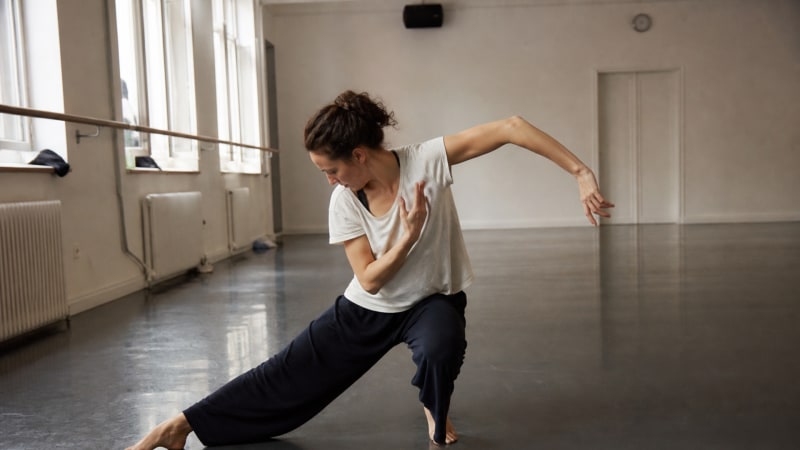
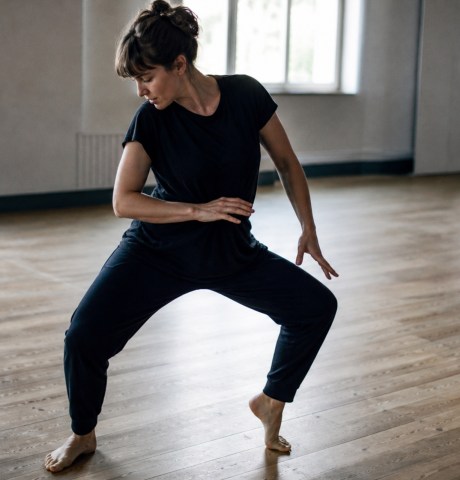
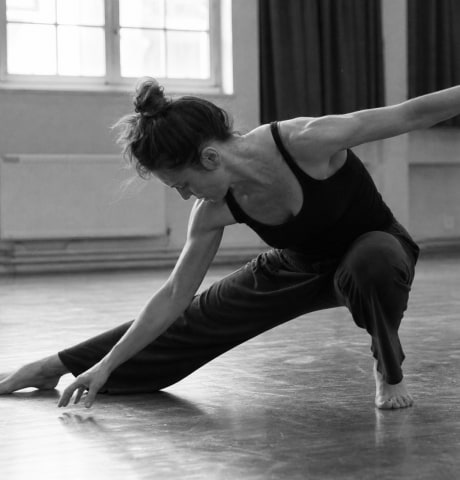
The separation of torso movement and footwork creates a fascinating, geometric clarity in the space.

Mastering the five positions of the spine

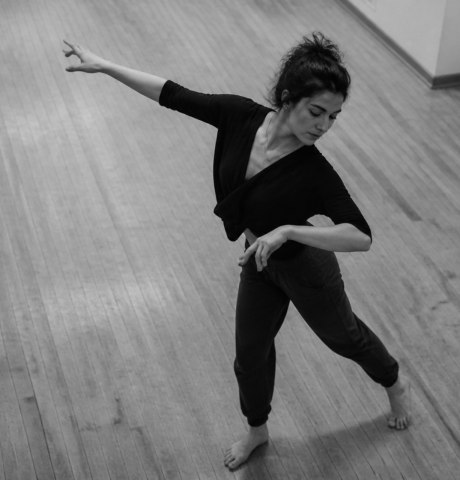
The biggest challenge when learning the Cunningham technique is breaking through habitual movement patterns. Normally, we move intuitively in a way that our head, arms, and legs harmoniously strive in the same direction. Cunningham breaks with this symmetry. A typical sequence requires, for example, that you stretch one leg to the side while your torso leans forward and your head looks toward the ceiling. This conscious disorientation forces the brain to create new neural connections and to dose muscle control extremely precisely.

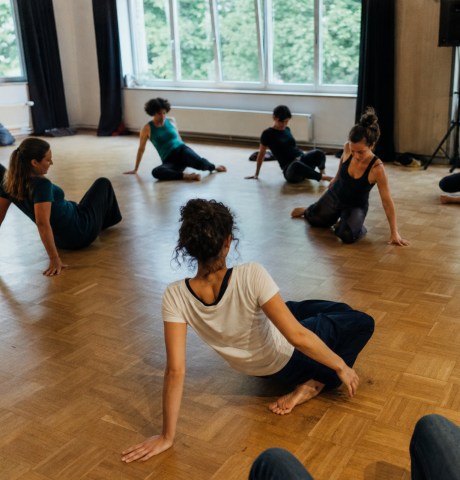
In a typical training session for Contemporary Dance for adults, work on the spine therefore takes up a large space. Cunningham distinguished five basic positions of the back: upright, curve (rounded forward), arch (stretched backward), tilt (tilted to the side), and twist (rotated within itself). These forms are practiced in isolation and later combined with complex footwork. The goal is to make the spine so flexible and at the same time so stable that it can execute every change of direction in space lightning-fast and without loss of balance.

Precision instead of momentum

Training correctly

  • Train the spine precisely in all five directions
  • Mentally separate footwork and upper body movement
  • Generate the power for quick changes of direction from your core

Common mistakes

  • Keeping the upper body stiff and immobile during footwork
  • Collapsing at the hips instead of tilting the spine
  • Losing balance due to uncontrolled momentum

The Cunningham technique forces you to view your body like an architect, assembling lines and angles in space with precision.

Contemporary dance instructor, Berlin

Precise footwork and overcoming gravity

Unlike many other modern dance styles that work heavily with the floor, the Cunningham technique usually remains upright. Gravity is not used as a partner to let yourself fall, but as a force to be overcome through muscle tension. This requires excellent footwork, which is strongly reminiscent of the precision of classical ballet. Fast weight shifts, sudden changes of direction, and holding balances on half-toe are fixed components of the training.

To execute these movements cleanly, a sound physical approach to modern dance techniques is essential. You learn to align your joints exactly on top of each other and to draw strength directly from your core. This precision not only protects against injuries, but also gives the dance its characteristic, almost weightless clarity. For adults, this training is an optimal workout that challenges strength, flexibility, and mental agility in equal measure.

The two poles of the Cunningham movement

Legs

Precision and stability

The classic foundation in space

Footwork requires absolute precision, extended lines, and a clear alignment of the joints, which strongly reminds one of the school of classical ballet.

Torso

Dynamics and isolation

The five directions of movement of the back

The spine acts completely detached in curves, arcs, tilts, and rotations, which requires enormous flexibility and deep muscle strength.

Frequently Asked Questions

  1. The Cunningham technique can be learned by motivated beginners, but it requires patience. Previous experience in ballet or contemporary dance makes it much easier to get started with the complex coordination.

Discover modern dance for adults

Find the right dance studio near you and start your training.

View all matching courses

Find your partner for Modern dance

On udansa connect, you will find like-minded people who want to practice the demanding movement sequences of modern dance styles with you. Make contact with training partners in your area and share your passion for contemporary dance.

Find your partner for Modern dance