Dance level5 minutes

Acro Dance level test: Are you ready for floor elements?

In short
  • A systematic Acro Dance level test evaluates the core areas of strength, flexibility, and body awareness.
  • Self-assessment protects against injuries and shows which physical prerequisites still need to be strengthened.
  • For a safe introduction to floor work, stable core muscles and solid basic spinal flexibility are essential.
  • The test result provides clear guidance for selecting the right dance course and the intensity of the training.

The path to spectacular floorwork does not begin with the first flip, but with a deep understanding of your own body. Find out where you stand today and how you can safely continue to develop.

Why an honest self-assessment protects you

Entering the world of dance acrobatics is exciting, but it often raises questions. Many dancers wonder if their physical prerequisites are sufficient to glide across the dance floor elegantly and without injury. A systematic acro dance level test helps you to realistically classify your current skills in the areas of strength, flexibility, and balance. This way, you avoid overexertion and can work specifically on the right foundations.

Before you dare to try demanding figures, an honest assessment is crucial. Acrobatic elements require an interplay of muscle strength and flexibility that differs significantly from classic standing dance. If you have already gained experience in learning contemporary dance as an adult, you often already bring a good foundation with you. Nevertheless, floor acrobatics has its own rules that require targeted preparation.

Test your acrobatic prerequisites

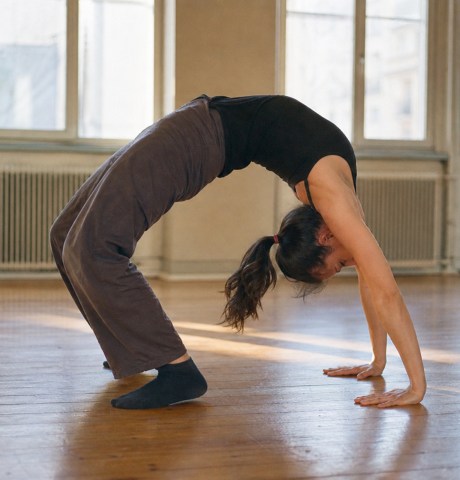
  1. How easy is it for you to round your spine in a bridge?

    • A: I quickly feel blockages and can barely get off the floor
    • B: With some warming up, I can manage a solid, if not extremely deep, bridge
    • C: I am very flexible and can easily bend far backwards
  2. How long can you hold a proper forearm plank position?

    • A: After less than 30 seconds, I start to shake
    • B: I can manage one minute with focus and good body tension
    • C: Two minutes or more are absolutely no problem for me
  3. What happens when you try to balance on one leg?

    • A: I wobble a lot and have to put my foot down quickly
    • B: I stand steadily, but have to actively balance with my arms
    • C: I stand like a rock and can even move while doing so
  4. How does your body react the day after an intense stretching or strength session?

    • A: I have severe muscle soreness and feel stiff for days
    • B: I feel my muscles, but I am fully ready for action again the next day
    • C: My body recovers extremely quickly and craves movement

Your evaluation

Mostly A: The cautious beginner

You are still at the very beginning of your acrobatic journey. For now, focus primarily on building solid core strength and gentle stretching exercises for the spine before you venture into complex floor work. A beginner course for Contemporary or classical ballet is ideal for you right now.

Mostly B: The ambitious climber

You already have a good foundation of strength or flexibility, but you should work on the balance between both components. Use targeted exercises to compensate for your weaknesses, and start with simple, floor-based elements under the guidance of an instructor.

Mostly C: The ready movement artist

Your body awareness, your strength, and your flexibility are already excellently developed. You have the optimal prerequisites to venture into more demanding floor elements, transitions, and initial balance figures on your hands or forearms.

Acro-dance levels in direct comparison

CriterionLevel 1 (Beginner)Level 2 (Intermediate)Level 3 (Advanced)
Strength baseHolding your own body weight is difficultStable core and shoulder muscles presentVery good support strength and body tension
MobilityLimited stretching in hips and backGood basic stretching, splits approach presentHigh flexibility in spine and shoulders
Typical elementsForward roll, simple lowering to the floorCartwheel, simple bridge, elbow standHandstand, fluid transitions, dynamic drops
Focus in trainingStrength building and gentle mobilizationTechnique of floor elements and balanceFlow of movements and complex combinations

This classification serves as a guideline for self-study and course selection.

How to use your test result in training

After you have evaluated your answers, the focus shifts to practice. The test serves as a guide and does not replace sports medical advice, but it gives you a clear direction. If you notice that you still lack stability in certain areas, there is no reason to worry. Every dance skill can be built up through continuous training.

To put your theoretical findings into practice, it is worth taking a look at the basics. In the guide on Learning Acro Dance: The guide for floor elements in dance, you will learn how to gain confidence step by step. It is best to combine your training with like-minded people in a professional dance school to benefit from direct feedback and avoid typical mistakes from the start.

Frequently Asked Questions

  1. You do not need extreme prior knowledge to get started, but solid core strength and normal flexibility are an advantage. A healthy sense of your own body makes learning the first floor elements significantly easier.

Acro Dance and acrobatics near you

Find the right course that perfectly matches your tested level.

View all matching courses

Dance together and grow

Here you will find like-minded people who, just like you, want to work on their flexibility or dare to take their first acrobatic steps. Exchange ideas, train together, and find the right course in your area.

Dance together and grow