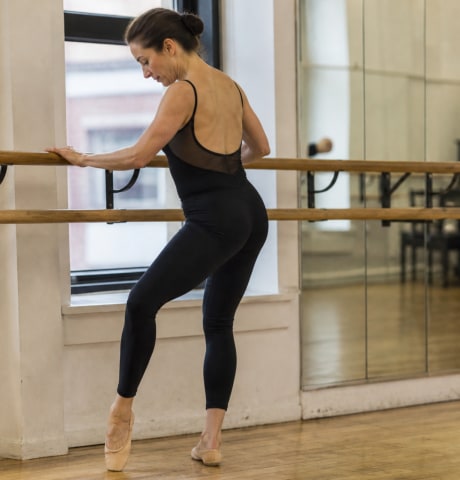
Ballet training3 minutes

Ballet stretching exercises for the hips: More turnout at a mature age

In a nutshell
  • Regular stretching of the hip flexors and deep gluteal muscles increases the range of motion for classic turnout.
  • Active hip openers gently mobilize the hip joint and optimally prepare the tendons for the demands at the ballet barre.
  • Adults over 40 achieve the best and safest progress without risk of injury through gentle, statically held stretching positions.
  • The combination of deep stretching and conscious breathing permanently releases deep-seated blockages in the entire pelvic area.

Turnout is the foundation of classical dance. With targeted stretching exercises for the hips, adult beginners can also noticeably improve their flexibility step by step.

How we selected the best exercises

  • Anatomical safety

    All selected stretching exercises are anatomically safe for adult beginners and do not place unphysiological strain on the knee joints.

  • Easy to perform

    The exercises do not require any acrobatic skills and are easy to perform even if you have limited flexibility at the beginning.

  • Practical effectiveness

    The selection is based on the recommendations of experienced ballet teachers for training at a mature age.

  • Independent selection

    No studio and no association has paid for placement or mention on this list.

The 5 most effective hip openers for adult ballet dancers

  1. 01

    The Butterfly Stretch

    Seated position, ideal for beginners, gentle intensity

    • Adductors
    • hip opening
    • classic

    The butterfly stretch is the absolute classic among hip openers. It gently stretches the adductors and allows you to let your knees sink towards the floor using only gravity, which is the perfect preparation for the ballet class structure for adults.

  2. 02

    The Figure Four Stretch (Supine Figure Four)

    Supine position, medium intensity, very precise control

    • Piriformis
    • glute stretch
    • knee-friendly

    This exercise stretches the deep gluteal muscles and the piriformis muscle, which are often responsible for blockages during outward rotation. It is gentle on the knees, as you can control the degree of the stretch yourself by pulling on your thigh.

  3. 03

    The Low Lunge

    Kneeling position, high intensity, focus on the front of the hip

    • Hip flexor
    • psoas
    • front of the thigh

    The low lunge opens the hip flexor (psoas) of the back leg and simultaneously stretches the hip of the front leg. A flexible hip flexor is essential to keep the pelvis stable in a vertical position during ballet stretching for the hips.

  4. 04

    The Frog Pose

    All-fours position, high intensity, for advanced stretching

    • Deep hip opening
    • adductors
    • intensive

    The Frog Pose is an intense hip opener for ballet and adults that deeply stretches the inner thighs. By pushing the pelvis back in a controlled manner, the stretch in the hip joint can be adjusted with millimeter precision.

  5. 05

    Cow Face Pose

    Seated position, very high intensity, requires preparation

    • Outer rotators
    • glutes
    • hip joints

    In this seated position, the thighs are stacked on top of each other, which causes an intense stretch of the outer hip rotators. It helps to build the necessary suppleness for complex turns and pole work.

How to safely integrate hip openers into your training

To train your turnout effectively and without injury, you should always integrate stretching exercises into a fixed routine. Warm up for at least ten to fifteen minutes before stretching to promote blood circulation in the pelvic area. Hold each position for at least 30 to 60 seconds and breathe deeply into your abdomen while doing so. Avoid jerky, bouncing movements, as these can trigger the muscle's stretch reflex and lead to blockages. If you want to sustainably improve your flexibility at a mature age, consistency is the key: a short, focused session three times a week brings significantly more success than one long, irregular training session once a month. A look at our overview of ballet for adults also shows you how to optimally structure your entire training.

Numbers for your safe hip training

minutes of warm-up before stretching
10
seconds minimum hold time per exercise
30
training sessions per week for success
3

Frequently Asked Questions

  1. For noticeable progress, you should perform the exercises three to four times a week. Consistency is more important for hip stretching than the duration of individual sessions.

Ballet classes for adults near you

Find the right studio and start your ballet journey with the best support.

View all matching classes

Sharing the passion together

On udansa connect, you will find like-minded people who share your passion for ballet, and suitable courses in your area. Exchange ideas and train together with other adults.

Sharing the passion together