Kids dance3 minutes

Rhythm games for kids: A guide to playful timing

In a nutshell
  • Rhythm games for children playfully encourage a natural sense of timing at home through movement and clapping.
  • Parents do not need any prior musical knowledge, but instead use simple everyday objects and child-friendly music.
  • Playful rhythm training optimally prepares children for later participation in children's dance classes.
  • Conscious listening and moving is proven to strengthen motor coordination and concentration.

A sense of rhythm cannot be learned from textbooks, it must be experienced with the whole body. Using simple everyday objects and lots of fun, you will awaken your child's natural joy for movement and music with udansa.

What you need for the rhythm games

  • A room with enough space to move around
  • Music player with clearly audible bass
  • Simple household items like wooden spoons or plastic cups
  • A few of your child's favorite upbeat songs
  • Good mood and a desire to move together

Why a sense of rhythm is the foundation for every children's dance

For the little ones, music is initially pure energy that wants to be released through movement. However, before children learn complex choreographies in a children's dance class, they need to learn to feel the heartbeat of the music. Rhythmic early education in your own living room works completely without sheet music or dry theory. It is much more about making the beat tangible in the truest sense of the word: through clapping, stomping, hopping, and experiencing fast and slow beats. This fundamental rhythm training prepares the little ones optimally for later dance styles, as it playfully strengthens the connection between what is heard and physical reaction. Along the way, the shared experience trains concentration and strengthens the bond between you and your child.
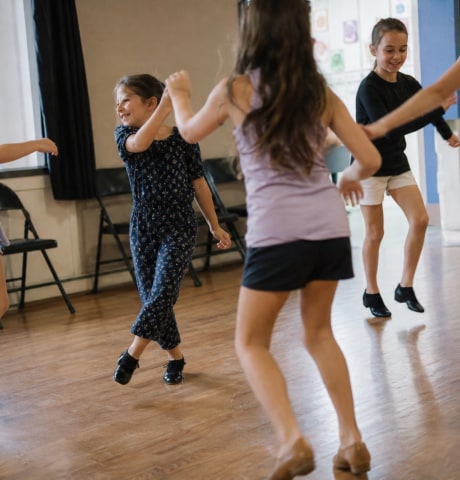
The beat comes to life: When children create the rhythm themselves with their hands and feet, they understand the music without any theory.

Step-by-step guide for rhythm training

  1. Finding the basic beat

    Choose a song with a very clear, steady beat. Clap the basic rhythm out loud and let your child try to join in with your clapping until you are both hitting the same beat.

  2. Stomp with your feet

    Move the rhythm into your whole body. Stomp alternately like heavy giants to a slow beat, or pitter-patter through the room like little mice to fast beats.

  3. Stop the music

    Use the game musical statues. As soon as you pause the music, your child must freeze like a statue, which trains their attention to the sudden silence of the rhythm.

  4. Drum simple echoes

    Distribute upside-down plastic bowls or paper cups to use as drums. Clap out a short, simple rhythm sequence that your child then taps out on their cup drum.

Teach rhythm playfully instead of cramming

Like this

  • Focus on fun and movement
  • Use simple everyday objects as instruments
  • Ignore mistakes and keep the flow going
  • Choose short play sequences of 10 to 15 minutes

Not like this

  • Forcing complex music theory or counting beats
  • Requiring expensive equipment or real drums
  • Constantly correcting the child for being off-beat
  • Practicing for too long until concentration completely fades

The flow of your rhythm playtime at udansa

Before the game

Preparation

During the game

Execution

After the game

Conclusion

Frequently Asked Questions

  1. From about three years old, children can actively imitate simple rhythms by clapping or stomping. At this age, playful parent-child dance is particularly suitable for gathering initial movement experiences to music.

Find children's dance classes near you

Discover playful dance classes that further develop your child's sense of rhythm in a cheerful group.

See all suitable classes

Staying in sync together

On udansa, you can find playful dance classes for children and offers for parent-child dancing right in your area.

Staying in sync together

Read more