Children's dance4 minutes

Trends in children's dance 2026: Modern course concepts in focus

By Mary De LucaUpdated

In short
  • Modern children's dance classes in 2026 prioritize playful development and the joy of movement over the rigid memorization of choreographies.
  • Contemporary dance school concepts for children combine dance pedagogy with elements of mindfulness, children's yoga, and creative improvisation.
  • Flexible course formats and the integration of digital accompanying media make everyday life easier for families and support playful learning at home.

The world of children's dance is evolving rapidly. Discover how innovative teaching formats and playful approaches shape classes today and provide your child with the perfect, pressure-free introduction to movement.

How modern concepts are revolutionizing children's dance

The days when children had to stand rigidly in rows and memorize fixed choreographies in dance class are over. Trends in children's dance in 2026 show a clear development towards needs-oriented, flexible, and holistic concepts. Modern children's dance courses focus on playful development, where the joy of movement is at the forefront. Today, dance educators use innovative methods that strengthen not only motor skills but also the social competence and emotional intelligence of young dancers.

A central driver of this development is the changed understanding of early childhood education. Dance schools increasingly see themselves as places for creative personality development. Instead of performance pressure and perfectionism, modern concepts that boost self-confidence for shy children through dance are becoming established. The lesson structure adapts to natural developmental phases instead of forcing children into rigid templates.

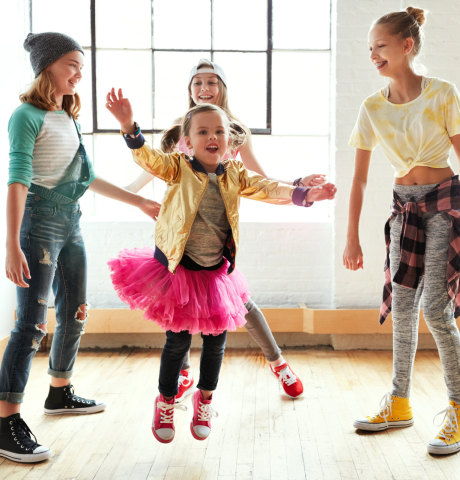
A group of happy children during Hip-Hop dance training in a studio
Growing together in a circle: Modern course concepts promote social interaction and leave room for your own creative ideas.

The formative movements in modern children's dance pedagogy

  • Creative movement improvisation

    This approach focuses on the natural joy of movement. Children do not learn fixed steps, but instead translate imagery and stories into their own movements. This fosters creativity, trains body awareness, and leaves room for individual personality development without the pressure to perform.

    • Creativity
    • improvisation
    • body awareness
  • Mindful Movement for kids

    Modern concepts combine dancing with playful mindfulness exercises and elements from children's yoga. This combination helps children to consciously find calm after dynamic dance phases. It strengthens body awareness and shows ways how children can deal with everyday stress and sensory overload.

    • Mindfulness
    • balance
    • relaxation
  • Interdisciplinary crossover formats

    Classic children's dance styles open up to modern, urban rhythms and contemporary music that match the children's world. The focus is on fluid transitions and the playful mix of different dynamics, which trains the children's musical adaptability and coordination.

    • Versatility
    • rhythm
    • modern beats

The future of children's dance is flexible and connected

Digitalization and changing family routines are having a lasting impact on dance school concepts for children in 2026. Modern studios are responding to the desire for flexibility with hybrid models that complement the shared experience on-site with digital, playful companion media for home. The involvement of parents has also changed: instead of waiting passively in the lobby, parents are being integrated into their children's world of movement in specific, active formats.

For the future of children's dance, this means an even stronger connection between movement, mental health, and community. Courses are designed in an interdisciplinary way, linking dance steps with elements from children's yoga, relaxation pedagogy, and creative acting. Anyone who keeps an eye on the right preparation for children's dance performances and the legal framework also creates safe spaces where children can proudly present their learned skills without pressure.

Modern children's dance meets children where they are in their everyday lives. It is not about shaping perfect dancers, but happy children who discover their bodies as a means of expression.

Dance educator and expert for children's dance, Hamburg

Modern dance pedagogy in direct comparison

Correct

  • Encourage free movement impulses and creative improvisation in a targeted way
  • Use child-friendly stories and playful imagery in class
  • Respect the individual development pace and need for breaks of the children

Wrong

  • Drilling rigid choreographies for hours without variety
  • Demanding strict performance pressure and purely technical perfection
  • Forcing children into fixed movement patterns and comparing them

Frequently Asked Questions

  1. Experts define the trends in children's dance for 2026 as modern, needs-oriented teaching formats. The focus is on playful concepts that promote holistic movement experiences and emotional development, rather than demanding rigid choreography.

Modern children's dance classes near you

Find the right class that optimally encourages your child's creativity and joy of movement.

View all suitable classes

Find modern dance classes for kids

At udansa, you will find modern dance classes for kids with contemporary concepts in your area. Discover playful offers that focus on the joy of movement and the healthy development of your child.

Find modern dance classes for kids