Find your dance flow
Find the right street dance courses near you on udansa, as well as like-minded people you can try out your new isolations with at the next social.

By Bernhard De LucaUpdated
Find the right street dance courses near you on udansa, as well as like-minded people you can try out your new isolations with at the next social.
Smooth isolations separate the pros from the beginners. With these five targeted stretching exercises, you get your body ready for razor-sharp pops, locks, and waves.
Focus on isolations
All five exercises target the key areas for isolations directly.
No equipment needed
The exercises can be performed anywhere and at any time without any equipment.
Injury prevention
The selection is based on sports science standards for safe stretching.
Independent selection
No sponsorship funds were accepted for the creation of this list.
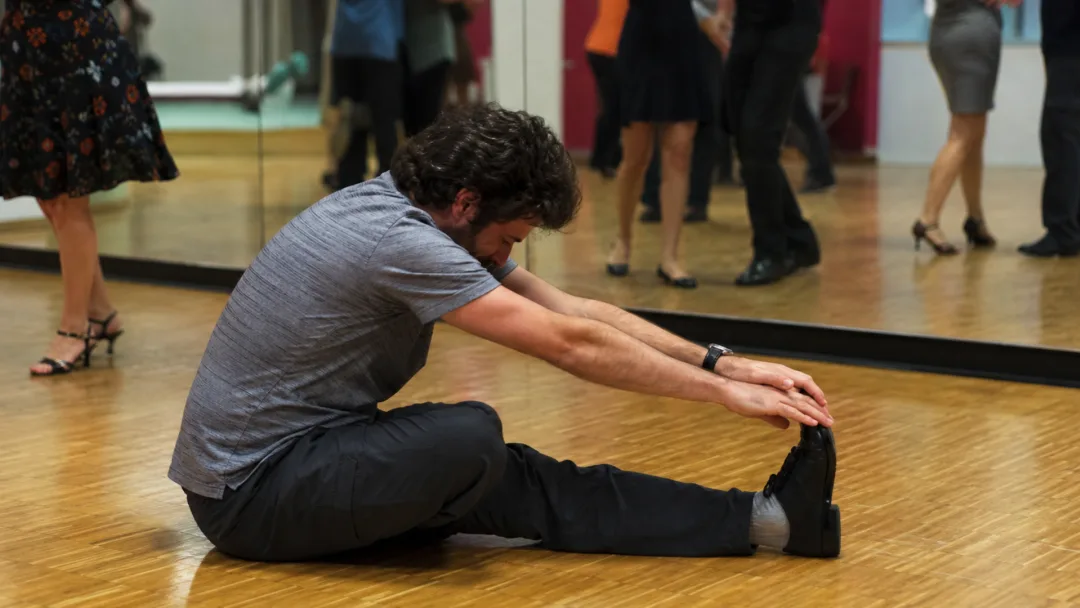
Cervical spine, 2-3 repetitions per side, hold for 30 seconds
This exercise stretches the lateral neck muscles and the upper trapezius. A relaxed neck is the absolute prerequisite for clean head isolations (head slides) in street dance.
Thoracic spine, 3 rounds, hold for 45 seconds each
By opening your chest, you stretch the often shortened pectoral muscles. This gives you the necessary freedom for explosive chest pops and fluid side-to-side movements of the upper body.
Entire spine, dynamic in the rhythm of your breath, 10 repetitions per side
This exercise mobilizes the entire spine in rotation. It helps you to twist your shoulders and hips independently of each other, which is especially important for Locking and Popping.
Hip flexors, 2 sets per side, hold for 40 seconds
With this, you stretch the hip flexors, which shorten due to sitting a lot in everyday life. Flexible hip flexors are essential for tilting the pelvis forward and backward in isolation.
Lateral core muscles, 3 sets per side, hold for 30 seconds
This stretch opens the flanks and the lateral core muscles. It allows you to shift your rib cage extremely far to the right and left, without moving your hips.
Put your new flexibility into practice in the right course.
Hip HopLimbach-Oberfrohna · Germany
HipHop 11 - 13 JahreFriday · 15:45 · Nov 13
Limbach-Oberfrohna
Hip HopLimbach-Oberfrohna · Germany
Hip Hop ab 14 JahreFriday · 15:45 · Nov 13
Limbach-Oberfrohna
StreetdanceBurgstädt · Germany
Videoclip Teens 11-13 JahreMonday · 16:50 · Nov 16
Burgstädt
If you really want to shine in street dance, there is no way around precise isolations. When the chest moves independently of the hips or the head seems to glide along a horizontal line, it looks effortless to the viewer. However, there is no secret behind this, just targeted mobilization. Only when the surrounding musculature is elastic enough can individual joints move in isolation from one another. A stiff neck immediately blocks any head movement, and shortened chest muscles make clean chest pops impossible. That is why targeted stretching for street dance is the key to freeing your joints from the shackles of everyday life.
Before you start the exercises, a proper warm-up street dance is mandatory. A short, dynamic bounce gets your circulation going and prepares your muscles for stretching. Avoid going into a maximum stretch while cold, as this increases the risk of injury and reduces muscle tension too much. During the exercises, focus entirely on the stretching stimuli in the target areas and breathe deeply and evenly into the stretch. This signals to your nervous system that it can release the blockages and allow for the new range of motion.
For street dance, a combination of dynamic stretching before dancing and static stretching after the session is best. Before training, you actively mobilize your joints, and after training, you stretch the worked muscles statically for more flexibility.
You will often notice initial progress in your mobility after just two to three weeks if you perform the exercises three times a week. However, for permanently fluid isolations, continuous training over several months is necessary.
No, you do not need to be able to do the splits. In street dance, it is primarily about flexibility and mobility in the upper body, shoulders, and hips to execute the typical isolations cleanly.
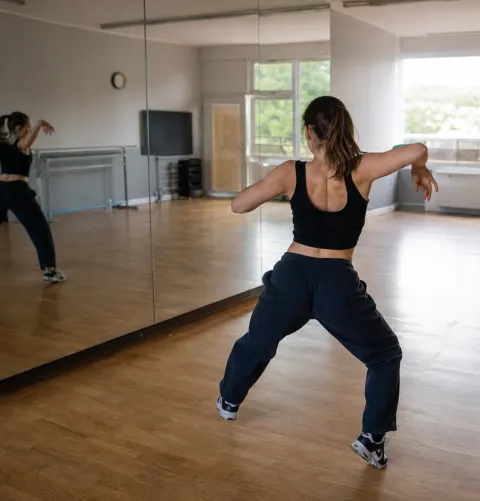 Learn street dance styles: Basics for Popping, Locking, and House
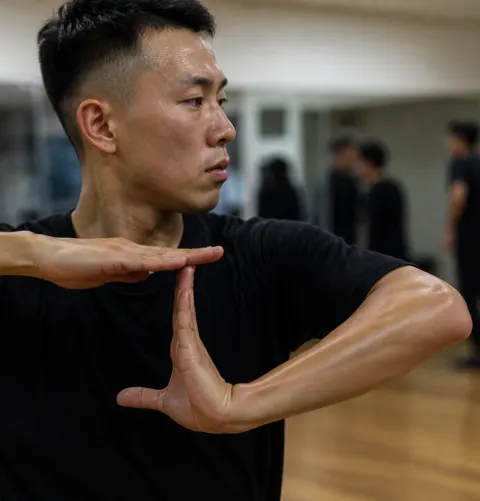 Learn Tutting: Create geometric shapes with your arms and hands
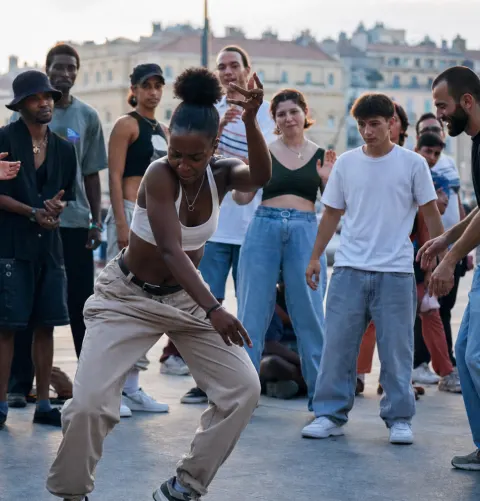 Learn Hip Hop Bounce: The right technique for your groove
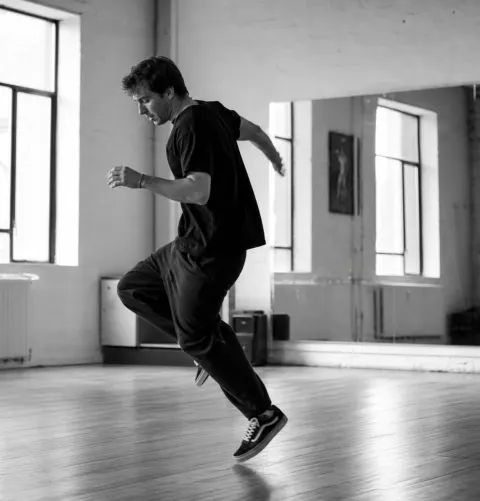 Learn the Running Man: A guide to the iconic move
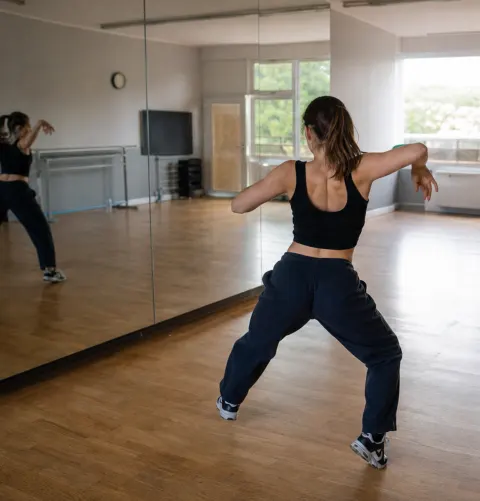 Popping vs. Locking: Comparing the Streetdance Classics
 Which street dance style suits you? Take the quiz
 House Dance Basics: Jacking and Lofting explained