Find your crew on udansa
Find like-minded people on udansa who share your passion for street dance, and start your next dance project today.

By Mary De LucaUpdated
Find like-minded people on udansa who share your passion for street dance, and start your next dance project today.
Starting your own dance group is an exciting adventure. With the right organization, a loose collection of dancers turns into a solid community that is ready for the street and the stage.
Building your own street dance group means far more than just meeting up weekly and playing music. The success of a crew stands and falls with a clear shared vision and reliable structures. Before the first steps are danced in the training room, the organizational course must be set. Anyone wanting to start their own crew should think about role distribution, training times, and long-term goals from the very beginning. Are you dancing just for the joy of movement, or do you want to present yourselves on regional stages?
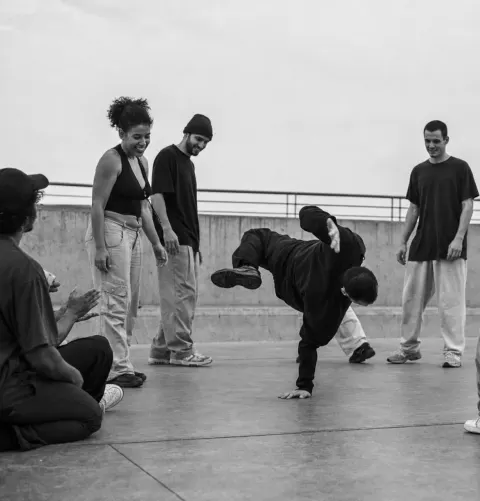
Solid dance crew organization takes the pressure out of everyday training and ensures that all members can focus on what matters most: the dance. Distinguishing yourself from other formations is important here. While starting a breakdance crew often focuses on individual acrobatic performances, the classic hip-hop crew thrives on synchronized energy and a shared groove. Use platforms like udansa to specifically search for dancers who bring exactly this energy and share your passion for urban dance styles.
Formulate precisely where the journey should lead. Clarify with the founding members whether you want to perform shows, participate in championships, or simply train together on a weekly basis.
Search specifically for dancers who share your level and attitude. Use your personal network, social media, or the community search on udansa to find like-minded people.
Secure a reliable place for your sessions. Ask local youth centers, schools, sports clubs, or dance studios about available capacity for regular practice times.
Distribute the organizational tasks among several people. Determine fixed responsibles for the music, room coordination, finances, and external communication.
Set a fixed framework for your rehearsals. Agree on clear rules for punctuality and cancellations so that every training session can be used efficiently.
Find the right course to strengthen your basics and make new contacts for your crew.
StreetdanceBurgstädt · Germany
Videoclip Teens 11-13 JahreMonday · 16:50 · Nov 9
Burgstädt
StreetdanceBurgstädt · Germany
Videoclip Teens ab 16 JahreMonday · 17:50 · Nov 9
Burgstädt
StreetdanceLimbach-Oberfrohna · Germany
Videoclip Teens 11-13 JahreTuesday · 18:35 · Nov 10
Limbach-Oberfrohna
How to make it work
This is holding you back
Preparation
Arrival
During
For starting a recreational crew, four to six dancers are completely sufficient. This group size is easy to coordinate and allows for personal, intensive training without a large organizational effort.
A dedicated training room is ideal, but not a must for the beginning. Youth centers, schools, gyms, or in summer even smooth outdoor surfaces in the park often offer inexpensive or free training opportunities.
Conflicts are best resolved through open communication and established rules. A short weekly feedback session after training helps to clear up small disagreements immediately, before they burden the group dynamics.
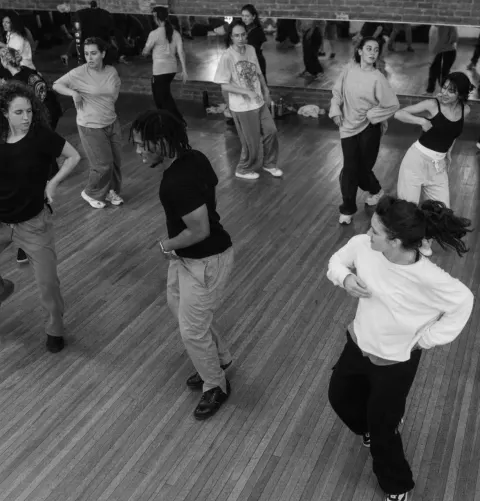 Find a Hip Hop dance class: From basics to your crew
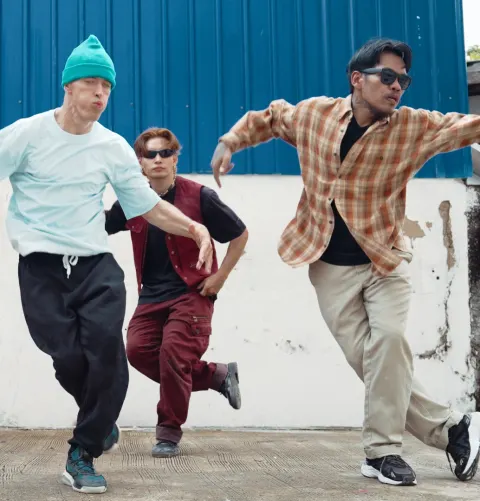 Hip-Hop choreography mistakes: The 7 biggest blunders
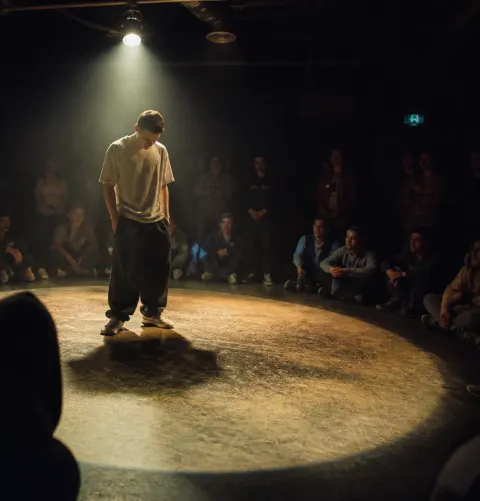 Preparing for your Hip-Hop performance: How to nail the show stress-free
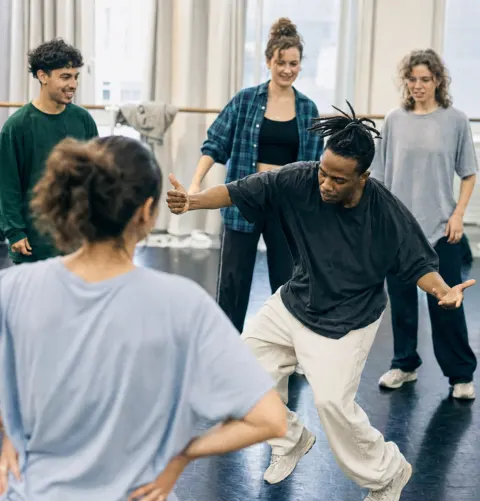 Hip-Hop Dancewear Trends: Style and Function
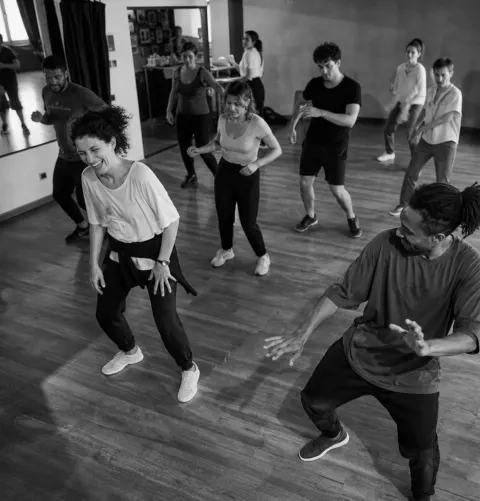 Hip-Hop for adult beginners: Your way to the dance floor
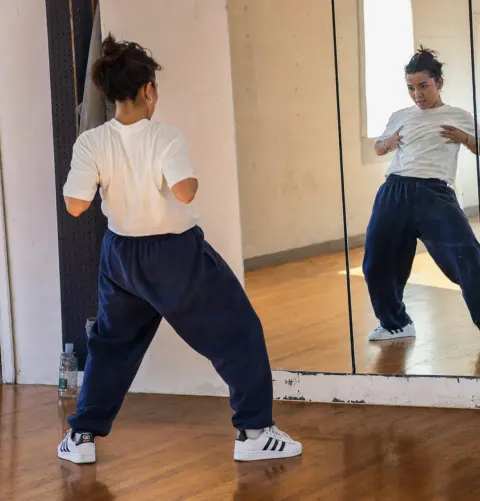 Improve your Hip-Hop body control: Tips for isolations
 Find a Hip-Hop community: How to join the scene