

Find Kizomba enthusiasts near you
Create your free profile on udansa in just a few steps. Here, you will meet other singles and dance enthusiasts from your region who, just like you, want to experience Kizomba without a fixed partner.

By Mary De LucaUpdated

Create your free profile on udansa in just a few steps. Here, you will meet other singles and dance enthusiasts from your region who, just like you, want to experience Kizomba without a fixed partner.
Kizomba thrives on the connection in the moment. If you are entering the scene as a single, you do not need a permanent partner, just a bit of courage and the right strategy for your first steps on the dance floor.
Socials are informal dance events in the Kizomba scene, where the focus is on dancing together freely with changing partners. Unlike formal parties, they often start in the afternoon or early evening and offer a very relaxed atmosphere.
The idea of attending a Kizomba party without a fixed partner often makes beginners nervous at first. After all, Kizomba is known for its intense, close connection. But the worry of being left standing on the sidelines as a single is unfounded. In hardly any other partner dance scene is it so common, and even encouraged, to show up without a fixed partner. The events, known as socials, are designed specifically so that partners are constantly rotated.
If you want to dance Kizomba as a single, it is best to take advantage of the dynamics on site. Because the music is fluid and the atmosphere is usually very familiar, making connections happens almost by itself. It helps to arrive early in the evening, when the dance floor is not yet crowded. At this time, the inhibition threshold for asking someone to dance is lowest on both sides, and you can make your first contacts in peace.

To gain a foothold in the local community, the internet is the fastest way to pave the path. Instead of hoping to meet like-minded people by chance in everyday life, you can search specifically online. On udansa, people connect every day who want to learn Kizomba without a partner or are specifically looking for companions for upcoming socials. An honest profile that describes your dance experience and your favorite events works wonders.
In addition to the online search, the dance schools themselves offer excellent entry points. Many schools organize short taster sessions before the actual parties, so-called pre-party workshops. These half-hour crash courses are the best opportunity to make contacts easily. Since everyone participating here constantly changes partners, you will already know the faces and names of the other singles before the first official song of the party.
This is how
Don't do this
At Kizomba socials, nobody dances with the same partner all evening. If you come alone, you will usually go home with a handful of new friends.
As soon as you are on the dance floor, your body language determines how quickly you will find a partner. Anyone standing in the darkest corner of the bar with their arms crossed, staring at their smartphone, signals disinterest. Instead, stand close to the edge of the dance floor, maintain eye contact with other dancers, and show with a slight smile that you are open to being asked to dance.
Don't forget that even experienced dancers once started small. In the Kizomba scene, respect is a top priority. If you stick to the basic etiquette that you can read up on in the Kizomba etiquette guide, you will quickly become a welcome guest at any social. Feel free to be proactive and kindly ask others to dance yourself.
The active role in the Kizomba flow
When leading, you take responsibility for the direction and safety on the dance floor. You learn to transmit your signals clearly, yet gently, without applying pressure.
The sensitive role of surrender
When following, you fully engage with the impulses of your partner. You sharpen your perception for minimal weight shifts and enjoy the pure movement.
No, that is absolutely not necessary. Kizomba is a social dance where changing partners is an integral part of the culture, so almost all dancers come to the events alone.
Use specialized community platforms like udansa to specifically search for other Kizomba enthusiasts in your city. Local Facebook groups or WhatsApp communities of dance schools are also good places to start.
Attend the pre-party workshop that often takes place before the actual social. There, you will rotate in a circle, and you will get to know the other guests quite automatically and without any inhibitions.
Absolutely, that is actually a big advantage. If you dance with many different people from the beginning, you will develop a much better sense for leading and following than with exclusive training with just one person.
 Kizomba Etiquette: Rules for respectful dancingDance safely and respectfully: our udansa Kizomba etiquette guide shows you the most important unwritten rules for a harmonious time at every social.
 Find a Kizomba dance partner: Your guide to the scene and socialsFind your perfect Kizomba dance partner and dive deep into the global community. With our guide, you will be perfectly prepared for your next social and your first festival.Find a Kizomba dance partner: Your guide to the scene and socialsFind your perfect Kizomba dance partner and dive deep into the global community. With our guide, you will be perfectly prepared for your next social and your first festival.
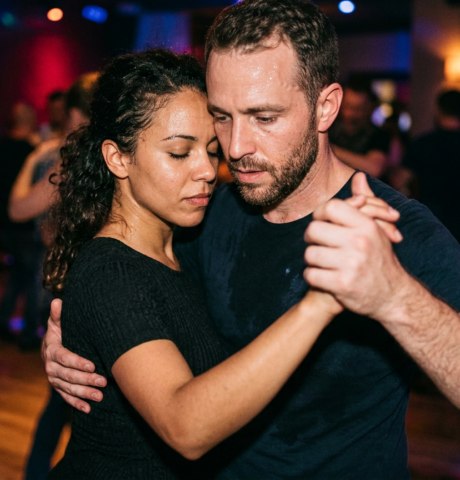 Switching partners in Kizomba: Why socials are so importantSwitching partners at Kizomba socials and festivals is the key to true dancing flexibility. Learn why dancing with strangers improves your technique and how udansa helps you find partners.
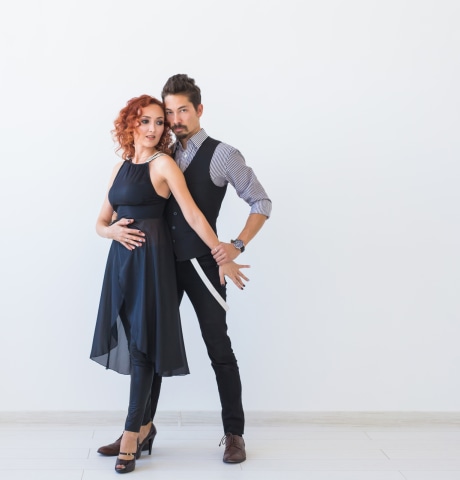 Kizomba Outfits and Shoes: The Style Guide for SocialsThe right style for a Kizomba social: Learn in our guide how to ensure the perfect connection on the dance floor with the right clothing and shoes.
 Finding a Kizomba dance partner for festivals: A guideDo you want to travel to an international Kizomba festival but don't have a companion yet? Learn how to find the perfect dance partner in this guide.
 Hygiene in Kizomba: How to stay fresh in a close danceKizomba is a dance full of closeness and intensity. With our practical hygiene tips, you will stay fresh even at hot parties and be a welcome dance partner.Kizomba Etiquette: Rules for respectful dancingDance safely and respectfully: our udansa Kizomba etiquette guide shows you the most important unwritten rules for a harmonious time at every social.
 The best Kizomba festivals worldwide for your travel plansReady for the big dance floor? Discover the most important Kizomba festivals worldwide, where you can meet the international community and take your dancing to the next level.