
Find your Kizomba dance partner on udansa
On udansa connect, you will meet like-minded people in your area who share your passion for Kizomba and want to conquer the dance floors with you.



By Bernhard De LucaUpdated
On udansa connect, you will meet like-minded people in your area who share your passion for Kizomba and want to conquer the dance floors with you.
Kizomba fascinates with its deep connection and fluid movements. To ensure that dancing at socials becomes a positive experience for everyone involved, respectful behavior and clear rules play a crucial role.
Kizomba social dance etiquette refers to the unwritten rules of conduct and the etiquette that ensure a respectful, safe, and pleasant atmosphere at Kizomba dance parties. They govern how to handle physical closeness, navigation on the dance floor, and social interaction.
Kizomba is a dance of subtle nuances, which thrives on an intense connection between the dancers. Because partners get very close in the upper body, unwritten rules apply on the dance floor that go far beyond step technique. A successful evening at a Kizomba social dance is based on mindfulness, mutual respect, and a clear awareness of boundaries. Anyone who understands Kizomba etiquette ensures that both sides feel safe and comfortable at all times within the close dance frame.
Respectful interaction begins even before the first step. The invitation is ideally made with eye contact and a friendly smile. Since physical proximity in Kizomba is high, a "no" must be accepted without justification. On the dance floor itself, it is important to respect the other person's personal space. The close embrace is a purely dance-related connection and never an invitation for private advances. Anyone who respects this boundary builds trust and lays the foundation for a harmonious dance.
On a crowded dance floor, orientation is crucial to avoid collisions. Unlike dances that cover a lot of space, Kizomba couples usually move in a small area, but even here, there is a line of dance that moves counter-clockwise. The leader is responsible for the couple's safety and must check the space behind them. Wild, uncontrolled movements or sudden changes in direction without looking back put other couples on the dance floor at risk.
The Kizomba steps should always be adapted to the available space. If the dance floor is full, dance more compactly and avoid expansive poses. Furthermore, the dance floor is exclusively for dancing. Extensive conversations, clearing up misunderstandings, or explaining steps belong on the edge of the dance floor. Anyone who stays in the flow and is considerate of the couples in the vicinity contributes to a relaxed and fluid atmosphere for everyone involved.
Correct
Wrong
The close connection in Kizomba is based entirely on trust. Only those who respect the boundaries of their partner create the space for a truly magical dance.
Respectful behavior while dancing Kizomba is especially evident in how you handle mistakes. If a lead fails or the rhythm falters, it is no reason for frustration or even lectures on the dance floor. A quick smile or a quiet apology is completely sufficient to restore the connection. Feedback or unsolicited instruction during a party are taboo and take away the lightheartedness from your dance partner.
After the song ends, it is good etiquette to thank your partner warmly. A short, honest word of appreciation concludes the shared moment. Anyone who internalizes these simple rules will quickly realize that getting started in the scene is easy. For everyone who wants to dive deeper into partner dance, the comprehensive guide to learning Kizomba offers excellent orientation to understand the basics of music and movement in detail.
Responsibility and spatial awareness
The leader guides the couple safely across the floor, protects the partner from collisions, and adapts the movements flexibly to the rhythm and the available space.
Actively shaping the connection
The follower engages with the lead, maintains their own body tension, and trusts the navigation without anticipating the leader's movements.
A respectful no is accepted without discussion in Kizomba. You do not have to justify a refusal, and the other person should accept this decision without resentment or prying.
Corrections on the dance floor are impolite, as they disrupt the flow of the dance and can make your partner feel insecure. Save feedback for dance classes and focus on the shared joy of dancing during a social.
Due to the very close dance posture, fresh body hygiene is essential. Use deodorant, take chewing gum or mints for fresh breath, and bring a spare t-shirt for long dance evenings if necessary.
When it gets crowded, adjust your steps and dance more compactly on the spot. Avoid expansive wave movements or steps backward without first making sure that the space behind you is clear.
Find the right course and learn the basics for your next social.
Couple danceLimbach-Oberfrohna · Germany
Silberkurs für PaareSunday · 16:15 · Oct 25 - Nov 15
Limbach-Oberfrohna
Couple danceLimbach-Oberfrohna · Germany
PaartanzkreisSunday · 16:30 · Oct 25
Limbach-Oberfrohna
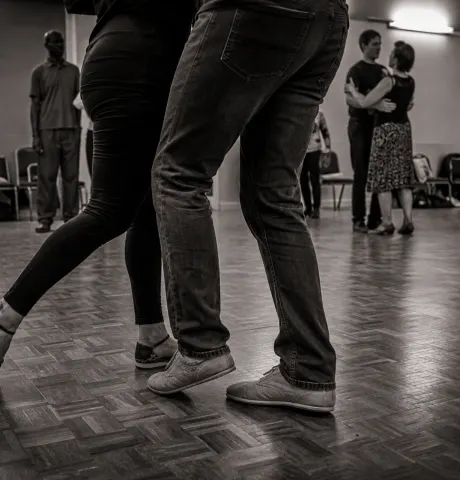 Learn Kizomba steps: An easy start for beginnersGetting started is easy: With our practical guide, you will learn the most important Kizomba basic steps and the correct posture for a harmonious dance experience.
 Learn to dance Kizomba: The guide to the partner danceKizomba combines African rhythms with a deep, emotional connection in partner dance. Learn how to master this fascinating dance style from scratch.
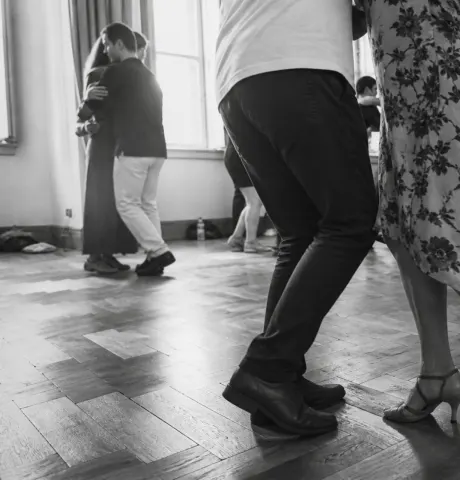 Find a Kizomba dance partner: Your guide to the scene and socialsFind your perfect Kizomba dance partner and dive deep into the global community. With our guide, you will be perfectly prepared for your next social and your first festival.
 The best Kizomba festivals worldwide for your travel plansReady for the big dance floor? Discover the most important Kizomba festivals worldwide, where you can meet the international community and take your dancing to the next level.
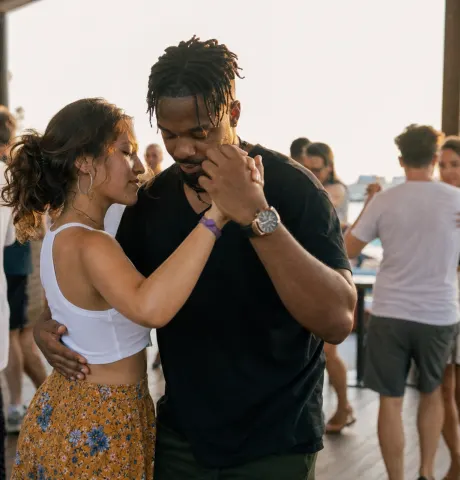 Closeness and distance in Kizomba: Boundaries on the dance floorKizomba fascinates with its intense closeness, but it also requires a great deal of sensitivity. Our guide shows you how to respect boundaries and build a harmonious connection.
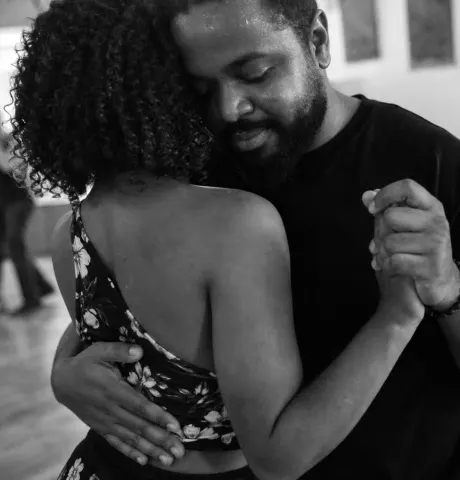 Your first Kizomba party: preparation for beginnersIs your first Kizomba party coming up? Don't worry: with the right mental and practical preparation, your first social will be a relaxed and wonderful experience.
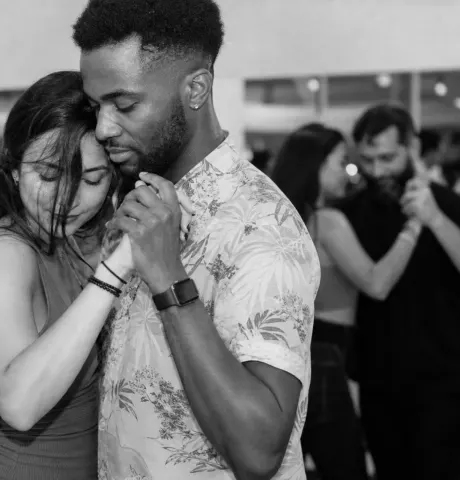 Kizomba Trends 2026: How the global scene is evolvingThe global Kizomba scene is evolving rapidly. We show you the most important Kizomba trends for 2026 and how they are changing dance floors.
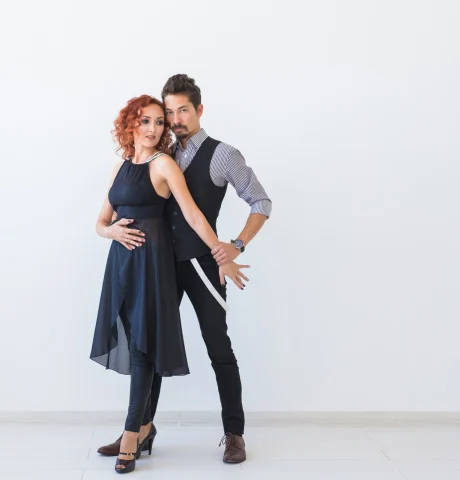 Dancing Kizomba as a single: Finding your way into the sceneWant to dance Kizomba but don't have a regular partner? Our guide shows you how to easily connect with others at socials and conquer the scene as a single.
 Switching partners in Kizomba: Why socials are so importantSwitching partners at Kizomba socials and festivals is the key to true dancing flexibility. Learn why dancing with strangers improves your technique and how udansa helps you find partners.