
Find your dance connection
On udansa, you will find like-minded people who want to take their first steps with you, as well as the right beginner courses in your area.



By Bernhard De LucaUpdated
On udansa, you will find like-minded people who want to take their first steps with you, as well as the right beginner courses in your area.
Kizomba fascinates with its gentle, fluid movements and the deep connection between partners. Getting started is surprisingly easy if you understand the basic technique correctly from the beginning.
The tap is a step without a weight change, where the foot only lightly touches the floor. In Kizomba, it serves to keep the rhythm and to have the foot free for the next step in any direction.
Kizomba is not a dance of fast spins or spectacular lifts. The magic of this Angolan dance lies in the subtle, almost invisible connection between the dancers. To successfully learn Kizomba steps, you must first let go of the idea that your feet do the main work. In Kizomba, the movement originates from the upper body and the pelvis. The steps follow this weight transfer quite naturally.
For beginners, the unfamiliar closeness is often the first hurdle. While we usually maintain a certain distance in ballroom dancing or Salsa, the classic Kizomba posture is based on close chest-to-chest contact. However, this closeness is by no means intrusive, but purely functional: it allows the follower to feel every weight transfer of the leader immediately and without delay. If you engage in this connection, you will notice how effortless the movements on the dance floor can feel.
The Kizomba basic step exists in various versions that are combined with each other on the dance floor. The most important foundation for beginners is the so-called three-step, also known as "Three Steps". Here, you take three steps in one direction, with the last step being a tap without a weight change. This tap is the secret of the Kizomba technique: it allows you to change direction immediately, as your free foot remains unweighted.
A detailed Kizomba step-by-step guide for the basic side step looks like this: the leader starts with the left foot to the left, pulls the right foot in, and places the left foot to the left again, followed by a tap with the right foot. The follower mirrors this movement exactly, starting with the right foot to the right. In addition to the side step, there is the basic step on the spot (Basic 1) and the basic step forward and backward (Basic 2). These simple Kizomba figures for beginners form the foundation upon which all more complex patterns are built later.
Like this
Don't do this
Kizomba is like walking with your eyes closed: you do not need to see where you are going, you just need to feel your partner.
When you start dancing, you often focus too much on your feet and forget the rest of your body. However, a stable Kizomba posture is the prerequisite for your partner's signals to be received at all. Keep your upper body upright, but relaxed. Your shoulders should remain low and your knees slightly bent to build an elastic connection to the floor. The leader places their right arm around the follower's back, while the follower rests their left arm relaxed on the leader's shoulder.
A common mistake among beginners is so-called "clinging" or the opposite, completely slack body tension. Try to maintain a comfortable basic tension in your core. If you are preparing for an event, a look at the general dance etiquette in Munich or other cities will also help you feel comfortable and confident on the dance floor right from the start. With a clear posture and your first confident steps, you are well equipped for your first socials.
Providing security and direction
The leader sets the direction and the tempo by precisely shifting their own body weight. They create a secure frame and lead exclusively from the upper body, never by pulling or pushing with the arms.
Giving up weight and feeling
The follower reacts to the partner's weight shifts and remains in constant contact with their chest. By letting go of control, a harmonious, fluid dance flow is created without actively thinking about the steps.
The Kizomba basic step consists of simple step sequences, usually in a triple-step rhythm. It is danced either on the spot, sideways, or forwards and backwards, and often ends with a weightless tap.
No, Kizomba is comparatively easy to learn for beginners. Since the steps are natural and modeled after normal walking, the real challenge lies more in maintaining the close connection with your partner.
For your first steps, comfortable clothing that allows freedom of movement is suitable. Your shoes should have a smooth sole so that turns are easy to perform, and flat shoes or low heels are ideal for beginners.
Find the right beginner course and learn the steps from scratch.
Couple danceLimbach-Oberfrohna · Germany
Silberkurs für PaareSunday · 16:15 · Oct 25 - Nov 15
Limbach-Oberfrohna
Couple danceLimbach-Oberfrohna · Germany
PaartanzkreisSunday · 16:30 · Oct 25
Limbach-Oberfrohna
 Learning the Kizomba basic step: A precise guideEvery beginning is easy: With our precise guide to the Kizomba basic step, you are guaranteed to get started with this fascinating partner dance, even without prior experience.
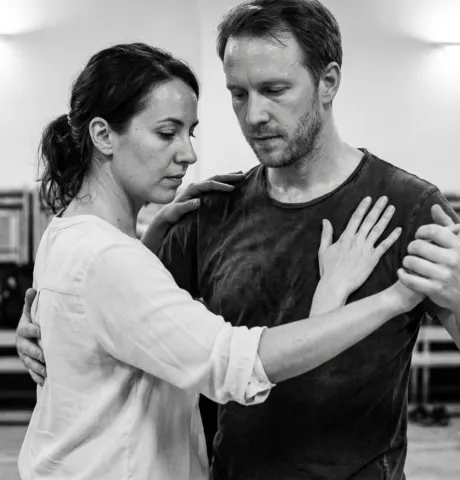 Kizomba posture: How to master the perfect connection and dance frameThe right Kizomba posture is the foundation for a harmonious connection on the dance floor. Learn how to dance with stability and fluidity through correct upper body contact.
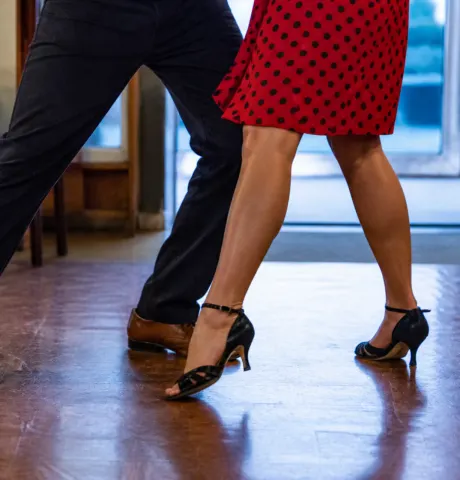 Kizomba Side Step: Guide to Weight TransferMaster the Kizomba side step with our simple guide. Learn how to shift your weight smoothly and bring more stability to your dance.
 Kizomba for beginners: The 5 most common mistakes in the basicsWhen learning Kizomba, you often stumble over the same hurdles at the beginning. This overview shows you the five typical beginner mistakes and how to correct them immediately.
 Kizomba Level Test: Do you already master the basics?Do you really master the Kizomba basics already, or should you keep working on your foundation? Take our quick level test now and find out.
 Leading and following in Kizomba: The art of weight transferDiscover how leading and following in Kizomba works through subtle chest weight transfers and how you can maintain a perfect connection.
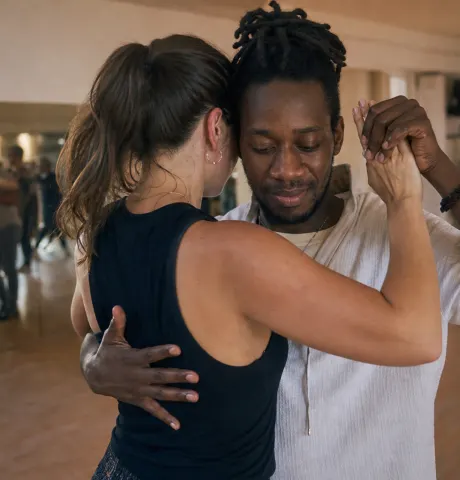 Learn Kizomba turns: Simple quarter turns for beginnersLearn how to execute simple quarter turns in Kizomba with control and harmony, without losing the close connection to your partner.
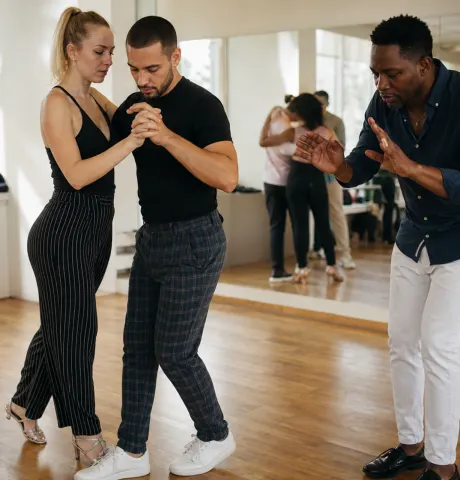 Learn to hear the Kizomba beat: How to always stay on rhythmLearning to hear the Kizomba beat is the key to smooth steps. Find out how to recognize the rhythm in class immediately and make your dancing harmonious.
 The 5 essential Kizomba moves for beginnersPrepare perfectly for your first Kizomba social. These five simple basic figures give you confidence on the dance floor and strengthen your connection as a couple.
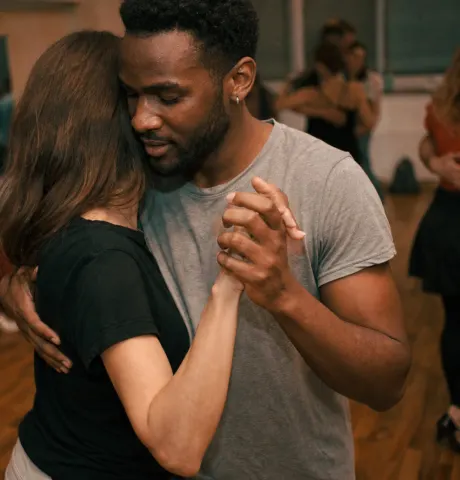 Kizomba floorcraft: Mastering space in partner danceKizomba thrives on connection, not large steps. In this guide, learn how to optimize your space on the dance floor and shine even in the tightest spots.
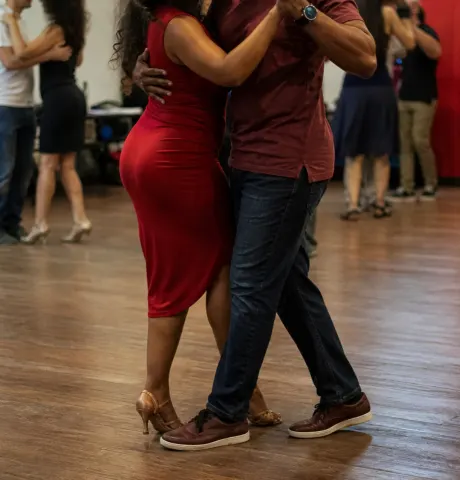 Learn Kizomba Saida: Step-by-step guide for couplesThe Saida is the heart of Kizomba. With our simple step-by-step guide, leaders and followers will learn how to perfectly harmonize this elegant lunge as a couple.
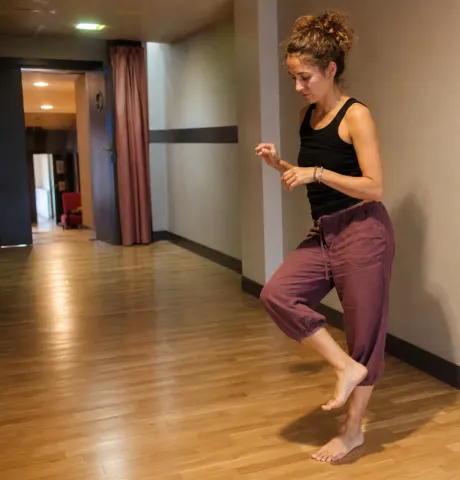 Train your Kizomba balance: 5 solo exercises for more stable stepsDo you want to train your Kizomba balance? Discover five effective solo exercises that improve your stability and give you more confidence on the dance floor.
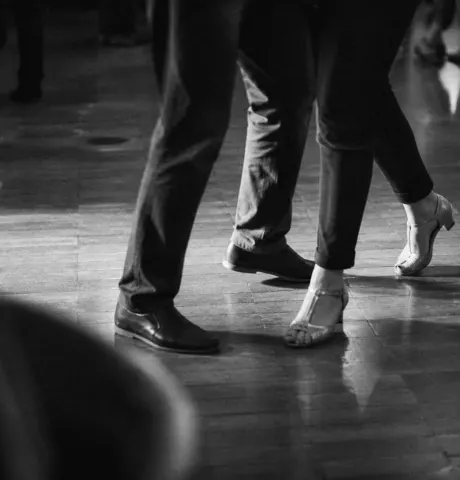 Kizomba footwork: How rolling your feet supports the close embraceLearn how to make your steps smoother with the right Kizomba footwork and fluid rolling motion. This guide shows you the path to perfect legwork.
 Kizomba classes 2026: What's changing for beginnersKizomba learning trends 2026 shows you how modern dance schools are shaping the beginner experience today. Learn all about the latest teaching approaches for quick success on the dance floor.
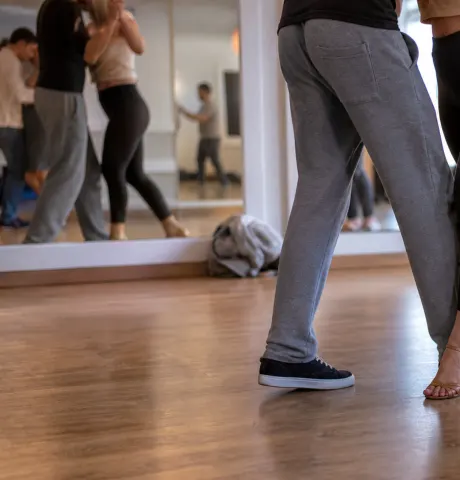 Kizomba to fast and slow music: adjusting your stepsFind out how to flexibly adapt your Kizomba steps to any music tempo without losing the basic step. Perfect for beginners!