Find your Kizomba partner on udansa
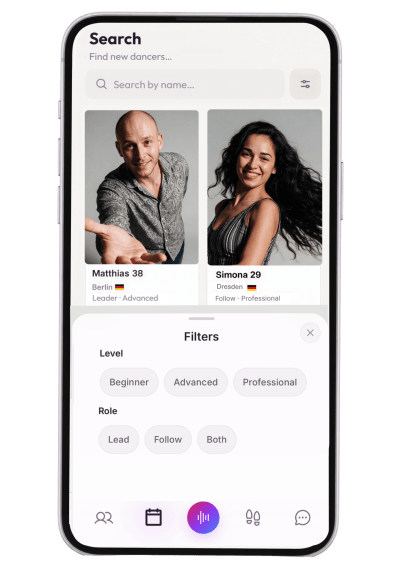
On udansa, you will find dance enthusiasts in your area who want to take their Kizomba steps to the next level with you. Connect now and try out the Saida together at the next social.

The Saida brings elegance and dynamics to your Kizomba. With this simple guide, you will master the elegant lunge as a couple, without any stumbling or stress on the dance floor.
The Saida, which simply means exit in Portuguese, is one of the most important and beautiful foundations in Kizomba. In this figure, one of the partners leaves the shared track, so that you move side by side for a moment instead of in front of each other. It breaks up the closed dance posture and opens up space for gentle turns and changes of direction. To dance the Saida flawlessly, it is not about spectacular embellishments, but about clean technique in weight transfer and a stable dance frame. Anyone who masters the Saida understands the interplay of leading and following on a whole new level.
For an easy start, it is worth consolidating the basics beforehand. If you still feel unsure, our guide on Kizomba steps for beginners will help you solidify the foundation. The Saida builds directly on that and brings dynamics to your dance flow. It is important that the upper body contact remains, while the feet move past each other on parallel tracks. This creates the typical, fluid Kizomba connection that makes this dance so special.
Practice the Saida in slow motion at first and without music. Focus only on how your upper bodies move in relation to each other before you increase the tempo.
The leader takes a step back to the left, slightly opening their upper body to the side. This clears the track directly in front of them for the partner.
The follower uses the open space and takes a step straight forward, directly past the leader's right side, without moving aside.
The leader places their right foot sideways behind the follower's left foot, while the follower takes their second forward step. The bodies remain close together.
The leader rotates his upper body back to the starting position, thereby gently guiding the follower back onto his own track.
Both partners finish the step with a clean weight transfer and switch seamlessly back to the familiar Kizomba basic step.
In Kizomba, the Saida is a step where partners offset their tracks. Instead of dancing in front of each other, they move past one another on parallel paths for a moment.
Learn the Saida and many other steps directly from experienced instructors in your area.
 Learn Kizomba steps: An easy start for beginnersGetting started is easy: With our practical guide, you will learn the most important Kizomba basic steps and the correct posture for a harmonious dance experience.
 Train your Kizomba balance: 5 solo exercises for more stable stepsDo you want to train your Kizomba balance? Discover five effective solo exercises that improve your stability and give you more confidence on the dance floor.
 Kizomba footwork: How rolling your feet supports the close embraceLearn how to make your steps smoother with the right Kizomba footwork and fluid rolling motion. This guide shows you the path to perfect legwork.
 Kizomba classes 2026: What's changing for beginnersKizomba learning trends 2026 shows you how modern dance schools are shaping the beginner experience today. Learn all about the latest teaching approaches for quick success on the dance floor.
 Kizomba to fast and slow music: adjusting your stepsFind out how to flexibly adapt your Kizomba steps to any music tempo without losing the basic step. Perfect for beginners!
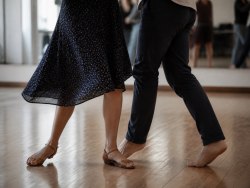 Learning the Kizomba basic step: A precise guideEvery beginning is easy: With our precise guide to the Kizomba basic step, you are guaranteed to get started with this fascinating partner dance, even without prior experience.
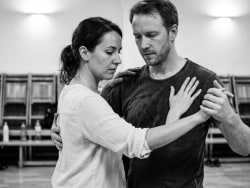 Kizomba posture: How to master the perfect connection and dance frameThe right Kizomba posture is the foundation for a harmonious connection on the dance floor. Learn how to dance with stability and fluidity through correct upper body contact.