

Find your dance connection
On udansa you can find like-minded people in your region and the right courses to take your footwork to the next level.


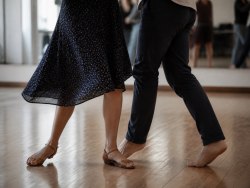
The fascination of Kizomba lies in its apparent weightlessness. This suppleness does not begin in the upper body, but at the soles of your feet: only those who roll their feet softly glide harmoniously across the dance floor.
Kizomba footwork rolling describes the conscious, fluid rolling of the feet from the heel to the ball and vice versa. This technique cushions the steps and creates the characteristic softness in the flow of the dance.
Kizomba is a dance of subtle nuances, where the magic lies in the seemingly effortless connection between the dancers. While many beginners initially believe that the fascination comes primarily from hip movements, the real secret lies much deeper, right on the floor. The correct Kizomba footwork technique forms the foundation for the entire flow of the dance. Without a controlled placement of the feet, the axis falters and the connection within the pair becomes restless. Those who learn how the feet work in Kizomba, on the other hand, create a natural softness that is transmitted through the entire body to the partner.
To understand the right basis, it is worth taking a look at the roots of the dance. Anyone interested in Kizomba history knows that the Angolan couple dance is characterized by a deep grounding. This grounding is not created by force, but by a very conscious, flat walk. Each step is placed on the dance floor in a controlled manner, which makes the movements appear fluid and extremely smooth. The feet maintain a minimal, sliding contact with the floor almost throughout, which ensures the necessary stability in every phase of the step.
The heart of a fluid movement is the conscious rolling motion. In Kizomba foot technique, the feet roll softly with every step to avoid harsh impacts in the body. When you step forward, you place your heel down gently first. From there, you roll the foot in a controlled manner over the outer edge to the balls of the feet and the tips of your toes. When stepping backward, the ball of the foot touches the ground first before the heel lowers in a controlled way. This principle ensures that your center of gravity never drops or rises abruptly during the transition between steps.
A common mistake is placing the entire foot flat on the floor, which leads to a stiff appearance and disrupts the subtle communication within the pair. When you let the Kizomba steps roll, you gain valuable milliseconds of control. This gained time allows you to react extremely sensitively to your partner's weight shifts. The footwork becomes elastic and absorbs every movement gently, so the flow of the dance never comes to a halt.
It is best to practice rolling your feet barefoot or in socks at home in front of a mirror. Without shoes, you feel the contact with the floor much more intensely and develop a sense for weight shifting more quickly.
If you don't feel the floor in Kizomba, you cannot build a real connection with your partner. The softness of the dance originates in the soles of your feet.
To permanently establish softness in your movements, a conscious weight transfer helps. Every step in Kizomba is only complete when the entire body weight has been fully transferred to the new standing leg. The free leg remains completely relaxed and ready for the next impulse. This clean separation prevents you from losing your balance between steps or unintentionally pulling your partner along.
To get started, it is recommended to internalize these movement sequences in solo training first. Focus entirely on the feeling under the soles of your feet before applying the technique in a pair. Anyone who masters the basics can later shine in partner dancing without having to worry about their feet. If you would like to delve deeper into the subject, you will find all the important basics for a harmonious dance style in the comprehensive Kizomba Guide.
The soft heel strike
When walking forward, place your heel down extremely gently first. From there, roll your foot in a controlled manner over the sole to the toes to ensure a fluid transition.
The soft ball landing
When moving backwards, the ball of the foot lands gently on the floor first. The heel is then lowered in a controlled manner, which prevents the body from suddenly dropping.
Kizomba steps look smooth when you consciously roll your feet with every step and keep your center of gravity low. Avoid placing your feet flat, and glide flat across the floor instead.
Find the right dance school now to refine your footwork in a course.
 The history of Kizomba: From its Angolan roots to a global danceDive into the history of Kizomba. Learn how Angolan traditions and Caribbean beats combined to create a global dance phenomenon.
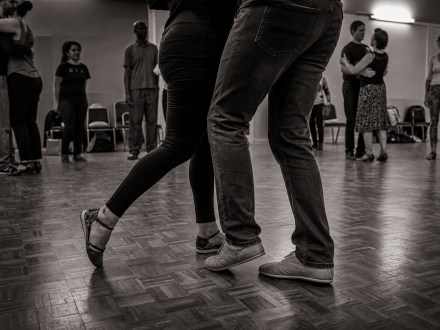 Learn Kizomba steps: An easy start for beginnersGetting started is easy: With our practical guide, you will learn the most important Kizomba basic steps and the correct posture for a harmonious dance experience.
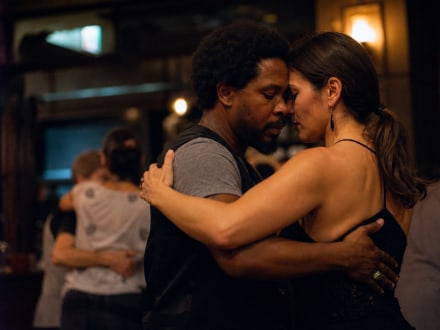 Learn to dance Kizomba: The guide to the partner danceKizomba combines African rhythms with a deep, emotional connection in partner dance. Learn how to master this fascinating dance style from scratch.
 Learn Kizomba steps: An easy start for beginnersGetting started is easy: With our practical guide, you will learn the most important Kizomba basic steps and the correct posture for a harmonious dance experience.
 Kizomba classes 2026: What's changing for beginnersKizomba learning trends 2026 shows you how modern dance schools are shaping the beginner experience today. Learn all about the latest teaching approaches for quick success on the dance floor.
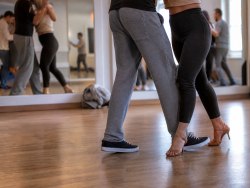 Kizomba to fast and slow music: adjusting your stepsFind out how to flexibly adapt your Kizomba steps to any music tempo without losing the basic step. Perfect for beginners!
 Learning the Kizomba basic step: A precise guideEvery beginning is easy: With our precise guide to the Kizomba basic step, you are guaranteed to get started with this fascinating partner dance, even without prior experience.
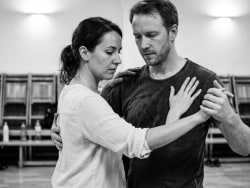 Kizomba posture: How to master the perfect connection and dance frameThe right Kizomba posture is the foundation for a harmonious connection on the dance floor. Learn how to dance with stability and fluidity through correct upper body contact.
 Kizomba Side Step: Guide to Weight TransferMaster the Kizomba side step with our simple guide. Learn how to shift your weight smoothly and bring more stability to your dance.
 Kizomba for beginners: The 5 most common mistakes in the basicsWhen learning Kizomba, you often stumble over the same hurdles at the beginning. This overview shows you the five typical beginner mistakes and how to correct them immediately.