
Find your rhythm with udansa
On udansa, you will find like-minded people who share your passion and discover the best events in your area. Sign up and become part of the global community.



By Mary De LucaUpdated
On udansa, you will find like-minded people who share your passion and discover the best events in your area. Sign up and become part of the global community.
Kizomba is much more than just a partner dance with close steps. Behind the warm sounds lies a fascinating journey through the culture of Angola, which tells a story of deep connection and global evolution.
Kizomba is an Angolan partner dance and music style, characterized by a close embrace, slow, flowing steps, and a distinctive, heavy bass rhythm. The term comes from the Kimbundu Bantu language and historically stands for a social gathering.
The roots of Kizomba are buried deep in the history of Angola, a country that was shaped by colonial influence and political change for decades. In the late 1970s and early 1980s, a new musical movement emerged in the capital, Luanda. Young people were looking for ways to express their cultural identity while processing modern influences. The term Kizomba comes from the Kimbundu language and simply means party or celebration. It was a response to the longing for community and joy in difficult times.
The Kizomba history is inextricably linked to the desire to wrap traditional African rhythms in a modern guise. On the streets and in the backyards of Luanda, the sounds of the ancestors blended with the new technical possibilities of music production. Anyone who dances Kizomba today feels this deep historical connection with every step. It is not just a dance, but a living piece of Angolan cultural history that has found its way from the suburbs of Luanda to the metropolises of the whole world.
To fully understand the development of Kizomba and its musical origins, you have to look at the Kizomba Berlin scene or other European centers where the dance is celebrated today. The musical foundation is formed by Semba, a traditional Angolan music style and partner dance, whose own history is closely linked to the country's identity. The Semba history is characterized by fast, cheerful steps and a humorous, often improvised way of dancing. When Caribbean Zouk music was imported to Angola in the 1980s, local musicians slowed down the tempo of Semba and mixed it with the synthetic, romantic sounds of Zouk.
From this fusion, the typical Kizomba rhythm emerged: a heavy, warm bass beat that forms the heart of the dance. In contrast to the often acrobatic Semba, the Kizomba origin is characterized by a closer embrace and a calmer, flowing movement. The Kizomba origin is therefore a fascinating example of transatlantic cultural exchange, in which African traditions and Caribbean modernity merged into something completely new.
Correct
Wrong
Kizomba is not a product of the music industry, but rather the emotional heritage of an entire generation in Angola that has matured over decades.
With the triumph of the dance in Europe, Kizomba culture also changed fundamentally. In countries like France and Portugal, a new movement developed from the traditional style, which is known today as Urban Kiz. While the traditional Kizomba style is based on circular movements, a soft, close connection in the upper body, and dancing on the beat, Urban Kiz uses linear step patterns. The music for this is strongly influenced by Hip-Hop, R&B, and electronic music, which is also reflected in a more distant posture and sudden changes in tempo.
This development often causes intense discussions about authenticity in the global community. Anyone who learns the basics in a Kizomba in Dresden course or at a social in another city quickly realizes how important it is to understand these differences. Both styles have their justification and fascinate in their own way, but they originate from different musical and cultural worlds. The ability to read the music and adapt the dance style accordingly distinguishes a versatile dancer.
The Angolan soul of dance
The traditional style focuses on a very close, heart-to-heart connection in the upper body. The movements are soft, fluid, and usually follow circular patterns on the dance floor, which are directly descended from Semba.
The urban evolution from Europe
This European development is based on linear movements and a greater distance between the partners. The music uses modern influences like Hip-Hop and Dubstep, which leads to abrupt stops and changes in tempo.
Kizomba originated in the late 1970s and early 1980s in Luanda, the capital of Angola. Young musicians there combined traditional rhythms with modern influences.
Kizomba is based on a slower, heavy beat with a strong Zouk influence and is danced very closely. Semba, on the other hand, is significantly faster, more cheerful, and often includes playful, acrobatic steps.
Urban Kiz originated in Europe and uses linear steps as well as a more distant posture. The music is more electronic, whereas traditional Kizomba is danced in a circular motion and is based on traditional instruments.
Find the right course and dive into the world of Angolan rhythms.
Couple danceLimbach-Oberfrohna · Germany
Silberkurs für PaareSunday · 16:15 · Oct 25 - Nov 15
Limbach-Oberfrohna
Couple danceLimbach-Oberfrohna · Germany
PaartanzkreisSunday · 16:30 · Oct 25
Limbach-Oberfrohna
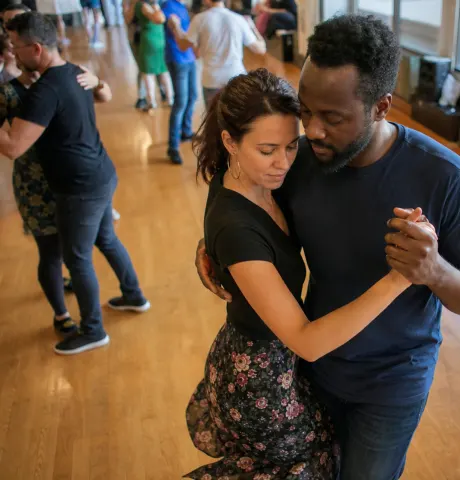 Kizomba in Berlin: Guide to dance styles, courses, and socialsKizomba inspires with close connection and musical depth. This guide explains styles, course selection, and how to start dancing for everyone who wants to dance Kizomba in Berlin.
 Kizomba in Dresden: A guide to classes, workshops, and socialsEverything about Kizomba in Dresden: Learn what matters when choosing classes and workshops, how styles differ, and how to start confidently on the social dance floor.
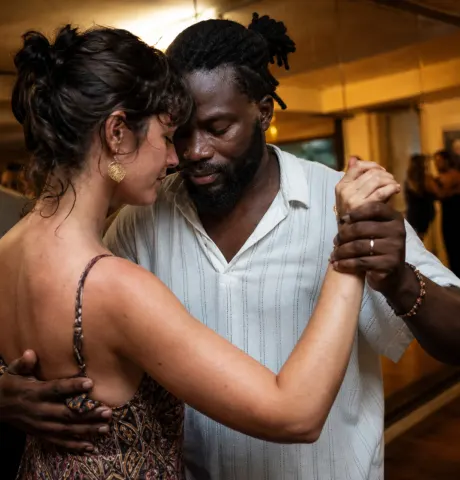 Semba and Kizomba: The difference in music and danceDiscover the subtle difference between Semba and Kizomba. We explain how the music defines the dance feeling and movement on the dance floor.
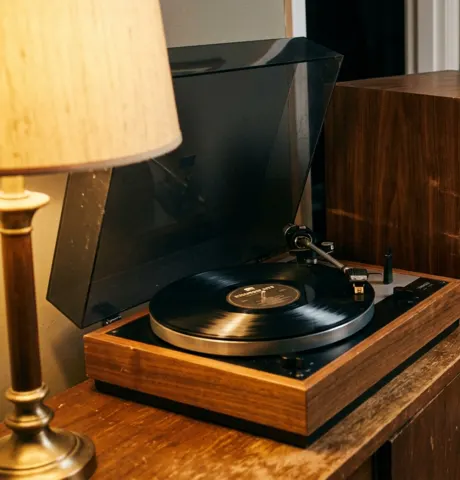 Understanding Kizomba music: How to hear the rhythmKizomba music has a very special magic. Learn here how to effortlessly pick out the characteristic beat and instruments so you can fully surrender to the music.
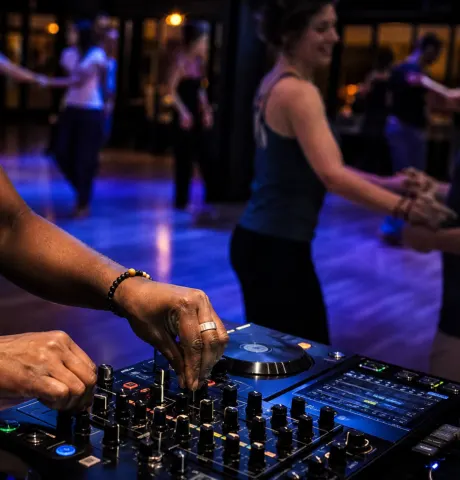 The 5 most important Kizomba music styles comparedDiscover the fascinating variety of Kizomba music: From traditional Semba to the modern Ghetto Zouk beat, we explain the five most important music styles.
 Kizomba Style Quiz: What kind of dancer are you?Find out with our quick self-test whether you are more of a traditional Kizomba dancer or if you feel at home in modern Urban Kiz.
 History of Ghetto Zouk: How the sound changed KizombaGhetto Zouk has taken the Kizomba world by storm. Learn how the fusion of Caribbean rhythms and electronic beats became a global dance trend.
 What is Tarraxinha? Definition and musical rootsTarraxinha shapes the Kizomba world with heavy, electronic beats and a minimalist aesthetic. Learn where this style from Angola comes from and how it changed music.
 Kizomba in Cape Verde: The influence of Passada and ColadeiraKizomba has roots beyond Angola. Learn how the Cape Verdean styles Passada and Coladeira shaped the dance with their elegance and melancholy.
 Kizomba Music Trends 2026: The latest sounds in the sceneKizomba music is evolving rapidly. We show you the most important trends and electronic influences that will dominate the dance floors in 2026.
 Kizomba Music Legends: The Pioneers of the Global DanceFind out which visionary musicians and DJs brought the Kizomba sound from the streets of Luanda to dance floors all over the world.
 Kizomba culture in Angola: Meaning and traditionsDive into the fascinating Kizomba culture of Angola and learn why this dance is a multi-generational family celebration there and how it differs from the West.
 Kizomba in Europe: How the dance conquered the continentKizomba conquered all of Europe from Portugal and France. Discover how this sensual partner dance spread across the continent and which styles emerged from it.
 The history of Tarraxo: Origins and distinctionsLearn how the urban dance and music style Tarraxo developed in Europe and how it fundamentally differs from traditional Tarraxinha.
 Zouk vs. Kizomba Rhythm: A Music ComparisonZouk and Kizomba share common roots, but they sound completely different on the dance floor. This guide analyzes their rhythmic structures and shows you how to instantly distinguish the beats.
 Kizomba and Brazilian Zouk: Two historical pathsKizomba and Brazilian Zouk share rhythmic roots, but they evolved on completely different continents. This guide explores the fascinating paths of both dances.