

Find your rhythm with udansa
Whether it is a traditional beat or a futuristic Urban Kiz sound: on udansa you will find dance enthusiasts in your area who share your passion for modern rhythms.

By Mary De LucaUpdated

Whether it is a traditional beat or a futuristic Urban Kiz sound: on udansa you will find dance enthusiasts in your area who share your passion for modern rhythms.
The Kizomba scene in 2026 is pulsing to the beat of digital innovations. Find out how electronic beats and modern influences are changing the feeling of the dance and which sounds are now dominating the dance floors.
Musical trends in partner dance spread in a fundamentally different way than in the classic music industry. While pop hits explode overnight via global streaming playlists, new sounds in the Kizomba scene migrate organically from the mixing consoles of international DJs directly to the dance floors of large festivals. Only when a track emotionally grabs the dancers during social dance and the DJs analyze the audience's reactions live does a new sound establish itself. In 2026, this development is clearer than ever: music is increasingly breaking away from rigid genre boundaries and opening up to global influences from electronic music, R&B, and Hip-Hop.
Anyone learning to dance Kizomba today quickly realizes that the music dictates the movement. The trend is moving away from purely traditional rhythms toward hybrid productions that are specifically produced for the fluid, often isolated movements of Urban Kiz. For beginners, this means a fascinating variety: an evening at a Kizomba party now offers a musical journey that ranges from warm, acoustic sounds to hard, almost mechanical synthesizers. Those who have mastered the basics and try their hand at learning to dance Kizomba quickly learn how these different beats influence their own body tension and dynamics.
This style combines the soft, emotional melodies of modern R&B with the typical, driving Kizomba rhythm. Often, well-known pop and R&B hits are remixed by creative DJs and set to a danceable beat. For dancers, this style offers a very accessible, harmonious approach and plenty of room for soulful styling.
Crystal-clear, digital productions that are heavily influenced by modern trap and Hip-Hop music dominate here. The beats are often minimalist, featuring hard kick drums and rapid hi-hat patterns. This musical style demands precise technique, as it fits perfectly with the fast, linear steps and sudden changes of direction in Urban Kiz.
This sound is darker, heavier, and extremely rhythm-focused. Tarraxo often almost completely dispenses with classic melodies and instead focuses on deep, vibrating basses and mechanical-sounding rhythmic structures. On the dance floor, this trend leads to very dense, intense movements with a strong focus on pelvic isolations.
The current trends of 2026 are primarily emerging in the creative music hubs of Europe and West Africa. Producers in Paris, Lisbon, and Luanda are constantly experimenting with new digital tools to charge the traditional beat with modern synthesizers. These electronic influences are not only changing listening habits, but are also challenging dance technique. When the music becomes more minimalist and the classic, continuous beat drops out, leaders and followers must pay even closer attention to each other to fill the pauses in the rhythm together with fitting movements.
Especially in the field of Urban Kiz, this development is leading to a completely new dance aesthetic. Here, it is primarily Kizomba Body Movement and subtle tempo changes that react to the complex, electronic beats. Those who embrace these modern sounds experience enormous creative freedom. The music is no longer a rigid corset, but a dynamic playground where every bass drop and every electronic echo can be translated into a visual movement. The scene in 2026 proves that the evolution of this dance is inextricably linked to the courage of music producers.
Modern music demands much more from dancers than just counting steps. It asks us to dance the silence between the beats.
Correct
Wrong
You can recognize modern Kizomba songs by their clean, often digital production, the use of synthesizers, R&B vocal lines, and minimalist beat structures. In contrast to traditional tracks, the rhythm is often more complex and breaks up during creative pauses.
Urban Kiz beat trends in 2026 are characterized by extreme tempo changes, so-called breaks, and dense electronic soundscapes. For dancing, this means you walk less continuously and work more with abrupt stops, isolations, and accelerations.
Absolutely. Even though the music is becoming more electronic and modern, the fundamental rhythm remains closely related to its African roots. If you have mastered the traditional steps, you can easily transfer them to modern songs and play with the timing there.
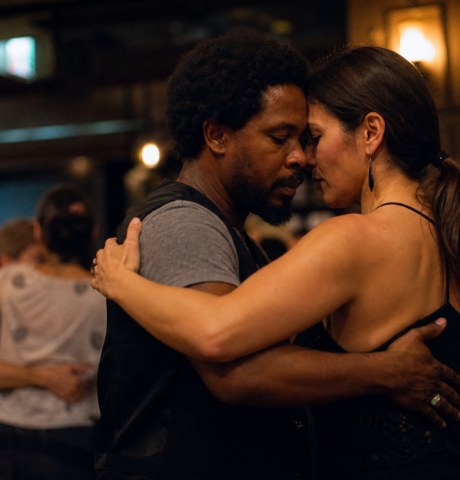 Learn to dance Kizomba: The guide to the partner danceKizomba combines African rhythms with a deep, emotional connection in partner dance. Learn how to master this fascinating dance style from scratch.
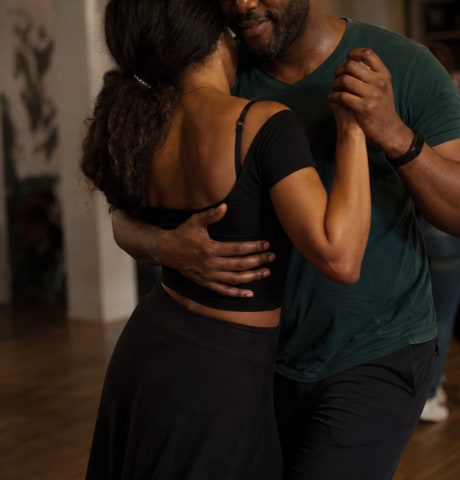 Kizomba Body Movement: Styling for Advanced DancersTake your Kizomba to the next level. Learn how to add more feeling to your dance with subtle body movement, precise Tarraxinha technique, and elegant improvisation.
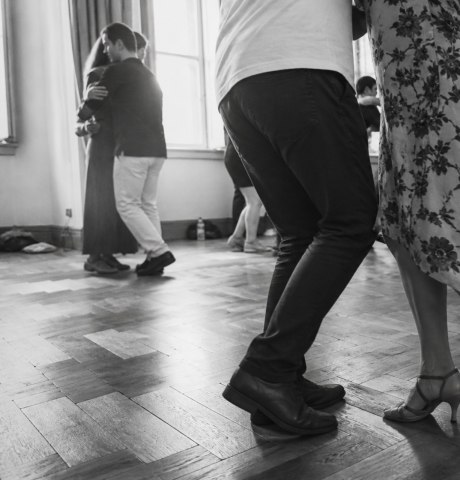 The history of Kizomba: From its Angolan roots to a global danceDive into the history of Kizomba. Learn how Angolan traditions and Caribbean beats combined to create a global dance phenomenon.
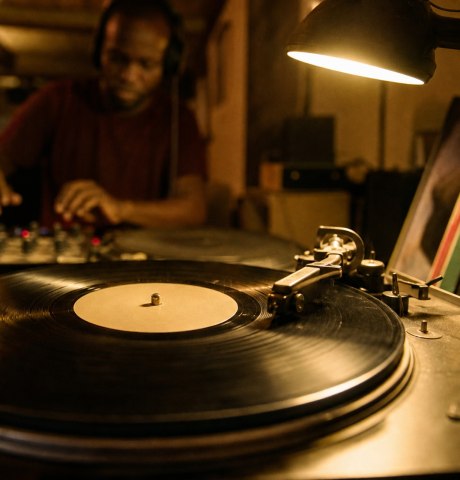 Kizomba Music Legends: The Pioneers of the Global DanceFind out which visionary musicians and DJs brought the Kizomba sound from the streets of Luanda to dance floors all over the world.
 Kizomba culture in Angola: Meaning and traditionsDive into the fascinating Kizomba culture of Angola and learn why this dance is a multi-generational family celebration there and how it differs from the West.
 Kizomba in Europe: How the dance conquered the continentKizomba conquered all of Europe from Portugal and France. Discover how this sensual partner dance spread across the continent and which styles emerged from it.
 The history of Tarraxo: Origins and distinctionsLearn how the urban dance and music style Tarraxo developed in Europe and how it fundamentally differs from traditional Tarraxinha.
 Zouk vs. Kizomba Rhythm: A Music ComparisonZouk and Kizomba share common roots, but they sound completely different on the dance floor. This guide analyzes their rhythmic structures and shows you how to instantly distinguish the beats.
 Kizomba and Brazilian Zouk: Two historical pathsKizomba and Brazilian Zouk share rhythmic roots, but they evolved on completely different continents. This guide explores the fascinating paths of both dances.