
Find your rhythm in partner dance
On udansa you can find experienced dance partners and advanced Kizomba courses to take your body movement to the next level. Sign up and discover the Kizomba scene in your area.



By Mary De LucaUpdated
On udansa you can find experienced dance partners and advanced Kizomba courses to take your body movement to the next level. Sign up and discover the Kizomba scene in your area.
Kizomba lives from the moments between the steps. Once you have mastered the basics, you will find the key to a deep, almost magical connection on the dance floor in subtle body movement.
Tarraxinha refers to an element of Kizomba that is danced almost entirely on the spot with very subtle, rhythmic hip movements. It is primarily used during quiet or beat-heavy sections of the music.
Kizomba is characterized by deep, almost silent communication within the couple. If you have already mastered the basic steps, precise Kizomba body movement is the key to making your dance lively and expressive. This is not about sweeping, expansive movements, but rather a subtle activation of the core and pelvic muscles. These wave-like movements originate deep in the body's center and are gently transmitted to your partner without disturbing the firm embrace. Smooth body movement requires relaxed muscle tension: only those who let go internally can flexibly reflect and pass on the subtle impulses of the music within their own body.
To develop a stable yet soft sense of movement, training isolations is essential. You will learn to move your chest independently of your hips. In Kizomba, the upper body usually remains calm and upright, while the pelvis picks up the rhythm of the music on the floor. The interplay of a stable connection in the upper body and elastic flexibility in the lower back creates the typical, fluid dynamic that makes this dance so special.
The Tarraxinha technique is the most finely tuned element in Kizomba. It is often danced on the spot when the music becomes particularly minimalist, beat-heavy, or emotional. This is about microscopically small hip accents, which are controlled through precise weight shifts. For successful styling, it is crucial that these movements never appear forced. Kizomba Lady Styling uses soft, circular, and lateral hip movements to elegantly embellish the beats of the music. The movement always follows the lead and never breaks the connection with the partner.
Kizomba styling for men is also based on this fine core control. Instead of large embellishments, advanced leaders show their musicality through extremely controlled weight shifts, sudden tempo changes, and a gentle but firm lead from their own center. If you have stable body movement in the leading role, you give your partner the necessary space and security to elegantly unfold her own styling. If you want to test your skills at socials, it is worth taking a look at the rules for social dancing to blend harmoniously into the dance floor.
Correct
Wrong
The true beauty of Kizomba is not revealed in complicated figures, but in the perfection of the smallest, almost invisible movements within the pair.
As soon as the technical foundations of body isolations are mastered, the door to Kizomba improvisation opens. Kizomba is not about rigidly reeling off memorized figures, but rather a continuous conversation with the music. Advanced couples use tempo changes, so-called syncopations, and sudden pauses in the beat to change the dynamics of the dance. Every instrument in the song can serve as an impulse for a small movement: a gentle violin bow invites a fluid body wave, while a hard kick beat can be interpreted with a precise stop in the hip.
The biggest challenge in improvisation is not to interrupt the shared flow. The leader suggests the direction and the basic tempo, but consciously leaves the follower time and space for subtle embellishments. This non-verbal agreement requires the utmost attention and a fine sense for the partner. This creates a harmonious interaction in which both dance partners perfectly complement each other and make the music visible in the room together.
Stability and precise impulses from the core
Focuses on leading from the center of the body. He uses minimal weight shifts, sudden pauses, and precise changes in tempo to offer the partner the perfect frame for her styling.
Soft hip movements and elegant accents
Use the space provided for soft, fluid hip movements and body-conscious accents. The movements flow harmoniously from the lead, without disturbing the connection.
Kizomba body movement is distinguished by its subtlety. While Salsa and Bachata often use expansive, lateral hip sways, Kizomba is based on subtle forward and backward pelvic tilts as well as wave-like movements in the torso, which are danced closely as a pair.
The movement comes from a conscious weight transfer from one foot to the other. By bending and straightening the knees in combination with relaxed pelvic muscles, the typical Kizomba hip movement occurs quite naturally, without needing to be forced.
In Kizomba, less is almost always more. Avoid forcing large styling movements abruptly or against the rhythm of the lead. Good styling always subordinates itself to the shared flow and only utilizes the spaces that the partner actively offers.
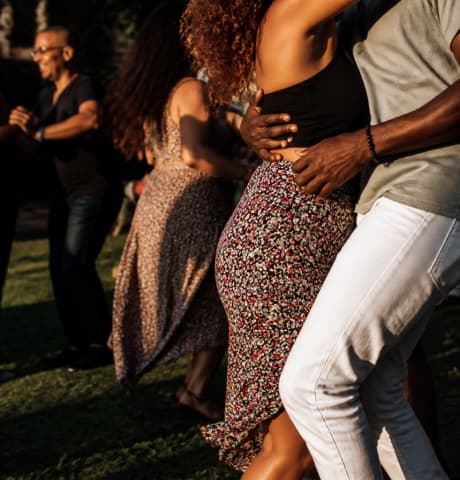 Mastering Kizomba hip movement: Subtle pelvic tilts for your stylingDiscover how to refine your Kizomba hip movement through targeted pelvic tilts and add noticeable elegance and softness to your dance style.
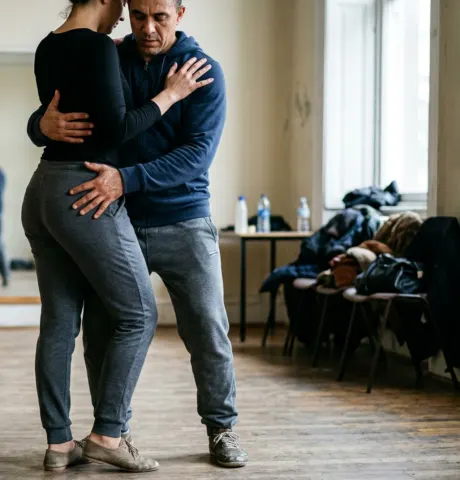 Learn Tarraxinha Technique: Gentle Kizomba IsolationsMaster the art of sensual micro-movements. With our guide, you will learn the precise Tarraxinha technique for smooth isolations in Kizomba partner dance.
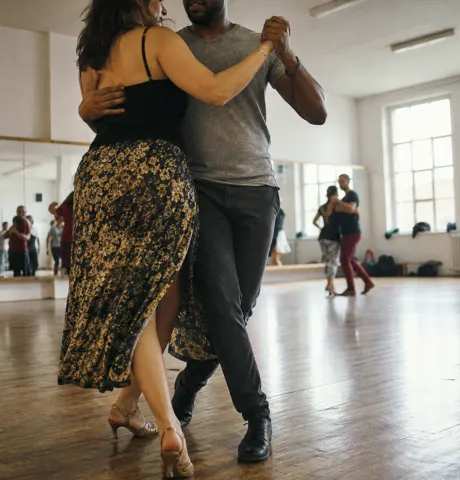 Kizomba Styling Level: Take the body awareness self-testFind out what level your Kizomba body movement is at with our targeted self-test. Analyze your body control beyond the basic steps.
 Kizomba isolations: How to isolate your upper bodyFind out how to refine your dance style with precise Kizomba upper body isolations and achieve maximum flexibility in your chest.
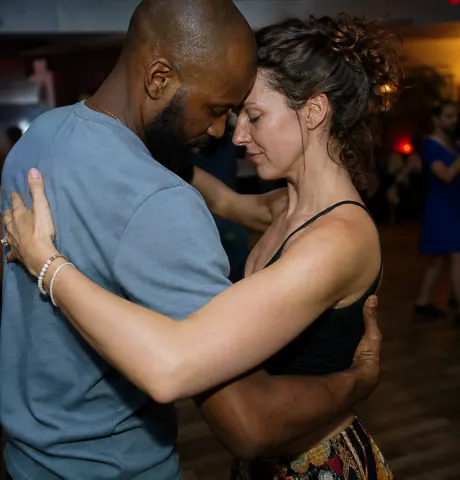 Kizomba Body Movement for Leaders: Leading from the coreLearn how to shift your Kizomba leading entirely to your core. This way, you dance more elegantly, musically, and completely without effort.
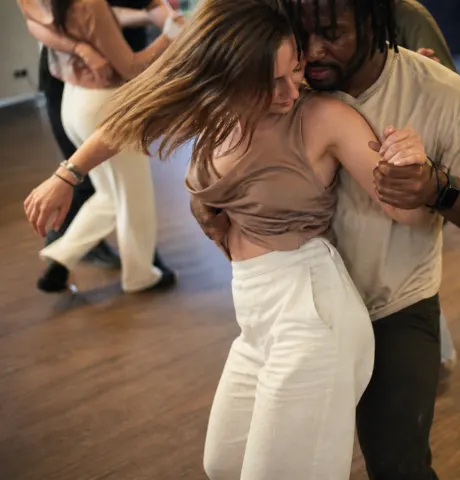 The 7 biggest Kizomba styling mistakes and how to fix themKizomba styling thrives on subtle, fluid movements from the core. We show you the seven most common body movement mistakes and how to fix them immediately.
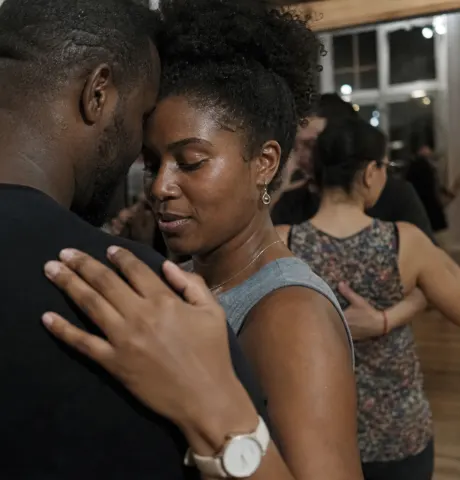 Kizomba Body Wave: Guide to the perfect body waveThe Kizomba body wave is one of the most elegant movements in partner dance. With our guide, you will learn the sophisticated technique for maximum harmony as a couple.
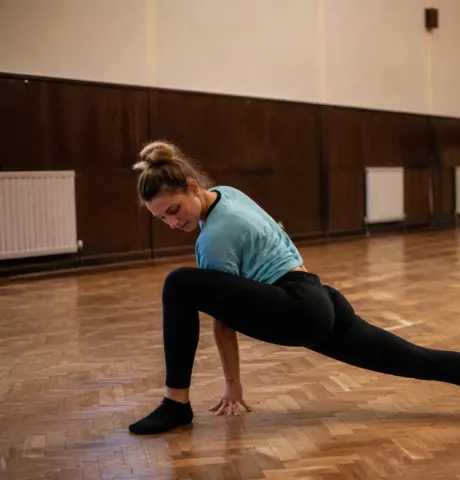 Train Kizomba flexibility: Exercises for fluid movesWith specific Kizomba flexibility training, you can free up your hips and spine for fluid body waves and elegant isolations on the dance floor.
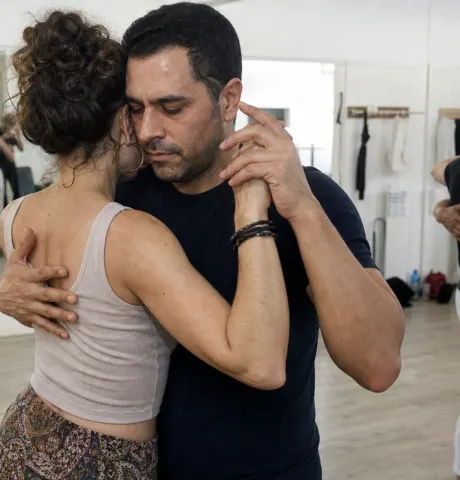 Kizomba styling in partner dance: Harmony and connectionKizomba styling in partner dance requires sensitivity and body control. Learn how to integrate your movements seamlessly without disrupting the connection.
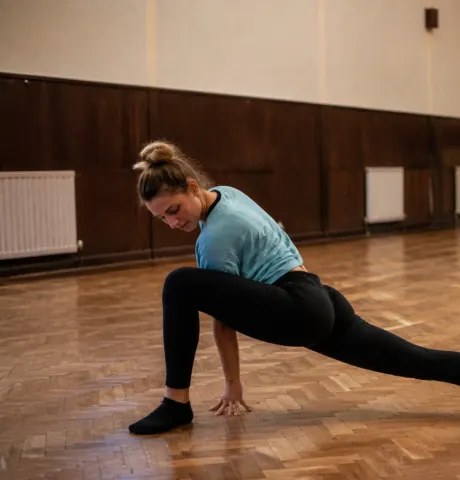 Practicing Kizomba styling alone: Your solo training planImprove your Kizomba styling at home without a partner. With targeted solo exercises, you can train your isolations, balance, and body awareness highly effectively.
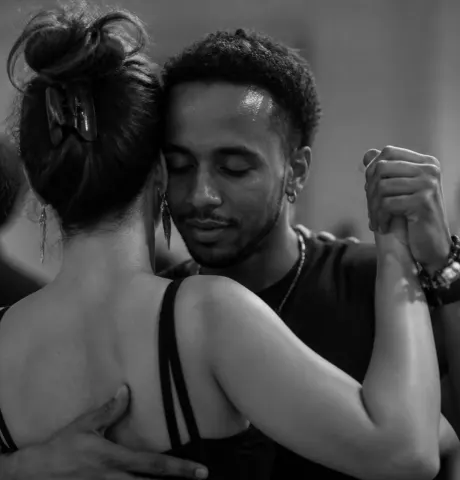 Kizomba balance and body tension: Stay stable in every moveStability in every step: Learn how to control your body tension in Kizomba and maintain perfect balance even during demanding styling elements.
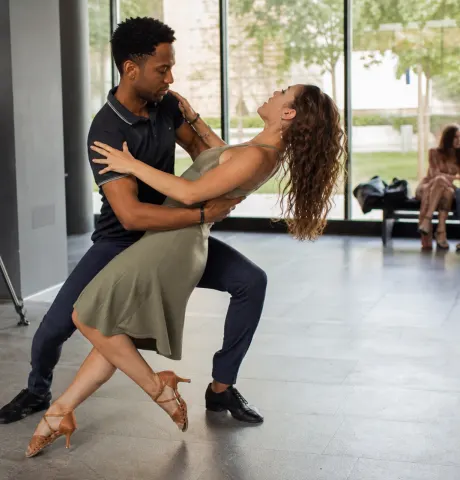 Kizomba Show Styling: The best moves for your performanceMake your choreography unforgettable. With these Kizomba show styling moves, you are guaranteed to turn heads on stage and in social media videos.
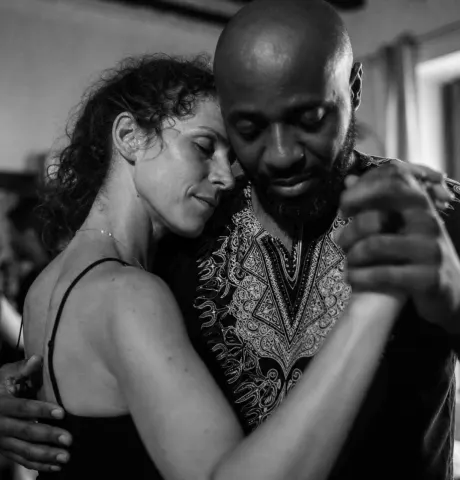 Kizomba Head Movement: Leading gentle head movements correctlyGentle head movements give Kizomba an incomparable elegance. Learn here how to lead and follow head styling safely and harmoniously through subtle body impulses.
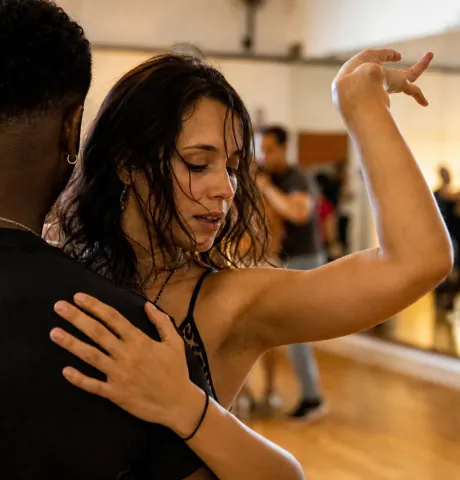 Kizomba Lady Styling: Expressive Arms in Partner DanceAdd more expression to your Kizomba with elegant arm and hand movements, all while keeping your connection to your partner stable.
