Kizomba technique4 minutes

Kizomba Body Wave: Instructions for the perfect body wave

In a nutshell
  • A perfect Kizomba body wave requires the precise, sequential movement of the spine from the hips to the chest.
  • Both partners must maintain a constant, elastic body tension to transmit the movement synchronously and without effort.
  • The wave is not initiated by pushing or pulling with the arms, but exclusively through the contact of the centers of the bodies.
  • Regular isolation training for the pelvis and chest is the mandatory prerequisite for a smooth execution in partner dance.
udansa community

Find your dance partner for Kizomba

On udansa you will find like-minded people who want to work on the perfect body wave with you and share the fascination of this dance. Sign up and discover dance partners, courses, and workshops right in your area.

Find your dance partner for Kizomba

Forget stiff poses and forced movements. With the right technique, the wave in Kizomba becomes an effortless, fluid dialogue that creates pure connection on the dance floor.

What you need for the body wave

  • Good mobility in the lumbar spine
  • Ability to isolate the pelvis and rib cage
  • Confident maintenance of a stable, close dance frame
  • Mutual trust and a fine sense for weight shifts

The biomechanics of the perfect body wave in partner dance

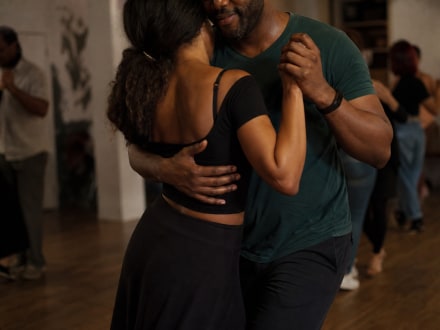
The Kizomba body wave is not an isolated show effect, but a fluid dialogue between two bodies. To execute this demanding movement elegantly, both partners must understand the mechanics of the spine. The wave starts deep in the pelvis and travels vertebra by vertebra upwards into the chest and shoulders, without losing the stable connection within the pair. Anyone who masters the Kizomba body movement technique uses this wave movement to make the subtle nuances in the music physically visible.

For a successful wave, the balance between muscle tension and relaxation is crucial. An upper body that is too rigid blocks the flow, while a completely limp body swallows the partner's signals. The key lies in flexible core muscles, which allow the chest and pelvis to move independently of each other. These isolations form the foundation upon which the wave is built. Only when both partners master this dynamic do the movements merge into a harmonious unit on the dance floor.

udansa tip

Practice the wave extremely slowly at first and while standing, without any steps at all. Only when the synchronous rolling of the spine works blindly as a couple, you can integrate the movement into the flow of the dance.

Step by step to a synchronized body wave

  1. Building the elastic connection

    Take a close, upright dance position with your partner. Your knees are slightly bent and elastic, your weight is on the balls of your feet, and your upper bodies have a flat, gentle contact without pressure.

  2. Starting the impulse in the pelvis

    As a leader, you tilt your pelvis slightly backwards to initiate the wave from below. The follower immediately feels this weight shift in the contact area and mirrors the pelvic movement synchronously.

  3. Rolling the wave upwards

    Now roll the movement upwards through the abdominal area, vertebra by vertebra. Make sure that the contact between the upper bodies is maintained throughout this phase and does not break off.

  4. Open and lift the rib cage

    Continue the movement in your rib cage by lifting it slightly and pushing it forward and up. Keep your shoulders low and relaxed to avoid any unnecessary tension in your posture.

  5. Let the movement fade out softly

    Let the wave fade out softly over your shoulders, while your pelvis already returns to its neutral starting position. This creates a continuous, fluid transition back into the flow of the dance.

The most important do's and don'ts for the wave

How to succeed

  • Start the movement in your pelvis and let it roll upwards
  • Maintain elastic tension throughout your entire torso
  • Give subtle signals to your partner through direct body contact

Common mistakes

  • Starting the wave jerkily in the shoulder area
  • Letting the upper body go completely limp
  • Tugging with your hands or pulling your partner towards you

The process for a successful body wave

Before dancing

Preparation

When taking your posture

Arrival

During movement

During

Frequently Asked Questions

  1. The movement starts in the pelvis with a gentle tilt backwards. From there, the movement rolls vertebra by vertebra up through the abdominal area and the rib cage until it reaches the shoulders.

Kizomba courses near you

Find the right dance school to take your body movement to the next level.

View all matching courses