Your solo training will take you further
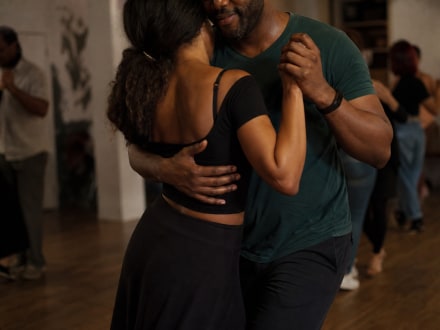
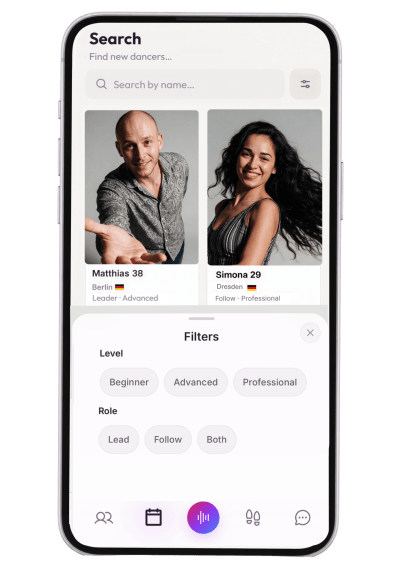
On udansa you will find the perfect dance courses and events to try out your newly gained body awareness directly on the dance floor. Simply choose the right offer in your area and start dancing!

Kizomba thrives on the subtle connection between partners, but you lay the foundation for fluid movements all on your own. With the right training plan for home, you can improve your isolations and body awareness at your own pace.
If you want to shine with fluid movements and elegance in Kizomba, you do not have to wait for the next dance party. The secret to expressive moves lies in precise body control, which can be trained perfectly within your own four walls. If you want to improve your Kizomba body movement for advanced dancers, solo training is often the most effective way. Without the distraction of a partner, you can focus entirely on your own axis, your muscle tension, and the subtle nuances of your joints.
Regular training at home sustainably trains your muscle memory. As soon as the isolations of the hips and upper body work without thinking, you can fully engage with the connection in the pair and the music at the next social dance. You will notice that you feel significantly more confident through solo training and your movements appear much smoother.

Record your practice sequences regularly with your smartphone. Often, a movement feels right in your body, but still looks uneven on video. The camera does not lie and is your best coach.
Stand barefoot or in flat dance shoes with your feet hip-width apart and bend your knees slightly. Tilt your pelvis forward and backward in a controlled manner, without moving your upper body or knees, to activate the deep muscles.
Shift your weight slowly from one foot to the other and consciously roll through your feet while doing so. Make sure that your hips follow the movement softly, while the top of your head remains at a constant height.
Prove your stability by standing on one leg and lifting the other knee slightly. Hold your balance for thirty seconds on each side to strengthen the standing leg axis for future turns and poses.
Put on some slow Kizomba music and combine your isolated movements into a fluid sequence. Use your smartphone to record a short video, so you can check your posture and the flow of your movements afterwards.
Yes, Kizomba styling can be trained excellently on your own. Without a partner, you can focus much better on your own core, your balance, and the clean isolation of individual muscle groups.
Find the right course now to apply your trained styling in partner dance.
 Kizomba Body Movement: Styling for Advanced DancersTake your Kizomba to the next level. Learn how to add more feeling to your dance with subtle body movement, precise Tarraxinha technique, and elegant improvisation.
 Kizomba balance and body tension: Stay stable in every moveStability in every step: Learn how to control your body tension in Kizomba and maintain perfect balance even during demanding styling elements.
 Kizomba Show Styling: The best moves for your performanceMake your choreography unforgettable. With these Kizomba show styling moves, you are guaranteed to turn heads on stage and in social media videos.
 Kizomba Head Movement: Leading gentle head movements correctlyGentle head movements give Kizomba an incomparable elegance. Learn here how to lead and follow head styling safely and harmoniously through subtle body impulses.
 Kizomba Lady Styling: Expressive Arms in Partner DanceAdd more expression to your Kizomba with elegant arm and hand movements, all while keeping your connection to your partner stable.
 Mastering Kizomba hip movement: Subtle pelvic tilts for your stylingDiscover how to refine your Kizomba hip movement through targeted pelvic tilts and add noticeable elegance and softness to your dance style.
 Learn Tarraxinha Technique: Gentle Kizomba IsolationsMaster the art of sensual micro-movements. With our guide, you will learn the precise Tarraxinha technique for smooth isolations in Kizomba partner dance.