

Find your dance connection
Whether you want to refine your body movement or train the right muscle tension: on udansa you will find like-minded people and the right courses in your area.

Styling in Kizomba gives the dance its magic, but small misunderstandings in technique often block the flow. Learn which typical mistakes disrupt your movement and how you can correct them immediately.
Anatomical verifiability
Every analyzed styling error can be verified directly in solo training or partner dance through anatomically correct explanations.
Relevance for the connection
Only technical errors that directly influence the biomechanical connection in partner dance are addressed.
Independent selection
No payments or placement fees were accepted from dance schools or instructors for the creation of this list.
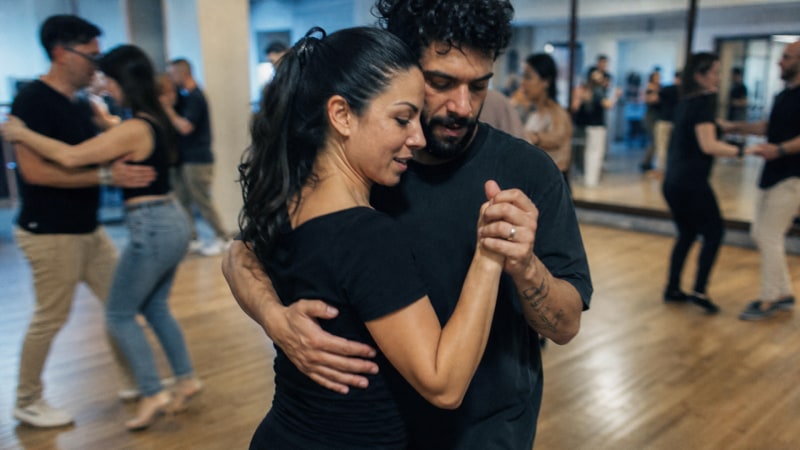
Mistake 1: The artificial duck butt styling
Artificially pushing out the buttocks creates a swayback and blocks the natural pelvic tilt. The solution lies in a neutral pelvic position, where the movement arises organically from the weight shift.
Mistake 2: Active pushing and pulling with the arms
Many dancers try to create waves in the upper body by pushing into their partner's arms. This destroys the connection. The arms remain stable and soft, while the movement comes isolated from the thoracic spine.
Mistake 3: Lack of basic tension in the core
An extremely limp torso causes styling attempts to look like foreign objects and robs you of your balance. Only through active deep muscles in the core does body movement become controllable and pleasant for your partner.
Mistake 4: Forced head movements without balance
Anyone who tilts their head unnaturally backwards or to the side loses their orientation and puts strain on the cervical spine. The head should remain in line with the spine, and your gaze should be relaxed, looking past your partner.
Mistake 5: Hip movement before weight is fully transferred
Often, there is an attempt to rotate the pelvis while the weight is still between the feet. Styling only works when the weight transfer is complete and the standing leg stabilizes the hip movement.
Mistake 6: Shoulders pulled up during isolations
When shoulders are pulled up towards the ears during upper body waves, the movement looks stressed. Shoulders must remain low and relaxed while only the sternum moves in isolation.
Mistake 7: Constant styling without musical pauses
Anyone who desperately tries to add a styling element to every single beat loses the connection to their partner and appears hectic. Styling needs pauses and should emphasize the quiet moments in the music.
Once you have left typical Kizomba styling mistakes behind, it is all about anchoring your new body awareness in your daily dancing. Styling is not a rigid corset, but a dynamic game with the music. A common follow-up mistake after the initial correction is so-called over-styling: you want to show everything you have learned at once and overload the dance. The art lies in the dosage. Use soft waves and subtle accents only when the music offers a breather or a special beat. Less is often more to maintain the magical connection in the couple.
For a deeper understanding of movement quality, we recommend taking a look at Kizomba body movement for advanced dancers. There, you will learn how to translate the corrected movement patterns into fluid, complex combinations. If you would rather solidify the basics again, starting with learning to dance Kizomba will help you recalibrate your basic connection. Practice the isolations regularly on your own in front of the mirror to get honest feedback about your own body axis.
A Kizomba styling mistake usually shows itself through a sudden loss of tension in the upper body or by the hips moving backward. If the movement looks choppy or the partner loses their balance, there is usually a posture error.
Find the right course and learn Kizomba from scratch without mistakes.
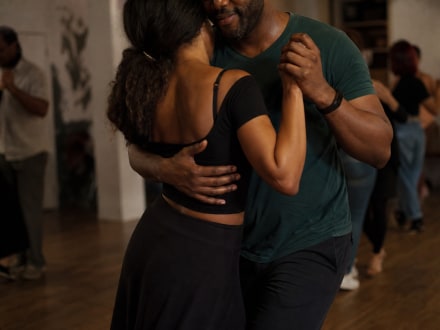 Kizomba Body Movement: Styling for Advanced DancersTake your Kizomba to the next level. Learn how to add more feeling to your dance with subtle body movement, precise Tarraxinha technique, and elegant improvisation.
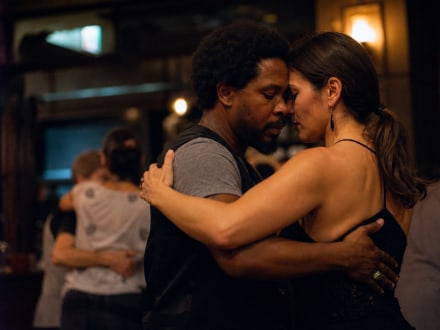 Learn to dance Kizomba: The guide to the partner danceKizomba combines African rhythms with a deep, emotional connection in partner dance. Learn how to master this fascinating dance style from scratch.
 Kizomba Body Movement: Styling for Advanced DancersTake your Kizomba to the next level. Learn how to add more feeling to your dance with subtle body movement, precise Tarraxinha technique, and elegant improvisation.
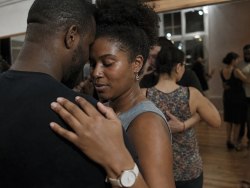 Kizomba Body Wave: Guide to the perfect body waveThe Kizomba body wave is one of the most elegant movements in partner dance. With our guide, you will learn the sophisticated technique for maximum harmony as a couple.
 Train Kizomba flexibility: Exercises for fluid movesWith specific Kizomba flexibility training, you can free up your hips and spine for fluid body waves and elegant isolations on the dance floor.
 Kizomba styling in partner dance: Harmony and connectionKizomba styling in partner dance requires sensitivity and body control. Learn how to integrate your movements seamlessly without disrupting the connection.
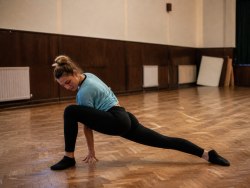 Practicing Kizomba styling alone: Your solo training planImprove your Kizomba styling at home without a partner. With targeted solo exercises, you can train your isolations, balance, and body awareness highly effectively.
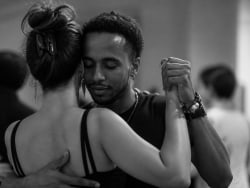 Kizomba balance and body tension: Stay stable in every moveStability in every step: Learn how to control your body tension in Kizomba and maintain perfect balance even during demanding styling elements.
 Kizomba Show Styling: The best moves for your performanceMake your choreography unforgettable. With these Kizomba show styling moves, you are guaranteed to turn heads on stage and in social media videos.