
Find your dance connection
Here you can find the right dance school and like-minded dance partners to put your first steps directly into practice.



By Bernhard De LucaUpdated
Here you can find the right dance school and like-minded dance partners to put your first steps directly into practice.
The Kizomba basic step is your key to one of the most sensual dances in the world. With these clear instructions, you will master the basic step sequence in no time and gain confidence on the dance floor immediately.
Kizomba is a fascinating partner dance characterized by a deep connection and minimalist, yet highly precise movements. Unlike dynamic styles such as Salsa, it is not about fast turns, but about gliding together in harmony with the beat. If you want to learn to dance Kizomba as a beginner, mastering the fundamental steps forms the essential foundation.
The magic of this dance lies in the subtle communication through the upper body. Before you venture into complex figures, you must internalize weight shifting. Every movement is gently initiated through the chest. Only when this non-verbal agreement works without delay do the steps on the dance floor feel harmonious and effortless. Focus entirely on the clean rolling of your feet and maintaining your shared balance at the beginning.
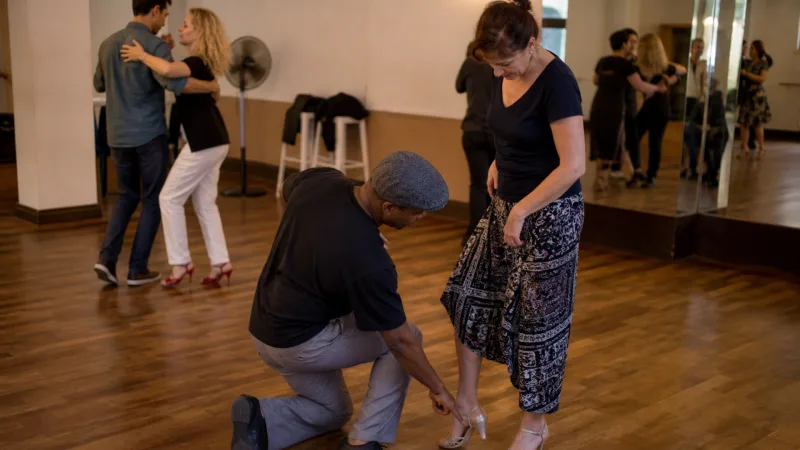
Adopt an upright, relaxed posture. The leader shifts their weight completely onto the right leg, while the follower brings their weight onto the left leg.
The leader takes a soft step with the left foot to the outside left. The follower mirrors the movement and steps with the right foot to the right.
Transfer your body weight completely onto the newly placed leg. Only when the weight is fully shifted does the other foot remain free for the next step.
Bring your free foot in a controlled manner and place it flat next to your standing leg. Make sure that the movement is fluid and without any rush.
Lightly tap your free foot next to your standing leg without shifting your weight onto it. Now, that foot is immediately ready for the opposite direction.
Correct
Wrong
Preparation
Arrival
During
The classic basic step in Kizomba consists of three steps (passadas). These are usually danced to the rhythm of slow-slow-quick-quick or as smooth transitions on the heavy beats of the music.
Yes, you can perfectly practice weight shifting and the precise rolling of your feet alone in front of a mirror. This trains your own balance, so you stand much more stably when dancing as a couple.
Make sure to let your feet glide flat across the floor and transfer your weight completely to the new standing leg with every step. Avoid bouncing on your tiptoes.
Find the right beginner course now and learn the basics from professional instructors.
Couple danceLimbach-Oberfrohna · Germany
Silberkurs für PaareSunday · 16:15 · Oct 25 - Nov 15
Limbach-Oberfrohna
Couple danceLimbach-Oberfrohna · Germany
PaartanzkreisSunday · 16:30 · Oct 25
Limbach-Oberfrohna
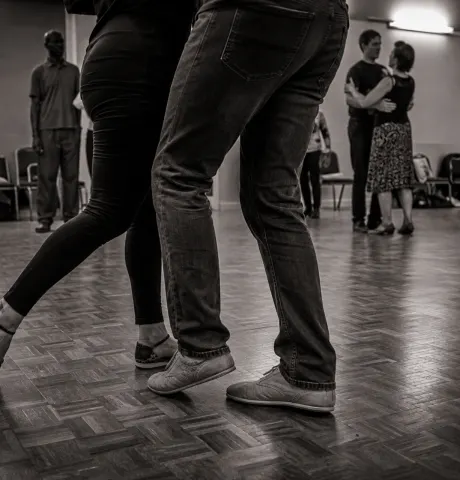 Learn Kizomba steps: An easy start for beginnersGetting started is easy: With our practical guide, you will learn the most important Kizomba basic steps and the correct posture for a harmonious dance experience.
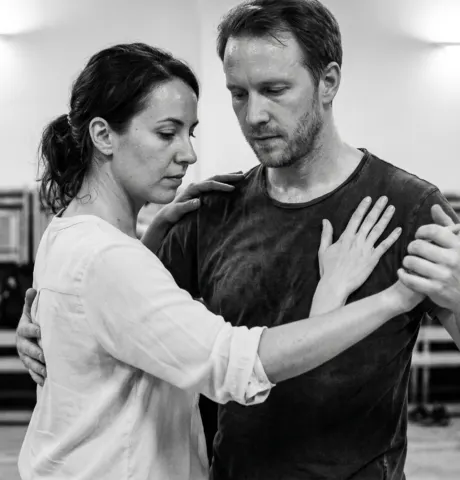 Kizomba posture: How to master the perfect connection and dance frameThe right Kizomba posture is the foundation for a harmonious connection on the dance floor. Learn how to dance with stability and fluidity through correct upper body contact.
 Kizomba Side Step: Guide to Weight TransferMaster the Kizomba side step with our simple guide. Learn how to shift your weight smoothly and bring more stability to your dance.
 Kizomba for beginners: The 5 most common mistakes in the basicsWhen learning Kizomba, you often stumble over the same hurdles at the beginning. This overview shows you the five typical beginner mistakes and how to correct them immediately.
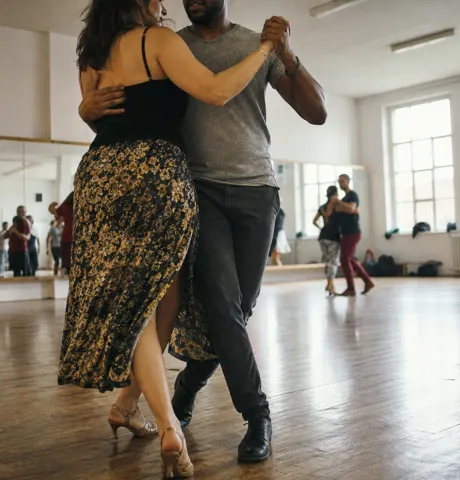 Kizomba Level Test: Do you already master the basics?Do you really master the Kizomba basics already, or should you keep working on your foundation? Take our quick level test now and find out.
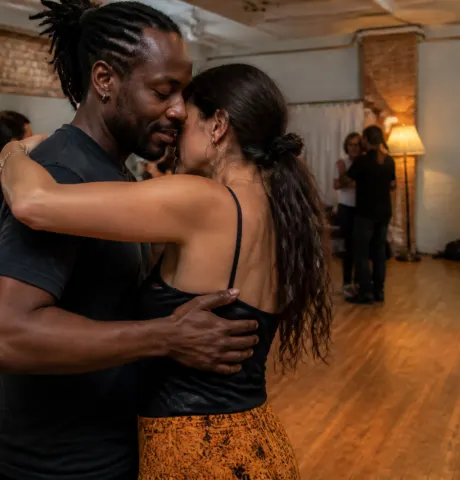 Leading and following in Kizomba: The art of weight transferDiscover how leading and following in Kizomba works through subtle chest weight transfers and how you can maintain a perfect connection.
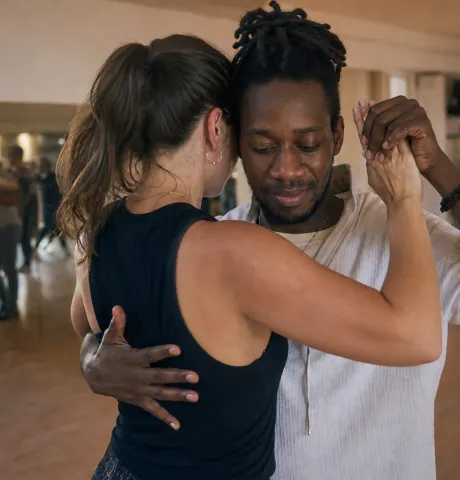 Learn Kizomba turns: Simple quarter turns for beginnersLearn how to execute simple quarter turns in Kizomba with control and harmony, without losing the close connection to your partner.
