

Find dance partners with the right vibe
Find like-minded people on udansa who want to experience Kizomba with the same mindfulness and joy as you. Create your profile and make connections in your area.

By Bernhard De LucaUpdated

Find like-minded people on udansa who want to experience Kizomba with the same mindfulness and joy as you. Create your profile and make connections in your area.
Kizomba fascinates with its intense connection, but it often raises questions. Learn how to master the balance between comfortable closeness and respectful distance, and how to communicate your boundaries clearly.
Kizomba closeness and distance describes the dynamic relationship of physical proximity in partner dance, which is characterized by mutual respect, mindfulness, and the continuous adjustment of personal comfort zones.
Kizomba is famous for its deep, almost meditative connection between dancers. However, the characteristic closeness often raises questions, especially for beginners. How close is too close, and where is the fine line between harmonious connection and crossing personal boundaries? Kizomba is not about blindly breaking down barriers, but about dancing in constant, silent agreement. A respectful encounter on equal terms is the foundation upon which this dance unfolds its magic in the first place.
To ensure this harmony, a clear understanding of learning to dance Kizomba and the associated social dynamics is crucial. Physical closeness is an offer, not an obligation. Anyone stepping onto the dance floor does not leave their personal comfort zone at the cloakroom. A successful dance is always based on the mutual consent to get as close as feels good for both sides in the moment.
The Kizomba embrace, also called connection, is the heart of the dance. It differs fundamentally from everyday hugs, as it serves as a pure communication channel. Nevertheless, misunderstandings usually arise when the intentions behind the movement are not clearly separated. Kizomba is a dance full of sensuality, but it is not a flirtation and not an invitation to physical intimacy outside the dance framework. It is all the more important to pay close attention to the signals of your partner from the very beginning.
A good orientation is provided by the Kizomba dance partner search, where you can clarify in advance what attitude you bring to the dance. At socials, a gentle pressure or a slight leaning back in the upper body immediately signals where the other person's boundary lies. A respectful leader never forces the close embrace, but builds the connection step by step and always leaves the follower the space to remain at a distance.
Correct
Wrong
The most beautiful connection in Kizomba happens when both partners feel absolutely secure. Only by respecting boundaries does the freedom for true creativity emerge.
Setting boundaries on the dance floor is not a sign of weakness or rudeness, but rather a sign of self-confidence and respect for your own body. If a movement or the distance feels uncomfortable, you can and should communicate this immediately. This can be done by gently but firmly increasing the distance with your hands or, if in doubt, with a friendly, clear word. No one has to endure a dance that does not feel right.
For an all-around successful experience at parties, a look at the general dance etiquette for socials also helps. Those who learn to lovingly maintain their own boundaries and mindfully read those of their partner will quickly become a valued member of the community. Kizomba thrives on this safe space that both dance partners create together.
The art of deep dance connection
You are looking for an intense connection and enjoy the close embrace in Kizomba. At the same time, you are sensitive to whether your partner also wants this closeness and always signal your own boundaries clearly and kindly.
Maintaining your comfort zone and personal space
You consciously keep a little more distance to feel comfortable or to focus on the steps. You communicate this space clearly through your body tension, without losing the connection to your partner.
Kizomba is a deeply respectful dance, in which the close embrace serves a purely functional purpose for transferring weight and movement. The intention is purely artistic and athletic, not romantic.
Gently increase the body tension in your arms and keep your upper body at a slight distance. Your partner should feel this physical feedback immediately and respect it, without you having to stop the dance.
No, absolutely not. You can dance Kizomba wonderfully in a more open posture, where there is more space between the upper bodies, as long as the connection via the hands and arms remains stable.
Find the right course to learn Kizomba from scratch with the right feel for connection.
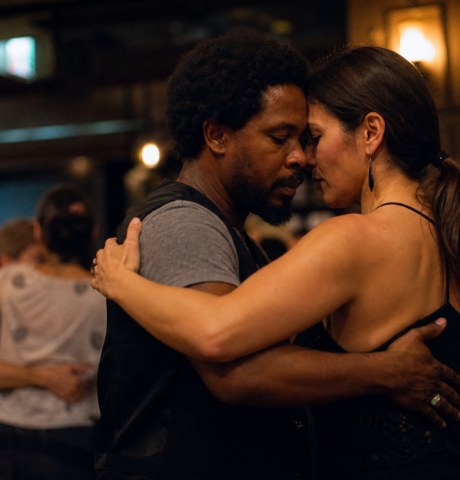 Learn to dance Kizomba: The guide to the partner danceKizomba combines African rhythms with a deep, emotional connection in partner dance. Learn how to master this fascinating dance style from scratch.
 Find a Kizomba dance partner: Your guide to the scene and socialsFind your perfect Kizomba dance partner and dive deep into the global community. With our guide, you will be perfectly prepared for your next social and your first festival.
 Dance Etiquette in Munich: A Guide for the Dance FloorDiscover the unwritten laws of the Munich social dance scene. With this practical guide, you will move confidently and respectfully on every dance floor.Find a Kizomba dance partner: Your guide to the scene and socialsFind your perfect Kizomba dance partner and dive deep into the global community. With our guide, you will be perfectly prepared for your next social and your first festival.
 Your first Kizomba party: preparation for beginnersIs your first Kizomba party coming up? Don't worry: with the right mental and practical preparation, your first social will be a relaxed and wonderful experience.
 Kizomba Trends 2026: How the global scene is evolvingThe global Kizomba scene is evolving rapidly. We show you the most important Kizomba trends for 2026 and how they are changing dance floors.
 Dancing Kizomba as a single: Finding your way into the sceneWant to dance Kizomba but don't have a regular partner? Our guide shows you how to easily connect with others at socials and conquer the scene as a single.
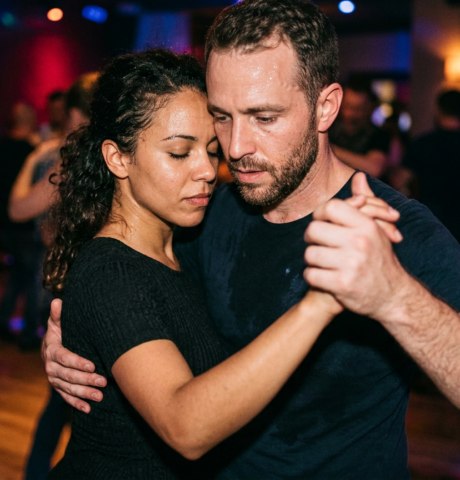 Switching partners in Kizomba: Why socials are so importantSwitching partners at Kizomba socials and festivals is the key to true dancing flexibility. Learn why dancing with strangers improves your technique and how udansa helps you find partners.
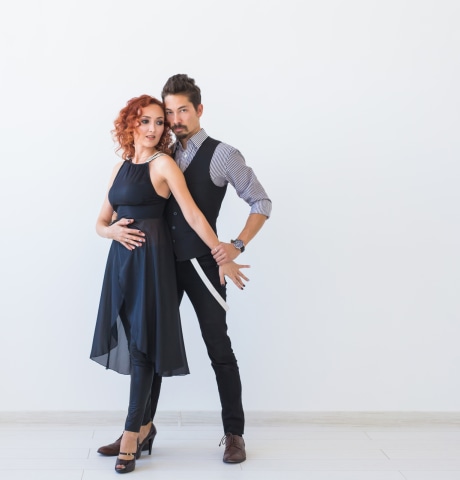 Kizomba Outfits and Shoes: The Style Guide for SocialsThe right style for a Kizomba social: Learn in our guide how to ensure the perfect connection on the dance floor with the right clothing and shoes.
 Finding a Kizomba dance partner for festivals: A guideDo you want to travel to an international Kizomba festival but don't have a companion yet? Learn how to find the perfect dance partner in this guide.