Rhythm training4 minutes

Latin dance rhythm training: solo exercises

In a nutshell
  • Rhythm training for Latin dances can be practiced excellently at home through focused listening and clapping.
  • When listening to music, concentrate specifically on percussion instruments like claves or congas to isolate the underlying beats.
  • By counting the beats out loud while sitting, you anchor the rhythmic pattern firmly in your memory.
  • The training sharpens your ear for syncopations and accents, without the need for dance steps in the room.

If you don't have the beat in your ear, you can't feel it in your feet. With this targeted listening training for at home, you will master the complex rhythms of Latin music while relaxing on the sofa.

What you need for your training

  • A quiet room without distractions
  • Good over-ear headphones
  • A music selection with clear percussion
  • A metronome or a metronome app
  • Ten minutes of undisturbed time

Why ear training is the key to dance success

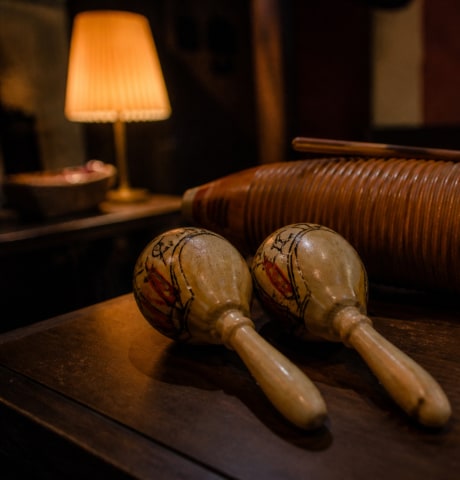
Latin music is fascinating due to its complexity. However, it is precisely this complexity, created by the interplay of various percussion instruments, that makes life difficult for beginners. Anyone who constantly stares at their feet in a dance class misses the connection to the music. The solution lies in targeted ear training for dance music, which you can carry out in your own four walls without any pressure. By learning to mentally isolate dominant instruments like the clave, congas, or cowbell, you can effortlessly filter out the rhythmic framework.

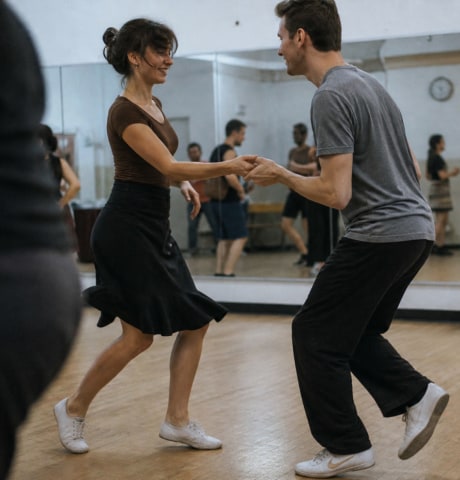
This training requires neither a large space nor dance steps across the room. It is exclusively about strengthening the connection between the ear and the brain. Once you can clap and count the beats flawlessly while sitting or standing, the later implementation on the dance floor in partner dancing becomes almost easy on its own. You gain confidence and can concentrate fully on your partner and the lead. Use this rhythm training for Latin dances as your personal foundation to ensure that posture mistakes in dancing do not arise in the first place due to stress and haste.

4 steps to perfect rhythm

  1. Isolating the bass

    Put on your headphones and close your eyes. For the first two minutes of the song, focus exclusively on the deep beats of the bass drum to anchor the basic rhythm.

  2. Count out loud

    Count out loud on beats one to four (or one to eight). Speaking the numbers out loud links the acoustic signal directly to your motor perception in the brain.

  3. Clapping the percussion

    Now try to listen for the clave or the cowbell. Clap exactly on their beats while you continue to tap the basic rhythm softly on the floor with your foot.

  4. Snapping to syncopations

    Focus on the rhythmic gaps, the syncopations. Mark these anticipated or delayed beats with a quick snap of your fingers to feel the tension in the rhythm.

How to master rhythm training at home

Training correctly

  • Focus on a single instrument
  • Count aloud and rhythmically
  • Complete short sessions regularly
  • Use headphones for subtle nuances

Avoid mistakes

  • Trying to grasp the whole band at once
  • Only counting quietly in your head
  • Listening for hours without a break
  • Listening through cheap phone speakers

Your training routine for ear training

Before training

Preparation

During practice

Training

Immediately after

Follow-up

Frequently Asked Questions

  1. The clave is a rhythmic pattern, often struck by two wooden sticks, that serves as a rhythmic foundation. You can recognize it by its distinctive, wooden, and piercing sound, which stands out clearly from the softer drum rolls.

Latin courses in your area

Prepare yourself perfectly and put your new sense of rhythm into practice in the right course.

View all matching courses

Find your rhythm partner on udansa

On udansa, you can find like-minded people and courses in your area to put your new sense of rhythm to the test directly on the dance floor. Sign up and find your perfect dance partner for Latin dances.

Find your rhythm partner on udansa