Bachata history5 minutes

Bachata styles and history in comparison

In a nutshell
  • The origins of Bachata lie in the rural regions of the Dominican Republic, where the musical style emerged in the 1960s as an expression of the working class.
  • The traditional Bachata Dominicana style is characterized by fast, playful footwork and a close connection to the rhythmic live music.
  • The Bachata Moderna and Bachata Sensual styles emerged in Europe and focus on structured turns as well as fluid body waves.
  • The essential Bachata differences lie in the dance posture, the music selection, and the proportion of hip and full-body isolations.
udansa community

Find your Bachata community on udansa

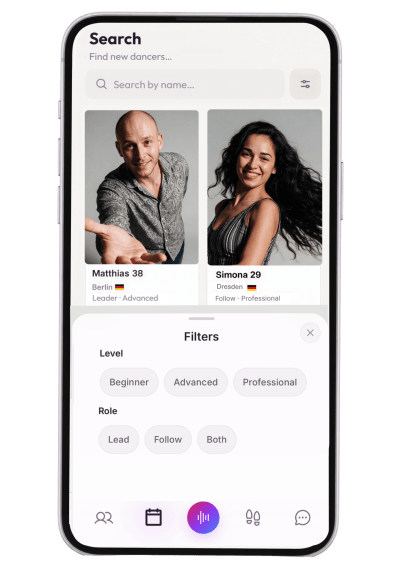
On udansa, you can find dance enthusiasts in your area who share your passion for Bachata, as well as the right courses for every style. Sign up and discover the variety of Caribbean rhythms together with others.

Find your Bachata community on udansa

Behind the gentle hip movements and the infectious music of Bachata lies a fascinating history full of contrasts. From a forbidden backyard dance in the Dominican Republic, this rhythm has evolved into a global phenomenon that is danced today in completely different styles.

Definition
Bachata styles

Bachata styles refer to the various dance forms that have developed from the original Dominican dance. These include, in particular, the traditional Dominican style, the structured Bachata Moderna, and the body-focused Bachata Sensual.

The roots in the Dominican Republic

The Bachata origin lies in the rural regions of the Dominican Republic in the 1960s. After the end of the Trujillo dictatorship, a new form of musical expression developed, which was initially heavily stigmatized. The term Bachata originally stood for an informal, loud backyard party and was used disparagingly by the urban elite for a long time. The music was considered vulgar, an expression of the working class and rural migrants in the slums of Santo Domingo.

This early phase deeply shaped the Bachata history. The lyrics dealt with heartbreak, poverty, betrayal, and melancholy, which is why the music was also known as Amargue, the music of bitterness. The instrumentation was simple, often dominated by acoustic guitars, maracas, and the bongó. It was not until the 1980s and 1990s, partly due to the international success of the musician Juan Luis Guerra, that the style gained social recognition and developed from frowned-upon pub singing into a proud national cultural asset.

The right balance of body tension and relaxation determines how harmoniously the wave movements can be transferred within the pair.

Three styles conquering dance floors worldwide

Anyone stepping onto a dance floor today will quickly realize that the original form has evolved significantly. The Bachata differences are particularly evident when comparing the traditional style, often referred to as Bachata Dominicana, with newer trends. While the Dominican style is closely linked to rhythmic music and thrives on fast, improvised step sequences, known as footwork, modern variations focus on different aspects.

Bachata Moderna simplified the complex Dominican footwork and adapted the dance to Western listening habits. Here, the focus is placed on clear turns, leading patterns, and a structured dance posture. Going one step further is Bachata Sensual, a style developed in Spain that is characterized by fluid full-body movements, waves, and isolation elements. The music for this style is often heavily influenced by pop music, slower, and more emotionally charged, which is also reflected in the very close dance posture. If you would like to try out the different styles, you can find, for example, an active Salsa and Bachata community in Munich on udansa.

Dance floor etiquette for Bachata styles

Correct

  • Listen to the rhythm of the music
  • Adapt the style to the respective song
  • Respect the boundaries of your dance partner

Wrong

  • Counting steps rigidly without a sense of rhythm
  • Forcing sensual moves to fast live music
  • Taking an extremely close dance hold without asking
udansa tip

Try out different styles in your first dance classes. Only when you feel the rhythmic footwork of Dominicana and the waves of Sensual for yourself, will you notice which style excites you the most.

Bachata is not a rigid dance, but a way of life that constantly reinvents itself through its various styles and connects people worldwide.

Bachata dance instructor, Berlin

Cultural identity versus modern dynamics

Choosing a dance style influences not only the steps, but your entire body awareness on the dance floor. In the Dominican style, the focus is on playful interaction with the music. Dancers move with agility, react to the rhythm guitar, and use the space for spontaneous solos. The connection between partners is loose and allows plenty of freedom for individual accents.

In contrast, the sensual variation requires extremely fine coordination and high body tension from both partners. Leading here is done not just through the hands, but through the entire upper body and hips to harmoniously transmit wave-like movements. Which style suits you best depends on your personal preferences, whether you prefer rhythmic playfulness or flowing elegance. To prepare for getting started, you can look around online or ask yourself, which dance style suits me in Berlin, to find the right direction for your training.

Two worlds on one dance floor

Dominicana

The original Dominican style

Focus on tradition and rhythm

This style is characterized by fast, rhythmic steps and a playful interaction with the music. Dance partners usually keep some distance to allow room for spontaneous footwork.

Sensual

The European evolution

Fluid movements and closeness

Here, the focus is on fluid body waves, gentle isolations, and a very close dance posture. The movements are often performed to modern remixes and emotional pop songs.

Frequently Asked Questions

  1. The traditional style from the Dominican Republic is based on fast, often improvised footwork and a close connection to the rhythm. Modern European styles, on the other hand, use more turns, expansive figures, and fluid full-body movements.

Bachata courses near you

Find the right course for your favorite style and learn the basics from experienced instructors.

View all matching courses