


Find your rhythm together
On udansa you will find like-minded people who feel the music just as intensely as you do, as well as the right courses to bring your passion to the dance floor.

By Bernhard De LucaUpdated
On udansa you will find like-minded people who feel the music just as intensely as you do, as well as the right courses to bring your passion to the dance floor.
Behind the gentle guitar sounds and the driving rhythm of Bachata lies a world full of poetry. If you understand the stories behind the songs, you don't just dance steps, you tell your own story on the dance floor.
Meaning of Bachata lyrics describes the thematic and emotional core of the songs, which traditionally tell of heartbreak, longing, and the social realities of Dominican society. These lyrics significantly shape the mood and, consequently, the artistic expression in the dance.
Anyone who dances Bachata is not just moving to a beat, but to a story. The roots of this dance lie deep in the history of the Dominican Republic, where the music once emerged as an expression of the working class. The Dominican culture and its singing are inextricably linked to the term "Amargue," a bittersweet mixture of melancholy, longing, and pride. When the singer raises their voice, they convey an emotional intensity that goes far beyond simply counting beats.
The lyrical structure of the songs directly influences how we move on the dance floor. Instead of stubbornly stringing figures together, understanding the song lyrics allows for a completely new depth in dance. When you know whether the song is about a happy conquest or a painful loss, your entire body tension changes. You no longer just dance to the music, but you become part of the narrative that is brought to life by the instruments and the voice.
In the western dance world, Bachata is often reduced to its sensual component. However, a look at the Bachata song structure in detail shows that the true magic lies in the complexity of the emotions. A recurring theme is bittersweet heartbreak dance music. It is about unrequited love, betrayal, and the longing for a lost person. This melancholy is rarely purely destructive, however, as it always carries a spark of joy and acceptance within it.
When you understand these nuances, your dance expression changes fundamentally. A sad, pleading undertone in the vocals calls for moments of pause, for softer movements, and for more intense, almost protective eye contact with your partner. A triumphant, energetic chorus, on the other hand, invites you to take up space and project that energy outward. The lyrics of Bachata music provide you with the visual and emotional template that you color in with your body.
Correct
Wrong
Find the right course and learn to interpret the music with your body.
If you don't feel the lyrics of Bachata, you are only dancing half the truth. Only the vocals give the steps their soul and make the connection between the couple palpable.
To bring the emotional depth of the songs to the dance floor, you do not need a Spanish certificate. It is often enough to pay attention to the vocal timbre, the dynamics, and recurring keywords. Words like "corazón" (heart), "dolor" (pain), or "amor" (love) are easy to recognize and immediately set the direction. The goal is to express the Bachata feeling by making yourself vulnerable and adapting to the mood of the singer.
This connection as a couple requires a high level of empathy. When both dancers pay attention to the lyrics, a silent dialogue emerges. You are not just reacting to each other, but together to the story of the song. This makes the dance organic and frees you from the pressure of constantly having to pull out new, complicated figures. The most beautiful dances are often those where a simple basic step, perfectly tuned to a heartbreaking vocal solo, makes you forget the whole world around you.
The bittersweet pain in dance
Here, melancholy takes center stage. The movements become softer, and the focus lies on the inner connection and sharing the emotional pain within the flow of the music.
The fiery side of the stories
When the text tells of passion, conquest, or celebrating life, the dance becomes more dynamic. Body language opens up, becomes more playful, and radiates pure energy.
The songs are usually about unrequited love, jealousy, betrayal, and longing. These themes reflect the Dominican feeling of amargue, which forms the emotional core of this musical genre.
You do not need to speak fluent Spanish. Pay attention to the singer's tone of voice, the tempo, and striking emotional outbursts in the vocals to intuitively grasp and translate the mood of the song.
Yes, the lyrics determine the dynamics. During sad passages, you often dance in a more closed and interpretive way, while cheerful or rhythmically dense passages invite more open, energetic movements.
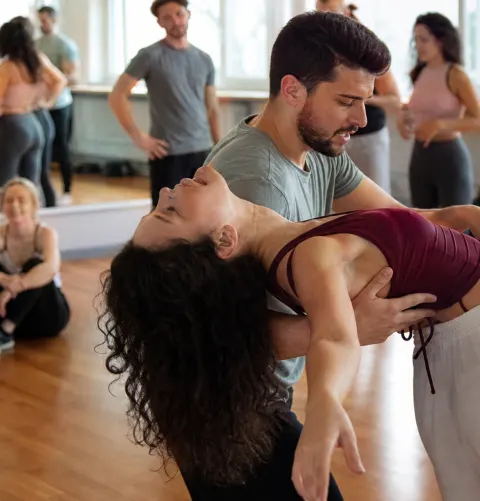 Bachata styles and history compared
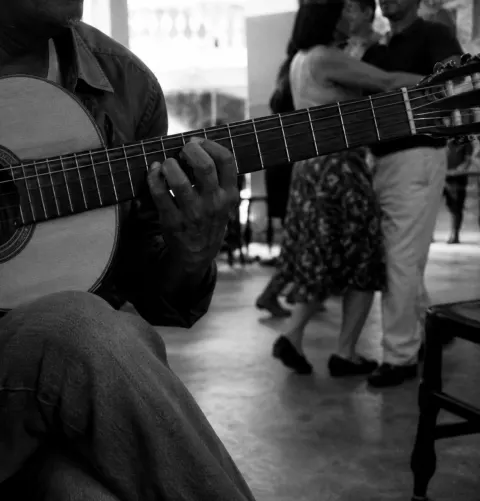 Bachata Urban vs. Traditional: A Cultural Comparison
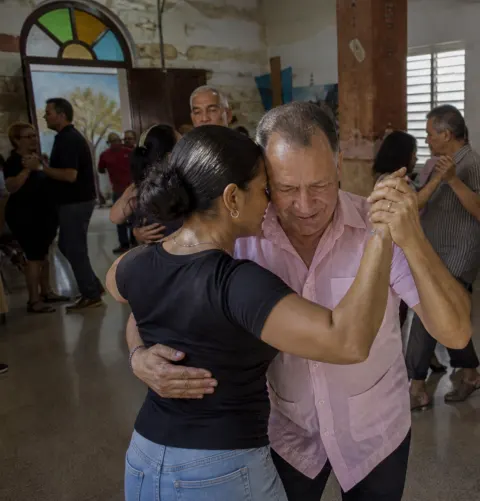 Experience the history of Bachata: The best documentaries and books
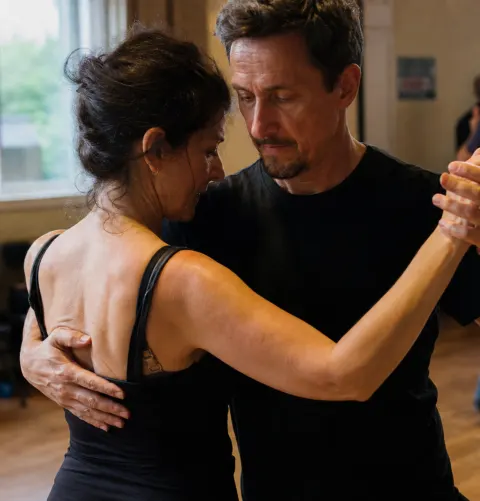 The history of Bachata: From forbidden sound to global dance
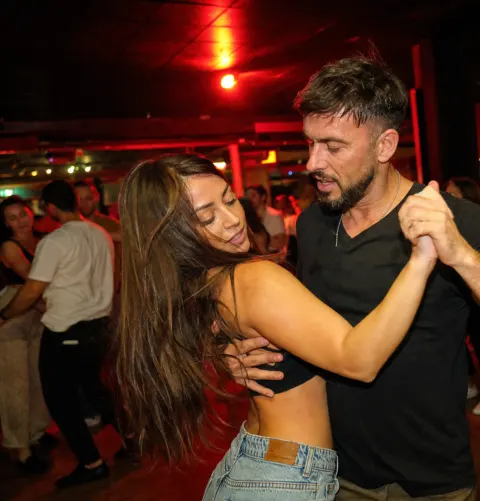 Bachata styles: Dominicana, Sensual, and Moderna compared
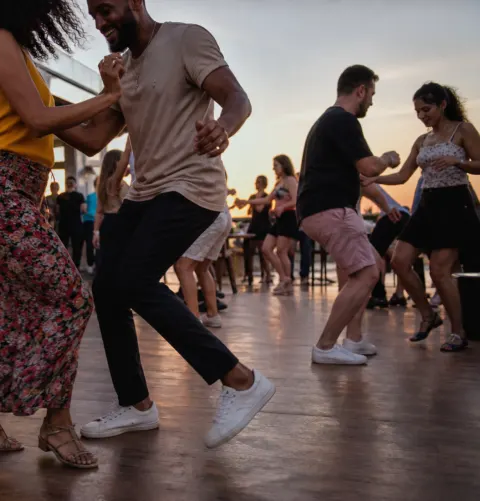 Bachata Dominicana: The traditional style
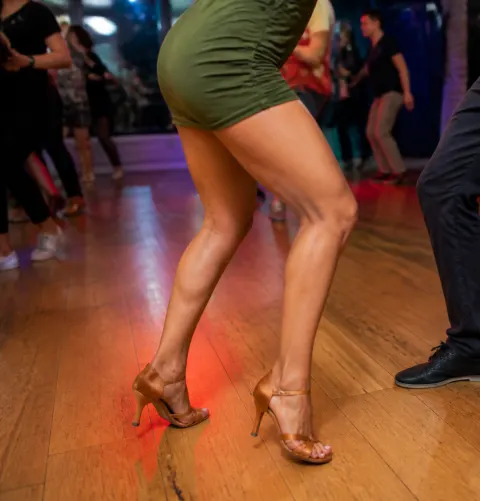 Bachata Sensual: Focus on Sensuality and Technique