Musical understanding5 minutes

Dominican Bachata rhythm: The difference in your ear

In short
  • The Dominican Bachata rhythm is based on dense, acoustic polyrhythms of güira, bongo, and requinto guitar.
  • The Sensual rhythm uses reduced, electronic beats with clear, heavy bass from modern pop music.
  • Traditional Bachata thrives on fast syncopations and off-beat accents between the main beats.
  • Sensual Bachata emphasizes even, flowing tension arcs with distinct pauses and effects.

Some Bachata songs sound like a fast-paced, acoustic whirlwind, others like a modern, gentle pop song. If you understand the difference by ear, you will dance with more feeling and confidence right away.

DefinitionDominican Bachata rhythm

The Dominican Bachata rhythm is the traditional, purely acoustic rhythm structure from the Dominican Republic, which is characterized by the complex interplay of bongos, güira, and syncopated guitar runs.

The acoustic heart of the Dominican Republic

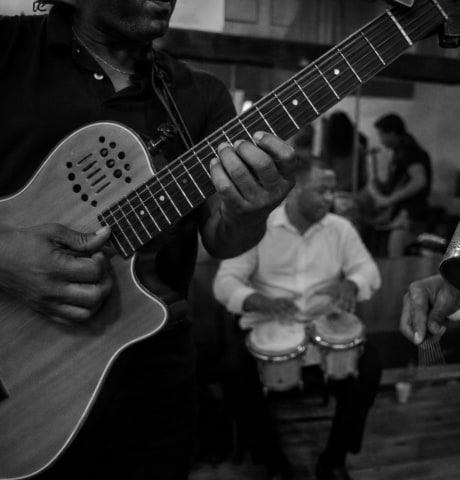
Anyone listening to traditional Bachata for the first time immediately notices an enormous vitality in their ears. The Dominican Bachata rhythm is based on a dense network of acoustic instruments, all playing their own highly dynamic patterns. At the center is the rhythmic interplay between the bongo and the metallic scraper, the güira. They drive the music forward, while the lead guitar, also known as the requinto, sprinkles in playful melodic runs and rhythmic embellishments. This structure ensures that the music feels extremely organic and unpredictable. Each instrument reacts live to the others, which gives traditional Bachata its typical, almost earthy texture.

In contrast, the rhythm of Bachata Sensual is structured in a much cleaner and more minimalist way. Here, electronically generated beats, soft synthesizer pads, and a very steady, rich bass often dominate. The complexity of the acoustic percussion gives way to a clear, modern pop rhythm. This makes it easier for the ear to find the basic beat at first, as the distracting, fast intermediate strokes of the traditional instruments are missing. The music focuses on the large, flowing arcs of tension and the deep, supporting heartbeat of the song.

Syncopation against the steady pulse

The decisive rhythmic difference in Bachata lies in the distribution of energy within the beat. A traditional Bachata beat thrives on constant syncopation, meaning accents that fall between the actual main beats. Musicians often emphasize the off-beats, which gives the music a bouncy, driving character. There is hardly a moment of stillness: the güira rustles continuously in fast sixteenth notes, and the requinto guitar breaks up the rigid beat structure through constant improvisation. Your ears must learn to decode this dense tapestry so you do not lose the thread.

In the Sensual rhythm, however, the rhythm track is heavily simplified and reduced to the essentials. Electronic kicks and snares mark the heavy counts of one, three, five, and seven extremely clearly. There are fewer rhythmic surprises, but instead a distinct emphasis on long wave movements in the music, which are often created by filter effects or the slow swelling of synthesizers. Where the Dominican style shines through micro-rhythms, the Sensual style works with macroscopic dynamics and long pauses that leave room for interpretation.

Rhythm check: How to train your ear in the club

Listen traditionally

  • Pay attention to the bright güira and the bongos
  • Pick out syncopations and intermediate beats
  • Pick up on the dynamics of the acoustic guitar

Typical listening mistakes

  • Only waiting for the heavy bass beat
  • Simply ignoring the fast off-beats
  • Expecting a steady pop beat

Only when you understand the polyrhythms of the Dominican instruments do you grasp why the footwork in traditional Bachata can be so incredibly playful.

Bachata dance instructor, Cologne

The direct listening comparison in the social club

To tell the two worlds apart in the club immediately, a simple trick helps: pay attention to the most dominant instrument in the upper frequency range. Do you hear a metallic, rapidly rasped güira and a virtuously plucked acoustic guitar that chases through the scale almost like a harp? Then you are dancing to a traditional Dominican track. The music invites you to react to the fast intermediate beats and to interlock your footwork closely with the instruments.

Do you hear a deep, synthetic bass that fills the room instead, combined with modern R&B or pop vocals and electronic reverb effects? Then a sensual mix is playing. Here, the rhythm is your reliable, stable foundation that keeps your head clear so you can focus fully on the connection in the couple. If you notice that picking out the nuances is still difficult for you, it is worth taking a look at typical mistakes in Bachata technique to develop a better feel for the interplay of movement and music.

Two rhythms, two completely different worlds in your ears

Traditional

Dominican vibrancy

The acoustic original from the Caribbean

Handmade acoustic sounds dominate here. The instruments play rhythmically against each other, constantly improvising and creating a driving, extremely lively sound that shifts the focus to fast, precise footwork.

Modern

Sensual Minimalism

The electronic pulse of European clubs

Electronic beats, soft synthesizers and familiar pop structures define this sound. The rhythm remains extremely stable and straightforward in the background, which leaves plenty of room for slow, fluid movements.

Frequently Asked Questions

  1. Traditional Bachata sounds very bright, metallic, and extremely busy. This is due to the rapidly rasped güira and the dominant lead guitar, which constantly improvises and plays fast sequences of notes.

Bachata courses near you

Find the right course on udansa and learn how to translate the different rhythms directly into movement.

View all matching courses

Find your rhythm in class

On udansa you will find dance enthusiasts in your area who feel the beat just like you. Sign up and discover suitable dance classes to bring your rhythm practice directly to the dance floor.

Find your rhythm in class