Style guide4 minutes

Modern or Contemporary test: Which dance type are you?

By Bernhard De LucaUpdated

In a nutshell
  • Modern dance is based on historical, clearly structured techniques with fixed rules for the body.
  • Contemporary dance breaks these structures down and puts individual, free emotional expression in the foreground.
  • Our self-test determines which of the two styles suits you better based on your training preferences.
  • The evaluation helps you choose the right class in your area without frustration.

The world of contemporary dance is fascinating, versatile, and sometimes confusing. Find out with our quick self-test whether your heart beats for the precise lines of Modern Dance or the creative freedom of Contemporary.

Structured school versus creative freedom

Anyone who engages with modern dance quickly realizes that the terms are often mixed up. Yet, behind the scenes, there are two completely different philosophies. Classic modern dance is based on the great schools of the 20th century: it has a clear, almost academic structure, its own terminology, and fixed movement sequences. Here, you learn precise techniques to master your body as a perfectly tuned instrument. If you love fixed rules and want to orient yourself along clear lines, this style offers you a wonderful, secure framework.

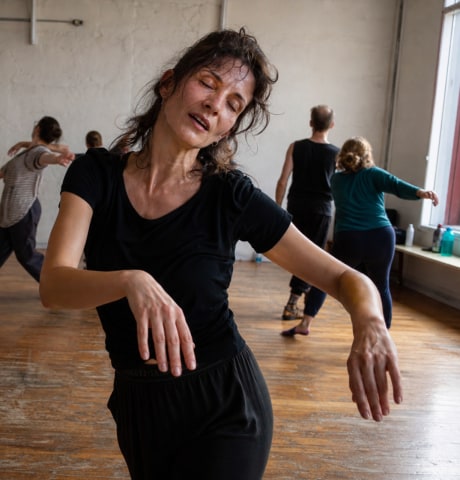
Contemporary dance, on the other hand, is the child of rebellion against any form of dogma. While it makes use of modern dance techniques, it consciously throws rigid rules overboard. Here, it is all about the moment, individual expression, and playing with gravity. You will learn how you can use gravity in contemporary dance to glide effortlessly across the floor. If you want to express yourself without fixed guidelines and explore your own movement patterns, this free approach is exactly the right thing for you.

Find your dance style: The quick self-test

  1. How do you prefer to learn new movement sequences?

    • A: Step by step according to a clear, logical method.
    • B: By trying things out, feeling them, and imitating freely.
  2. What is most important to you when dancing?

    • A: Body control, strength, and mastering precise technique.
    • B: Showing emotions, switching off your head, and being in the flow.
  3. How do you feel about improvisation in class?

    • A: It makes me feel insecure, I prefer dancing set sequences.
    • B: It sets me free, I love playing with my own ideas.
  4. Which music inspires you most to move?

    • A: Classical sounds, drum rhythms, or structured instrumental music.
    • B: Soundscapes, modern pop ballads, or even absolute silence.

Your evaluation

Mostly A: The structured modern type

You love it when movements have a clear logic and a comprehensible structure. The precise, historically evolved techniques of Modern Dance give you the perfect support to train your body systematically. Look specifically for courses that teach classical schools like Graham or Horton.

Mostly B: The free-spirited contemporary type

For you, personal expression and letting go are what matter most. You do not want to be forced into rigid structures, but rather seek the freedom of movement and creative improvisation. Contemporary dance with elements of release and floorwork is your dance home.

Direct comparison: Modern vs. Contemporary

CriterionModern DanceContemporary Dance
Origin20th-century schoolsPostmodern rebellion from approx. 1960
Movement basisFixed techniques and principlesCross-style, free patterns
ImprovisationLow, mostly fixed choreographiesVery high, often a central component
Body focusTension, line, resistance to gravityRelease, flow, use of gravity
Learning pathAcademic and systematicExperimental and individual

The transitions in modern dance schools are often fluid and depend heavily on the teacher.

How to use your test result in the studio

As soon as you have your test result in black and white, it is time to put it into practice. Don't let the terms intimidate you: many dance schools offer hybrid forms today or use the names synonymously. Take a close look at the course descriptions. If terms like Graham technique, Limón, or Horton are listed, a structured modern class awaits you. If, on the other hand, you read about improvisation, release, or floorwork, it is heading in the direction of contemporary.

For getting started in contemporary, it also helps to overcome the fear of improvisation in contemporary. Many beginners worry about acting awkwardly without fixed steps, but in the studio, there is a non-judgmental, supportive atmosphere. Use your test result as a compass to specifically search for trial classes. In the end, your gut feeling decides in which room you feel most comfortable and where your energy can flow best.

Frequently Asked Questions

  1. No, you do not need any prior knowledge for either style. The courses for adults are structured so that you learn the movements and body awareness from scratch.

Modern and Contemporary near you

Discover suitable courses and find your dance community on udansa.

View all suitable courses

Find your dancing home

Whether you are looking for the clear structure of modern dance or the boundless freedom of contemporary: on udansa you will find like-minded people, suitable workshops, and the best dance schools in your area.

Find your dancing home