Belly dance technique4 minutes

Belly dance hand movements: Learn elegant hands and arms

By Bernhard De LucaUpdated

In a nutshell
  • Elegant hand movements in belly dance are based on the precise isolation of the wrist and a soft guidance to the fingertips.
  • The continuous circling of the wrists inward and outward prevents the arms from appearing stiff or lifeless while dancing.
  • The fingers take on a slightly fanned posture, where the middle finger lowers gently and completes the movement with a slight delay.
  • A harmonious overall picture is created when the arm movement is fluidly guided from the shoulder through the elbow into the wrists.

Elegant arms and hands give oriental dance its magical radiance. With the right technique in your wrists, you turn rigid gestures into flowing poetry.

DefinitionWrist circles

Wrist circles describe a fundamental technique in oriental dance, where the wrist performs a circular isolation to give the arms a flowing and weightless aesthetic.

Why the hands are the secret to elegance

When we watch an oriental dance, we are often captivated by the seemingly effortless elegance of the arms. Yet, behind this lightness is no coincidence, but a fine coordination that begins in the wrist and extends to the fingertips. Many beginners focus so strongly on hip movements that their arms hang stiffly in the air or swing uncontrollably. The solution for fluid hand movements in belly dance lies in conscious isolation and targeted training of the wrist muscles.

A harmonious overall image only emerges when the arms frame the space around the body and gently underscore the hip accents. The basic rule applies: the movement always flows from the inside out. It originates in the back, flows over the shoulder and elbow, rolls through the wrist, and finally breathes life into the fingers. Anyone who understands this chain transforms stiff poses into living, breathing lines.
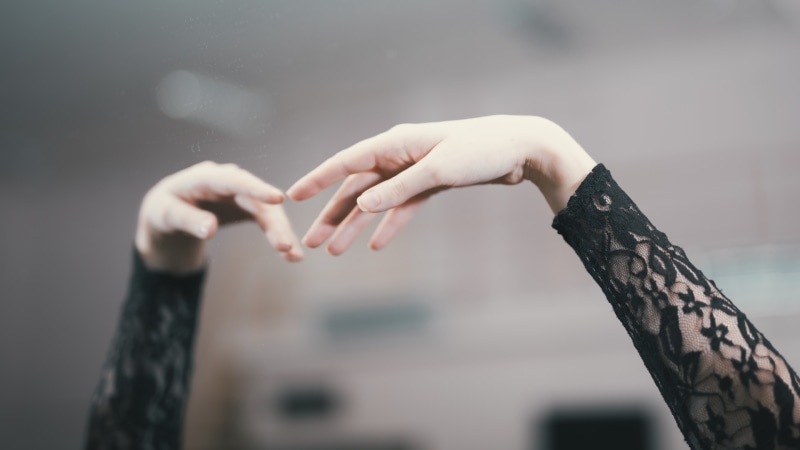
Close-up of an elegant dancer's hands
The perfect hand position in oriental dance is characterized by a slight lowering of the middle finger and a soft extension of the outer fingers.

The precise technique of wrist circles

A common misconception is that elegant arms simply need to be held still. The opposite is the case: an elegant use of arms in oriental dance only looks lively if it is in a constant, almost invisible flow. The most important basic technique for this is circling the wrists in belly dance. These circles can be guided inwards or outwards and require precise control of the tendons and muscles in the forearm.

To execute the movement cleanly, it is best to imagine drawing a gentle circle in the air with the tip of your middle finger. The wrist leads the movement, while the fingers follow softly. Avoid bending the joint unnaturally. It is about a round, flowing helix shape. When you internalize this coordination, even simple holding positions immediately appear dynamic and elegant. These soft transitions also form the perfect contrast to rhythmic accents, as you will learn in the belly dance shimmy guide for the lower body.

The path to elegant arms in oriental dance

Like this

  • Start the movement in the shoulder girdle
  • Rotate the wrist softly and in a controlled manner
  • Move the fingers individually and with a slight delay
  • Use the arms as a flowing frame

Not like this

  • Freezing the arms stiff and motionless
  • Jerking the wrist sharply
  • Pressing the fingers tightly together
  • Letting the elbows hang limply downwards

A dancer's hands are like a painter's brushstrokes. They complete the picture and give the entire movement its deeper meaning.

Instructor for oriental dance, Berlin

How delicate finger movements perfect your expression

The crowning finale of every arm movement is the belly dance finger movement. They breathe soul into the gesture. Dancers often tend to either press their fingers tightly together or let them hang completely limp. Both break the visual line and destroy the illusion of weightlessness. The solution lies in a gentle fanning, where each finger plays its own, minimally time-delayed role.

The classic hand position in oriental dance emphasizes the middle finger, which sinks slightly downward, while the thumb gently approaches it without touching it. The index finger and little finger stretch elegantly outward. When you now perform a wave movement, the fingers fold in and out one after the other, as if you were imitating a delicate blossom. This detailed work requires patience, but it instantly transforms your charisma on the dance floor.

Dynamic circling versus static holding

Circling

The active wrist wave

Fluid rotation from the joint

The movement is actively initiated from the wrist. The fingers remain soft and follow the circular motion like feathers in the wind.

Hold

Aesthetic placement

Elegant frames for the body

Fingers take on a firm, sculptural shape to frame poses in space. The tension keeps the line stable right to the tips.

Frequently Asked Questions

  1. Loosen up your wrists before training and practice the circles very slowly without music at first. Make sure that your forearm moves as little as possible.

Find your dance flow

On udansa you will find like-minded people and professional courses that help you take your belly dance technique to the next level.

Find your dance flow