Samba history5 minutes

Samba history and origin: The African heartbeat

In a nutshell
  • Samba has its deepest roots in the ritual dances of West and Central African peoples.
  • Enslaved people brought these traditions to Brazil during the slave trade.
  • The original form of the dance emerged in northeastern Brazil from the fusion of African rhythms and European influences.
  • After the abolition of slavery, Samba migrated to the favelas of Rio de Janeiro, where it developed into a national cultural asset.

Behind the infectious rhythms of Samba lies a dramatic history of oppression, resistance, and cultural perseverance. It is the living monument of a culture that danced its way to freedom despite the harshest conditions.

Definition
Semba

Semba is a traditional African circle dance from Angola, which is considered the most important precursor to Brazilian Samba. A characteristic feature is the umbigada, a dance-like touch of the bellies to pass on the solo part.

The journey across the Atlantic and survival in exile

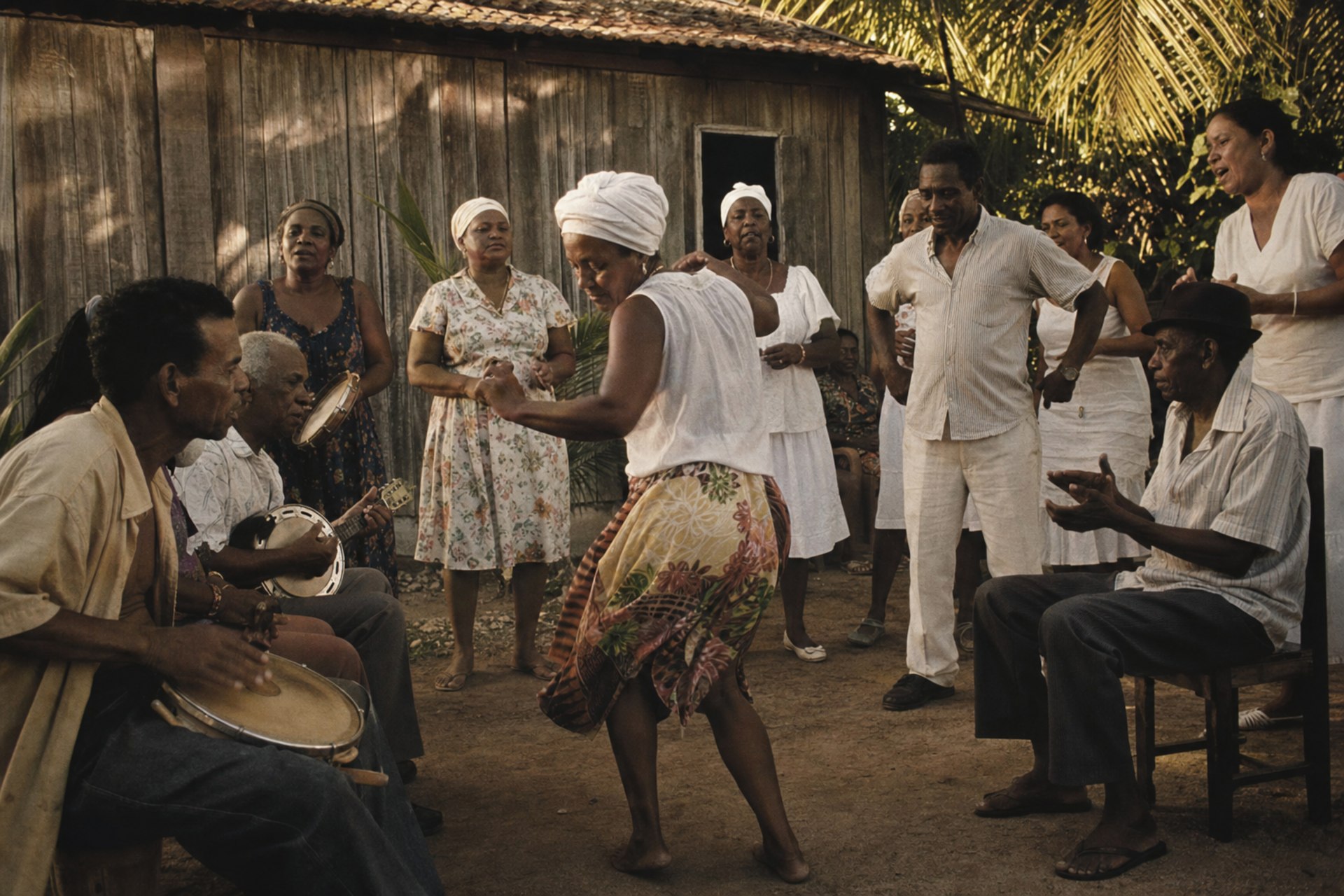
The roots of the world-famous Samba lie far away from the glittering stands of the modern carnival in Rio. Anyone who wants to grasp the deep soul of this dance must take a journey back to the 17th and 18th centuries. During the transatlantic slave trade, European colonial masters abducted millions of people from West and Central Africa to Brazil, primarily from the regions of present-day Angola and the Congo. These people carried no material goods in their luggage, but they brought their invaluable spiritual and cultural traditions. In exile, their dances and drum rituals were far more than mere leisure activities: they served as a vital outlet to process traumatic experiences, maintain a connection to their homeland, and forget the harsh everyday life on the sugar cane and coffee plantations for a few moments.

In these communities, the various African cultures merged into new forms of expression. A central element was the circle dance, where the community clapped the rhythm while individuals improvised in the center. Anyone who would like to delve deeper into the historical paths of the music will find valuable insights in the guide on understanding historical dance music. The original dances were deeply anchored in the collective memory and formed the foundation upon which a completely new attitude to life would later grow in Brazil.
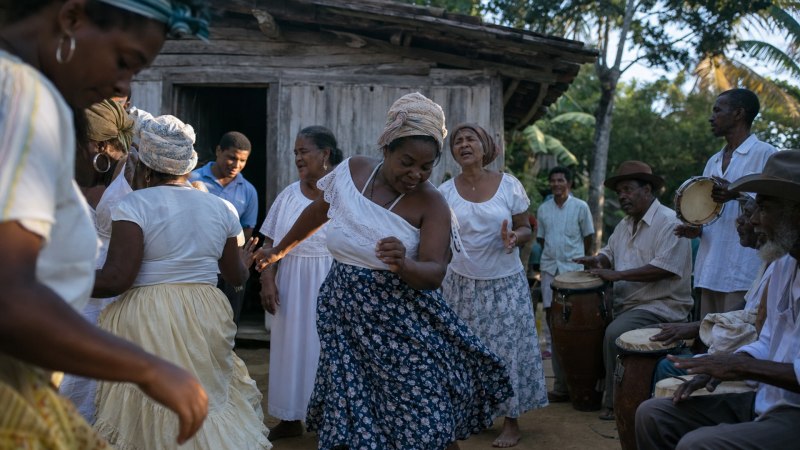
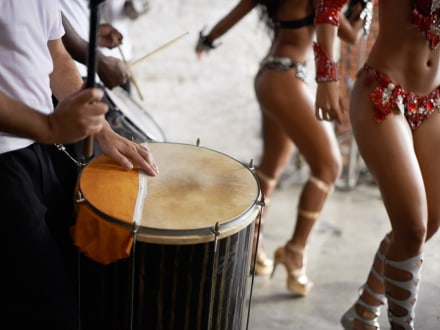
The drum is the foundation of Samba: its rhythms crossed the ocean and gave a voice to millions of people.

The belly button thrust as the seed of movement

The term Samba most likely derives from the term "Semba," which in the African Bantu language Kimbundu means something like "belly button thrust." This ritual thrust, also known as Umbigada, was the signal in traditional circle dances used by a dancer to invite the next person into the center of the circle. The movement was highly symbolic and celebrated fertility, community, and vitality. Upon arriving in Brazil, these African rhythms blended over the decades with European influences, including Portuguese melodies and instruments such as the guitar or the cavaco.

Especially in the northeastern state of Bahia, the historical heart of Afro-Brazilian culture, this fusion solidified. Here, one of the original forms emerged that we consider today as the origin of the entire movement. For those who want to dive deeper into this specific regional development, we recommend taking a look at the history of Samba history: The roots of the Brazilian heartbeat. These rural dances were characterized by earthy, syncopated steps and a close connection to the ground, far removed from the elevated, floating steps of the European ballroom dances of that era.

Understanding Samba: Historical heritage vs. modern cliché

Historically accurate

  • Respect the African origin as a spiritual heritage
  • Understand the drum as the heartbeat and timekeeper
  • Acknowledge the social history of resistance
  • Understand dance as a collective community experience

Cliché and myth

  • Reducing Samba only to feathers and carnival
  • Seeing the rhythm as a purely European product
  • Ignoring its origins in poverty and favela culture
  • Viewing Samba as a pure, soulless competitive dance
udansa tip

Listen to traditional recordings from Bahia to get to know the earthy, original drumming without modern synthesizers. This trains your ear for the authentic syncopations.

Samba did not originate in glittering halls, but on the bare earth of plantations and in the dusty alleys of the favelas. It was a cry for freedom.

Cultural historian, Salvador da Bahia

From a forbidden street ritual to an urban identity

With the end of slavery in Brazil in 1888, many formerly enslaved people moved from rural Bahia to the then-capital, Rio de Janeiro. They settled in the hills, the city's favelas, and brought their music and dances with them. In the backyards of Rio, often under the protection of religious leaders like the legendary "Tias" (aunts), Samba developed from a frowned-upon ritual of the lower class into an urban form of expression. The police initially pursued the drummers and dancers mercilessly, as the music was considered subversive and offensive.

But the captivating rhythm could not be suppressed. In the backyards of Rio, rural traditions met urban influences, making the music faster, more dynamic, and more complex. From the ritual gatherings, the first organized groups gradually emerged, which finally paved the way for the worldwide popularity of the genre. If you want to know how the different styles compare to classical partner dance today, read our article on Ballroom Dance vs. Social Dance, which sheds light on the subtle differences between these dance worlds.

Two sides of a movement: ritual and protest

Ritual

Community and faith

Connection to the spiritual world

In its African origins, dance was a spiritual community experience. It served to honor ancestors, celebrated harvests, and strengthened the group's cohesion in a circle.

Resistance

Identity and protest

Cultural self-assertion in urban spaces

In the favelas of Rio, dance became a tool for social resistance. It helped marginalized communities defend their identity against state repression.

Frequently Asked Questions

  1. The name Samba most likely originates from the Angolan word Semba. In the Kimbundu language, this describes the ritual belly-button bump Umbigada, which played a central role in African circle dances.

Salsa and partner dance courses near you

Discover the variety of Latin American rhythms and find your start on the dance floor.

View all matching courses
udansa community

Find your connection to the rhythm

On udansa you will find like-minded people who share your passion for rhythm and movement. Discover dance partners and courses in your area to experience the magic of Samba for yourself.