
Find your rhythm partner at udansa
On udansa, you will find like-minded people who share your passion for rhythm, as well as suitable courses and events in your area.



By Bernhard De LucaUpdated
On udansa, you will find like-minded people who share your passion for rhythm, as well as suitable courses and events in your area.
Samba is far more than just a dance for the carnival in Rio de Janeiro. It is the pulsating heart of an entire nation, born from the pain of slavery and the irrepressible joy of life of a continent.
Samba refers to a family of music and dance styles of Afro-Brazilian origin, which are characterized by syncopated rhythms and rich percussion accompaniment. Today, the term stands worldwide as a symbol for the cultural identity of Brazil.
The roots of Samba reach deep into the history of Afro-Brazilian culture. In the course of the transatlantic slave trade, millions of displaced people from West and Central Africa, primarily from the regions of modern-day Angola and the Congo, brought their ritual dances and drum rhythms to Brazil. In the sugarcane plantations and slave quarters of Bahia, these traditions merged into new forms of expression. The term is likely derived from the Angolan word Semba, which means belly button bump and describes a traditional invitation dance. These Afro-Brazilian roots formed the foundation upon which an entirely new cultural phenomenon developed over the centuries.
After the abolition of slavery in 1888, many former slaves moved to the then-capital, Rio de Janeiro. In the local favelas, the impoverished neighborhoods on the hillsides of the city, various regional influences collided. Music served as an outlet for oppression, as a spiritual refuge, and as a social link. Although the practice of this African-influenced culture was initially strictly persecuted and criminalized by the authorities, the creative power of the community could not be stopped. It was the beginning of an unprecedented success story that would carry the rhythm from the favelas directly into the heart of Brazilian identity.
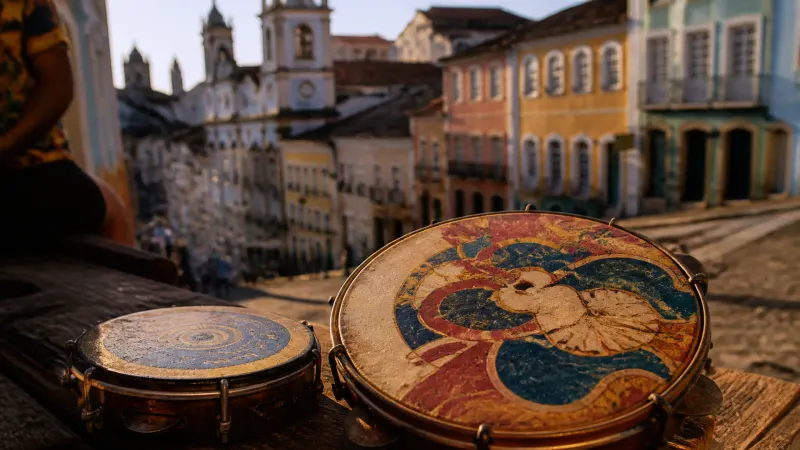
If you want to fully grasp the fascination of Samba, you have to engage with its sonic architecture. Its unmistakable heartbeat is based on a dense structure created by traditional Samba instruments. The deep, supporting pulse is provided by the surdo, a large bass drum that sets the basic beat. Layered over this are the whipping, bright strikes of the repinique, which is often used for solos and signals. The chocalho provides the characteristic metallic rustling, while the tamborim densifies the rhythmic web with precise, syncopated accents. Another key element is the agogô, a double bell made of metal whose bright tone supports the melody line.
A very special instrument is the cuíca, a friction drum that produces squeaky, almost human-sounding tones by rubbing a damp cloth against a bamboo stick inside the shell. This complex polyrhythm differs fundamentally from European beat structures. If you want to learn how to interpret these multi-layered sounds through dance, you will benefit from a deeper understanding of music history. A valuable aid for this is the guide Understanding historical dance music, which illuminates the development of rhythmic structures over the centuries and trains your ear for subtle nuances.
Correct
Myths
Samba is not merely a style of entertainment, it is a social chronicle of Brazil that captures the struggles and triumphs of its people in sound.
Over the course of the 20th century, music branched out into numerous different Samba music styles, each reflecting its own social and regional identities. The classic Samba de Terreiro emerged in the early samba schools of Rio and formed the basis for the pompous carnival sound, the Samba-Enredo. As a counter-movement to the loud street samba, Bossa Nova developed in the late 1950s, an elegant fusion of Samba rhythms with the harmonies of US Cool Jazz. In the 1970s, the Pagode movement brought the music back to the backyards and pubs, characterized by smaller ensembles and instruments like the Cavaquinho, a four-stringed mini guitar.
Each of these styles conveys its own attitude to life, which goes far beyond mere movement. While the monumental Batucada sound of the drum groups electrifies the body, the gentle melodies of the Samba-Canção invite you to dream and linger. The ability to hear these stylistic differences fundamentally changes your approach to dance. It transforms the steps from a mere sequence of movements into a genuine, deeply felt dialogue with the music. Samba is not a rigid construct, but a living, breathing organism that constantly reinvents itself through the continuous exchange of tradition and modernity.
The raw energy of the favelas
Traditional street Samba is loud, wild, and community-oriented. It thrives on the improvised energy in the circle, the interaction with the audience, and the powerful, driving sound of a huge drum ensemble.
The intellectual evolution
Concert Bossa Nova brought the rhythm into smoky clubs and bourgeois salons. Here, soft tones, complex jazz harmonies, gentle vocals, and an intimate, melancholic atmosphere dominate.
Samba originally comes from West and Central Africa. Through the transatlantic slave trade, the rhythms reached Bahia in the northeast of Brazil, where they blended with European cultural influences.
Traditional instruments form the foundation of the music. Among the most important are the surdo for the deep bass, the tamborim for bright accents, the friction drum cuíca, and the cavaquinho for harmonic accompaniment.
Bossa Nova emerged in the late 1950s in Rio de Janeiro as a fusion of Samba rhythms and American jazz. It is characterized by a slowed-down beat, complex chords, and whispering vocals.
The term most likely derives from semba, a word from the Kimbundu language in Angola. It describes a traditional dance in which the dancers touch each other with their pelvises.
Dive into the fascinating world of Brazilian rhythms and find the right course.
BallroomMeißen · Germany
Tanzkreis | PROFESSIONALTuesday · 20:15 · Oct 27, 2026 - Jan 5, 2027
“Ein Haus für Vieles” - Saal Tanzkurse
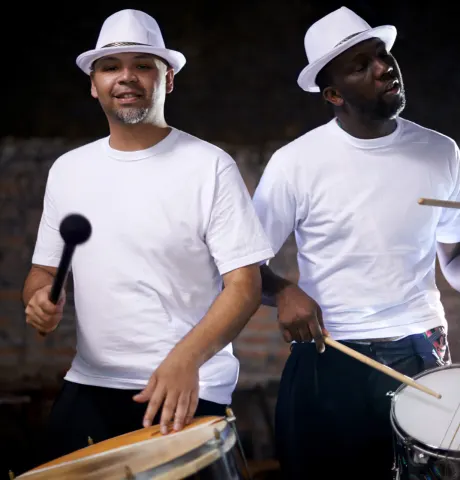 Samba instruments: The sound of the bateria in detailDive into the fascinating world of Brazilian samba instruments. Learn how the surdo, tamborim, and others shape the unmistakable sound of the bateria.
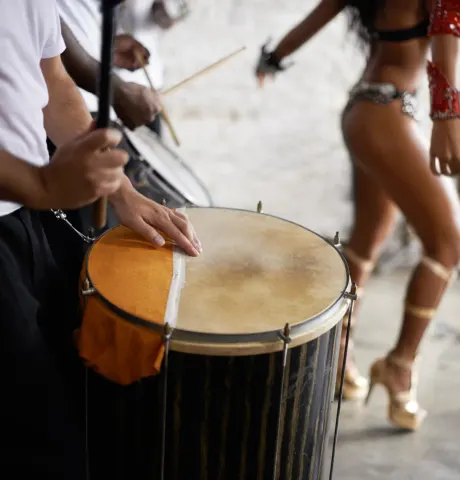 Counting Samba rhythm: How to hear the beatLearn step by step how to identify the Samba rhythm flawlessly and count the beat like a pro. No dance steps required, just for your ears.
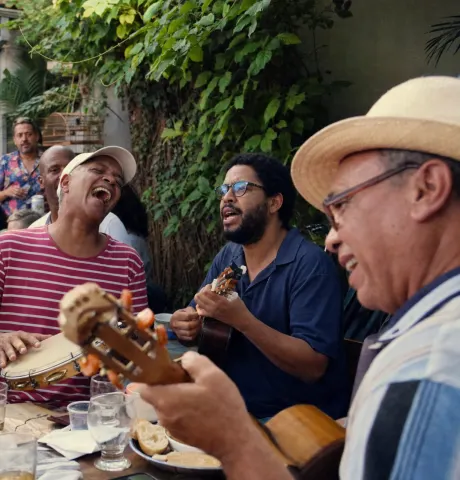 Samba music styles: From Pagode to Bossa NovaSamba is not just samba. Our guide leads you through the fascinating world of samba music styles, from wild Samba Enredo to elegant Bossa Nova.
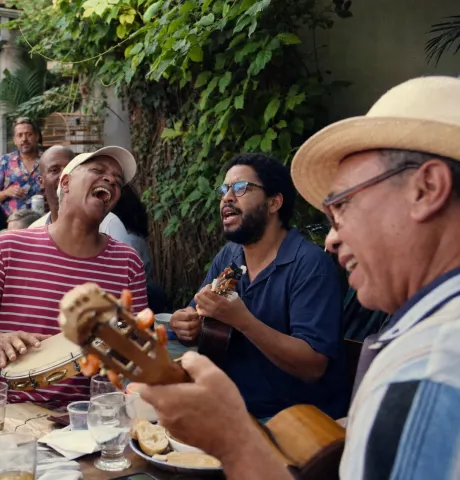 Which Samba style suits you? Take the testFind out which Samba subgenre best matches your musical taste with our quick test. Discover the variety from Bossa Nova to Pagode!
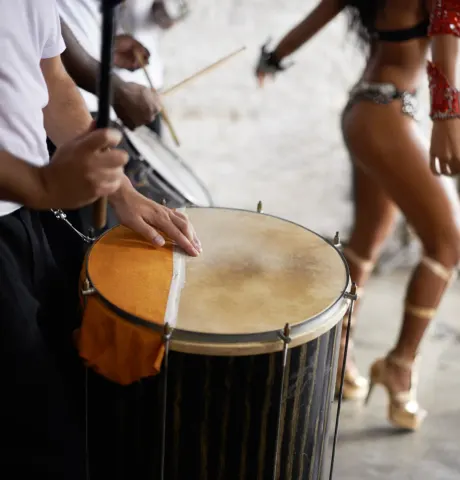 Famous Samba Musicians: The Legends of RhythmDive into the world of the most famous samba musicians in history. Learn how Cartola, Clara Nunes, and other legends made the rhythm of Brazil immortal.
 Best Samba Albums of All Time: Milestones in Music HistoryDive into the golden era of Brazilian music. We introduce you to the most legendary Samba albums, milestones that changed music history forever.
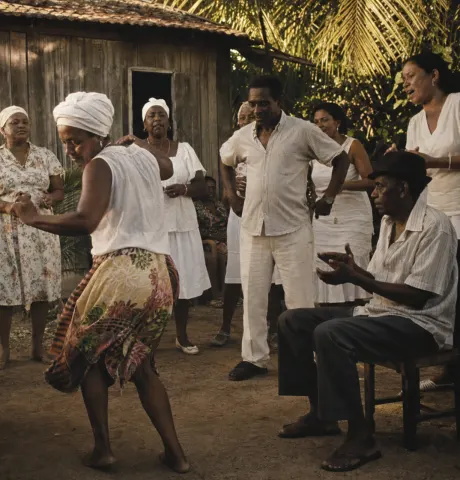 The history of Samba schools in Rio de JaneiroDive into the fascinating origins of the Samba schools in Rio de Janeiro. Learn how social protest and Afro-Brazilian rhythms evolved into a global cultural treasure.
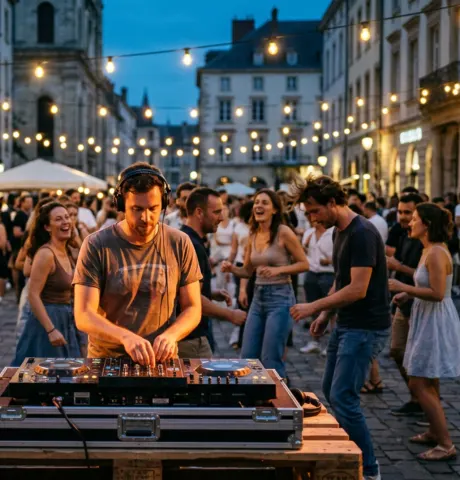 Samba Music Trends: How the sound is evolving todaySamba is more alive than ever. We take a look at the current music trends in 2026 and show you how electronics and tradition are merging.
 The history of Bossa Nova: The elegant sister of SambaIn the late 1950s, Bossa Nova revolutionized the music world by blending the wild energy of Samba with the cool elegance of jazz. Learn how this intimate sound emerged in the coastal districts of Rio de Janeiro.
 Samba de Roda History: The Cradle of Circle Dance in BahiaSamba de Roda is the historical cradle of the Brazilian national dance. Learn how this traditional circle dance originated in the state of Bahia and why it is protected today as UNESCO World Heritage.
 Samba Roda structure: How to host a traditional sessionLearn how to structure a traditional Samba Roda musically, which unwritten laws apply within the circle, and what the perfect session flow looks like.
 History of Samba in Europe: The Journey Across the OceanThe journey of Samba from the streets of Rio to European ballrooms is a story full of fascination, misunderstandings, and cultural adaptation. Learn how the rhythm conquered Europe.