
Find your Samba rhythm together
On udansa you will meet other music enthusiasts who share your passion. Find like-minded people for the next concert, a relaxed Roda de Samba, or the right dance course in your area.



By Bernhard De LucaUpdated
On udansa you will meet other music enthusiasts who share your passion. Find like-minded people for the next concert, a relaxed Roda de Samba, or the right dance course in your area.
Samba is as colorful and versatile as Brazil itself. Our psychological music test helps you discover the perfect Samba subgenre for your personal taste and your current situation in life.
Samba is not just Samba. When you think of this Brazilian music, you might immediately have the roaring drum fire of the carnival in Rio in your head. However, the musical world of Samba is far more complex and ranges from melancholic, gentle sounds to danceable, modern beats. To find out which style best suits your personality, a targeted look at your listening habits helps. Are you looking for intellectual relaxation, rustic conviviality, or the pure energy of a huge drum group? Each subgenre serves a completely different mood.
Engaging with the different musical styles is especially worthwhile if you want to understand the deeper roots of this culture. In the Samba history, it becomes clear how closely social developments were linked to musical changes. While the traditional Roda de Samba originated in the backyard, its elegant sister Bossa Nova developed in the chic beach districts of Rio de Janeiro. If you know which instruments and moods touch you emotionally, you will also understand the soul of Brazil a little better.
You love the intimate, intellectual side of music. Bossa Nova, with its soft jazz chords and quiet vocals, is your perfect retreat from everyday life. You prefer to enjoy music while relaxing on the sofa or with a good glass of wine.
For you, music is a shared experience. Pagode, with its catchy melodies, cozy circle atmosphere, and sing-along lyrics, is a perfect match for your sociable nature. You thrive when people come together.
You need power, rhythm, and ecstasy. Samba-Enredo or powerful Samba-Reggae sweep you away immediately and give you new energy. You love the feeling of being part of a large, pulsating crowd.
| Criterion | Bossa Nova | Pagode | Samba-Enredo |
|---|---|---|---|
| Basic mood | Elegant, melancholic, intimate | Warm, down-to-earth, familiar | Ecstatic, powerful, monumental |
| Main instruments | Guitar, soft percussion, piano | Cavaquinho, Pandeiro, hand drums | Huge Bateria, loud vocals |
| Tempo | Slow to medium speed | Medium speed and flowing | Very fast and driving |
| Best occasion | Dinner for two, relaxation | Barbecue, pub night with friends | Carnival, large festivals, sports |
The transitions between musical styles are often fluid in Brazilian reality.
After finding your musical home in the Samba universe, the question arises of how you can live out this sound in your everyday life. Music unfolds its greatest power when you share it. You can specifically search for playlists of your new favorite genre, attend concerts, or exchange ideas with like-minded people. The various subgenres offer the right soundtrack for every situation: Pagode is excellent for relaxed barbecue evenings with friends, while Bossa Nova provides the perfect backdrop for quiet reading hours or a stylish dinner.
If the rhythms make it impossible for you to sit still, the step to dancing is not far away. It helps immensely to feel the rhythm in your blood when you venture onto the dance floor later. If you already have the music in your ear, learning the movements becomes much easier. On udansa, you can easily make contacts to exchange ideas with others about your musical discoveries or visit events together that perfectly match your Samba taste.
Samba-Enredo is the monumental style of the Rio carnival, played by huge drum ensembles, the baterias. It is extremely fast, driving, and loud, designed for the large parades in the Sambadrome.
Pagode is the cozy, down-to-earth version of Samba, usually played in small groups in backyards or pubs. It uses quieter string instruments like the cavaquinho and invites you to sing along and celebrate with friends.
Bossa Nova emerged in the late 1950s as a blend of Samba rhythms and cool jazz harmonies. The style is significantly slower, more intimate, and is often performed with only an acoustic guitar and quiet, almost whispered vocals.
Let yourself be carried away by the Brazilian rhythms and find the right course for you.
BallroomMeißen · Germany
Tanzkreis | PROFESSIONALTuesday · 20:15 · Oct 27, 2026 - Jan 5, 2027
“Ein Haus für Vieles” - Saal Tanzkurse
 History of Samba: The roots of the Brazilian heartbeatThe history of Samba is a journey full of rhythm, culture, and resistance. Discover the fascinating African roots and the instruments that shaped this global success.
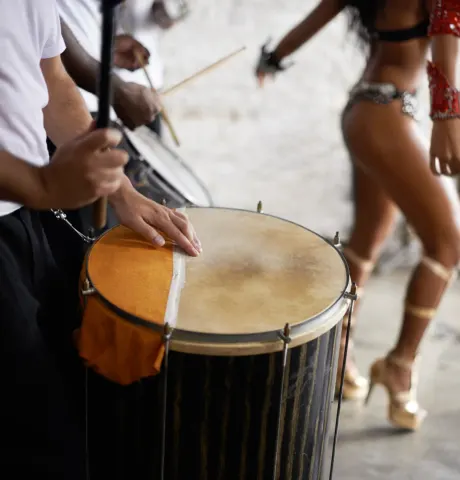 Famous Samba Musicians: The Legends of RhythmDive into the world of the most famous samba musicians in history. Learn how Cartola, Clara Nunes, and other legends made the rhythm of Brazil immortal.
 Best Samba Albums of All Time: Milestones in Music HistoryDive into the golden era of Brazilian music. We introduce you to the most legendary Samba albums, milestones that changed music history forever.
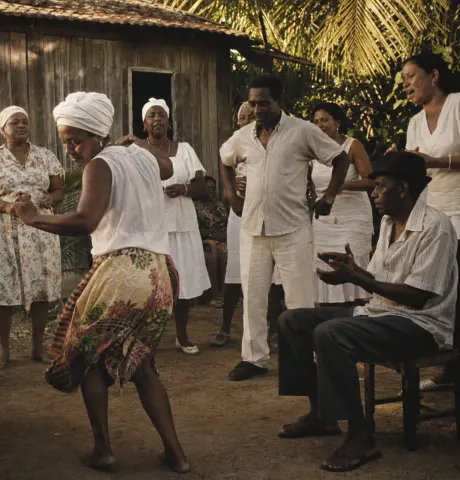 The history of Samba schools in Rio de JaneiroDive into the fascinating origins of the Samba schools in Rio de Janeiro. Learn how social protest and Afro-Brazilian rhythms evolved into a global cultural treasure.
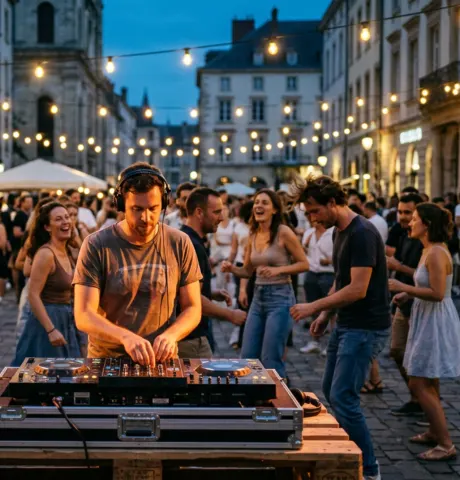 Samba Music Trends: How the sound is evolving todaySamba is more alive than ever. We take a look at the current music trends in 2026 and show you how electronics and tradition are merging.
 The history of Bossa Nova: The elegant sister of SambaIn the late 1950s, Bossa Nova revolutionized the music world by blending the wild energy of Samba with the cool elegance of jazz. Learn how this intimate sound emerged in the coastal districts of Rio de Janeiro.
 Samba de Roda History: The Cradle of Circle Dance in BahiaSamba de Roda is the historical cradle of the Brazilian national dance. Learn how this traditional circle dance originated in the state of Bahia and why it is protected today as UNESCO World Heritage.