
Find your Samba community with udansa
On udansa connect, you will meet like-minded people who share your passion for Brazilian rhythms. Find the right contacts in your area now to dance together and celebrate the music.



By Bernhard De LucaUpdated
On udansa connect, you will meet like-minded people who share your passion for Brazilian rhythms. Find the right contacts in your area now to dance together and celebrate the music.
Samba is much more than just a dance, it is the soul of Brazil. The melodies and rhythms that move us on the dance floor today were created by visionary artists whose legacy remains alive to this day.
Historical relevance
Only musicians who have historically shaped the genre through their own compositions or groundbreaking interpretations have been included.
Cultural influence
The selection is based on specialized literature on Brazilian music history and the lasting influence of these works on today's dance scene.
Independent selection
For the creation of this list, no financial contributions or paid placements from record labels or agencies were accepted.

Rio de Janeiro, active from 1920 to 1980, co-founder of the Mangueira school
Cartola is the undisputed poet of Samba. His compositions, such as "As Rosas Não Falam", are characterized by an incomparable melancholy and lyrical beauty that defined the golden age of the genre.
Rio de Janeiro, active from 1940 to 2018, pioneer for women in Samba
As the first woman in the composers' group of a major Samba school, Dona Ivone Lara broke all barriers. Her warm melodies and her unmistakable voice made her the "Queen of Samba".
Vila Isabel, active in the 1930s, revolutionary songwriter
Noel Rosa brought Samba from the favelas to mainstream radio. With ironic, clever lyrics about everyday life in Rio, he created classics like "Com Que Roupa?" that every Brazilian can still sing along to today.
Minas Gerais / Rio, active from 1960 to 1983, millions of albums sold
Clara Nunes was one of Brazil's greatest voices. She deeply connected Samba with Afro-Brazilian religions and brought immense spiritual power and a dance-like presence to the stage.
São Paulo, active from 1930 to 1982, voice of the working class
Adoniran Barbosa gave Samba in São Paulo its own unique voice. With the accent of Italian immigrants and humorous lyrics about working-class life, he created anthems like "Trem das Onze".
Rio de Janeiro, active from 1980 to the present, icon of suburban culture
As an outstanding singer and improviser of the Partido Alto style, Zeca Pagodinho shaped modern Pagode-Samba from the 1980s onwards. His songs celebrate simple living, friendship, and beer in the suburbs.
If you want to fully understand the magic of Samba, you cannot ignore the great creators of this genre. The history of Brazilian music is inextricably linked to the fates, the social struggle, and the unbridled zest for life of its composers. When you delve deeper into the history of Samba and its roots, you quickly realize that every step on the dance floor is carried by the stories of these pioneers.
The evolution from the traditional circle dance in the backyards of Rio de Janeiro to the opulent sounds of the great carnival schools was significantly shaped by visionary artists. They gave a voice to the rhythms of the bateria and made the melodies popular throughout the country. For everyone who loves dance, knowledge about these musicians opens up a completely new understanding of the accents, pauses, and emotional nuances in the music. It is worth putting on the old records, translating the lyrics, and actively listening for the subtle differences between the eras.
Cartola is considered the most influential Samba musician of all time. He founded the legendary Samba school Mangueira and wrote timeless classics that captivate with poetic depth and harmonic elegance.
The song Pelo Telefone from 1916 is officially considered the first registered Samba recording. It was copyrighted by Donga and Mauro de Almeida and marks the beginning of the modern Samba era.
Yes, women played a crucial role. Artists like Clara Nunes, Dona Ivone Lara, and Clementina de Jesus broke barriers in a male-dominated scene and significantly shaped the sound.
Experience the authentic Brazilian rhythm and learn the right steps in a dance course.
Couple danceLimbach-Oberfrohna · Germany
PaartanzkreisFriday · 18:15 · Oct 23
Limbach-Oberfrohna
BallroomMeißen · Germany
Tanzkreis | PROFESSIONALTuesday · 20:15 · Oct 27, 2026 - Jan 5, 2027
“Ein Haus für Vieles” - Saal Tanzkurse
Couple danceLimbach-Oberfrohna · Germany
Silberkurs für PaareSunday · 16:15 · Oct 25 - Nov 15
Limbach-Oberfrohna
 History of Samba: The roots of the Brazilian heartbeatThe history of Samba is a journey full of rhythm, culture, and resistance. Discover the fascinating African roots and the instruments that shaped this global success.
 Best Samba Albums of All Time: Milestones in Music HistoryDive into the golden era of Brazilian music. We introduce you to the most legendary Samba albums, milestones that changed music history forever.
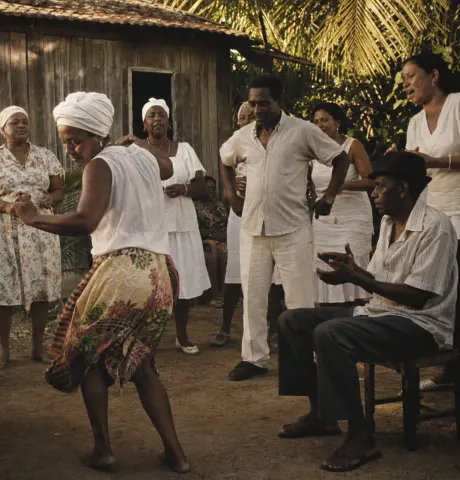 The history of Samba schools in Rio de JaneiroDive into the fascinating origins of the Samba schools in Rio de Janeiro. Learn how social protest and Afro-Brazilian rhythms evolved into a global cultural treasure.
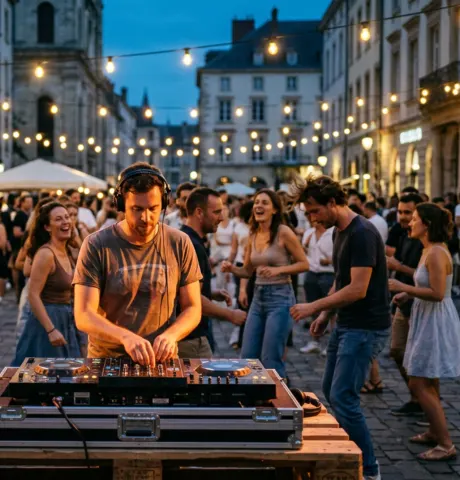 Samba Music Trends: How the sound is evolving todaySamba is more alive than ever. We take a look at the current music trends in 2026 and show you how electronics and tradition are merging.
 The history of Bossa Nova: The elegant sister of SambaIn the late 1950s, Bossa Nova revolutionized the music world by blending the wild energy of Samba with the cool elegance of jazz. Learn how this intimate sound emerged in the coastal districts of Rio de Janeiro.
 Samba de Roda History: The Cradle of Circle Dance in BahiaSamba de Roda is the historical cradle of the Brazilian national dance. Learn how this traditional circle dance originated in the state of Bahia and why it is protected today as UNESCO World Heritage.
 Samba Roda structure: How to host a traditional sessionLearn how to structure a traditional Samba Roda musically, which unwritten laws apply within the circle, and what the perfect session flow looks like.