
Brazilian joie de vivre is best shared together
On udansa you meet other music and dance enthusiasts who share your passion for Brazilian sounds. Find the perfect partners for your next dance class or social event now.



By Bernhard De LucaUpdated
On udansa you meet other music and dance enthusiasts who share your passion for Brazilian sounds. Find the perfect partners for your next dance class or social event now.
The late 1950s in Rio de Janeiro were marked by a spirit of optimism, modernization, and a young, middle-class generation in the Ipanema district. In the apartments by the beach there, young intellectuals and musicians were searching for a new sound. They wanted to transform the traditional, often loud and fast-paced Samba step beat of the streets of Rio into something more intimate, softer, and more intellectual. The birth of Bossa Nova had arrived. The year 1958 is considered a milestone in this development, when the singer and guitarist João Gilberto recorded the song "Chega de Saudade," composed by Antônio Carlos Jobim with lyrics by Vinícius de Moraes. This Samba history and origin shows how the music transformed from African-influenced drum rhythms into a jazzy, minimalist chamber play.
The Bossa Nova origin is inseparably linked to classical Samba, yet the aesthetic differs radically. Instead of the thundering percussion waves of an entire bateria, João Gilberto reduced the rhythm to the essentials: a syncopated, whispering accompaniment on the nylon-string guitar, combined with an almost spoken, breathy singing style. This "new wave," which is what Bossa Nova translates to, combined the rhythmic complexity of Brazil with the harmonic structures of North American Cool Jazz. Famous Bossa Nova musicians like Jobim, Gilberto, and the singer Astrud Gilberto made this elegant hybrid world-famous. With the global hit "The Girl from Ipanema," the soft sound conquered the worldwide charts in the 1960s and completely redefined the global perception of Brazilian elegance, without the need to master the wild steps of the carnival.

Listen to classic Samba recordings with loud drums and compare them directly with the first recordings by João Gilberto to understand the radical omission of heavy percussion.
Explore the jazz influences of the late 1950s to understand how the complex chords of cool jazz refined the basic Brazilian rhythm.
Read the poetic translations of the lyrics by Vinícius de Moraes, who moved away from the often socially critical street sambas towards melancholy, love, and depictions of nature.
Bossa Nova translates to "new wave" or "new trend". At the end of the 1950s, the term described the fresh, modern lifestyle and the novel musical aesthetic of the young generation in Rio de Janeiro.
The most important difference lies in the intensity and instrumentation. While Samba is often loud, percussive, and intended for dancing in the street, Bossa Nova is quiet, harmonically complex, jazzy, and designed for smaller spaces.
The most important pioneers are considered to be the composer Antônio Carlos Jobim, the guitarist and singer João Gilberto, and the lyricist Vinícius de Moraes. Later, the singer Astrud Gilberto also achieved worldwide fame.
Experience the variety of Brazilian rhythms and find the right course for you.
Couple danceLimbach-Oberfrohna · Germany
PaartanzkreisFriday · 18:15 · Oct 23
Limbach-Oberfrohna
BallroomMeißen · Germany
Tanzkreis | PROFESSIONALTuesday · 20:15 · Oct 27, 2026 - Jan 5, 2027
“Ein Haus für Vieles” - Saal Tanzkurse
 History of Samba: The roots of the Brazilian heartbeatThe history of Samba is a journey full of rhythm, culture, and resistance. Discover the fascinating African roots and the instruments that shaped this global success.
 Samba de Roda History: The Cradle of Circle Dance in BahiaSamba de Roda is the historical cradle of the Brazilian national dance. Learn how this traditional circle dance originated in the state of Bahia and why it is protected today as UNESCO World Heritage.
 Samba Roda structure: How to host a traditional sessionLearn how to structure a traditional Samba Roda musically, which unwritten laws apply within the circle, and what the perfect session flow looks like.
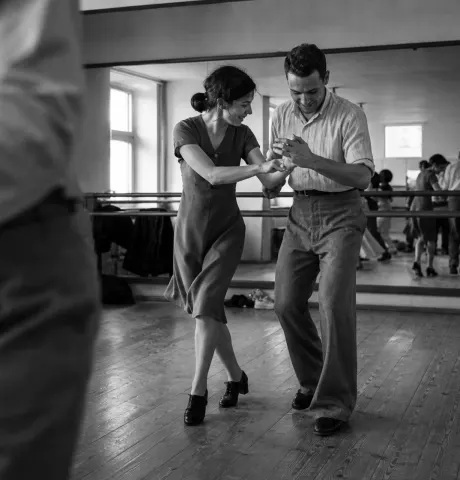 History of Samba in Europe: The Journey Across the OceanThe journey of Samba from the streets of Rio to European ballrooms is a story full of fascination, misunderstandings, and cultural adaptation. Learn how the rhythm conquered Europe.
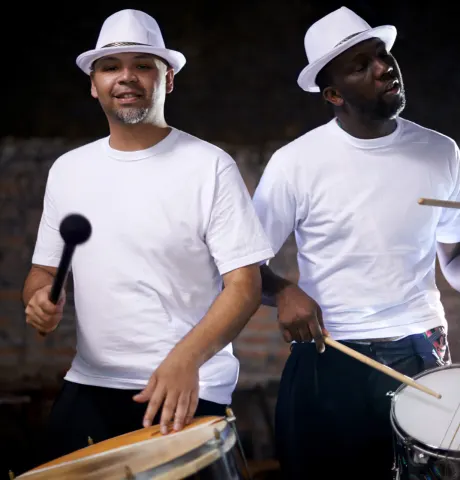 Samba instruments: The sound of the bateria in detailDive into the fascinating world of Brazilian samba instruments. Learn how the surdo, tamborim, and others shape the unmistakable sound of the bateria.
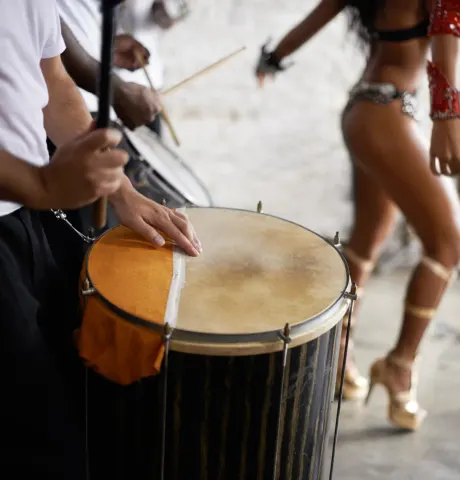 Counting Samba rhythm: How to hear the beatLearn step by step how to identify the Samba rhythm flawlessly and count the beat like a pro. No dance steps required, just for your ears.
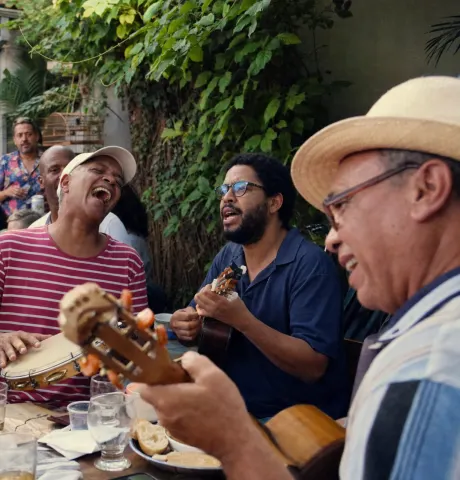 Samba music styles: From Pagode to Bossa NovaSamba is not just samba. Our guide leads you through the fascinating world of samba music styles, from wild Samba Enredo to elegant Bossa Nova.