
Find your rhythm partner on udansa
On udansa you will find like-minded people who want to count the beat with you and discover new rhythms on the dance floor together.



By Mary De LucaUpdated
On udansa you will find like-minded people who want to count the beat with you and discover new rhythms on the dance floor together.
Samba music is bursting with energy, but it often seems like an inextricable drum chaos to beginners. With the right ear, you will crack the fascinating code of the Brazilian heartbeat in no time.
The Samba rhythm is unique worldwide because it possesses a fascinating rhythmic shift. While many partner dances are based on an even, rigid beat, Samba thrives on so-called syncopation. This means that the emphasis does not always lie stubbornly on the main beats, but often slips in between. Anyone hearing a traditional bateria, a Samba percussion group, for the first time usually perceives only an infectious, dense wall of drum sounds. To bring structure to this, it helps to focus on the deepest drum, the surdo. It provides the heavy, supporting heartbeat that you can orient yourself to at any time.
If you understand the basics of the music, movement will also be easier for you later on. Before you try yourself out on a dance floor, you should therefore develop a feel for the different layers of the music. Samba consists of many instruments that all play their own small rhythms, which fit together like gears. If you learn to specifically listen to these layers individually, the music loses its intimidation. You suddenly recognize exactly when a new beat begins and can relax into the flow of the music without having to constantly count along in your head.
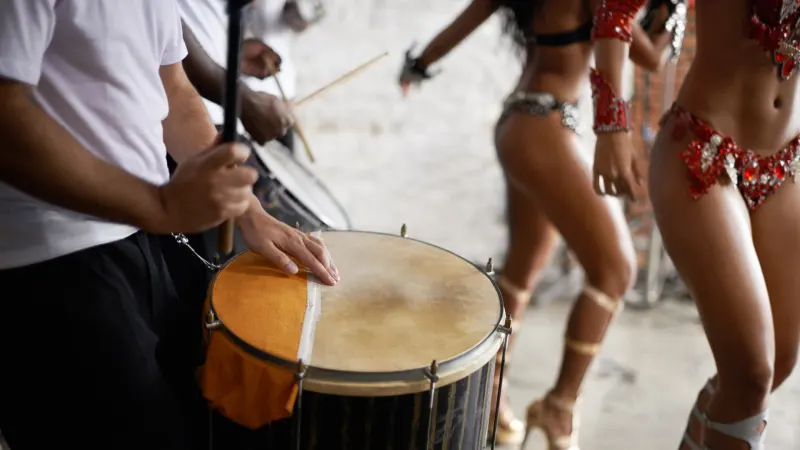
Fade out the fast, high-pitched instruments like shakers and listen only to the deep, muffled beats in the background. This deep bass beat repeats in a steady, heavy loop.
Once you have found the deep bass, you will notice that one beat is slightly louder and more dominant. This heavier beat always marks the count of two in the Samba rhythm.
Now place the first beat directly before the heavy bass beat. If you tap steadily, you have established the basic pulse of one and two, which forms the framework of the song.
Samba thrives on the syncopation, a quick intermediate beat just before the two. Count out loud one, and, two, where the and is extremely short and directly coupled to the two.
Clap or speak the counted rhythm fluently over several bars. As soon as you no longer have to think about it, you have fully internalized the rhythm.
Correct
Wrong
Preparation
During
Samba is played in a fast two-four time signature. This means there are two main beats per bar, over which the rhythmic accents are distributed.
The surdo drum is the deepest drum in a Samba band. It strongly emphasizes the second beat and serves as the most important anchor for dancers in the rhythmic chaos.
The intermediate step, the 'and', is only half as long as a normal beat. It is played extremely shortly before the two, which creates the typical bouncy Samba character.
Find the right course now to turn your sense of rhythm into movement.
BallroomMeißen · Germany
Tanzkreis | PROFESSIONALTuesday · 20:15 · Oct 27, 2026 - Jan 5, 2027
“Ein Haus für Vieles” - Saal Tanzkurse
 History of Samba: The roots of the Brazilian heartbeatThe history of Samba is a journey full of rhythm, culture, and resistance. Discover the fascinating African roots and the instruments that shaped this global success.
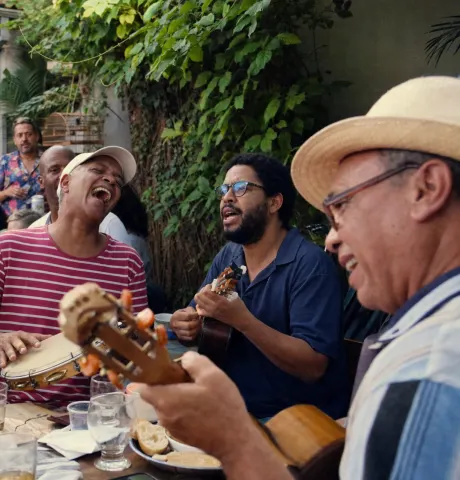 Samba music styles: From Pagode to Bossa NovaSamba is not just samba. Our guide leads you through the fascinating world of samba music styles, from wild Samba Enredo to elegant Bossa Nova.
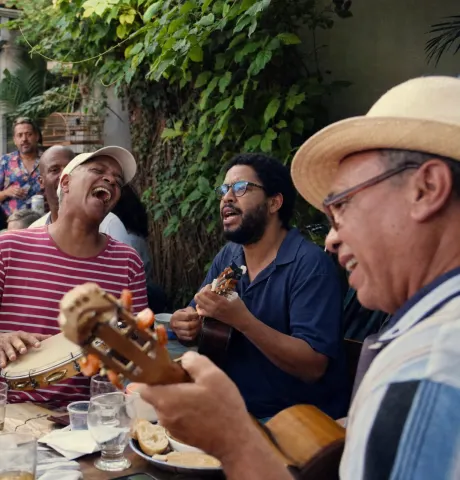 Which Samba style suits you? Take the testFind out which Samba subgenre best matches your musical taste with our quick test. Discover the variety from Bossa Nova to Pagode!
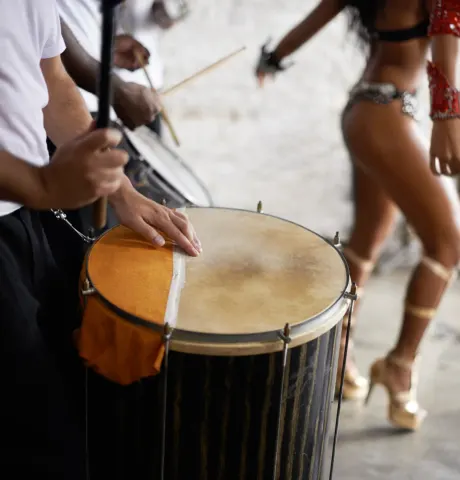 Famous Samba Musicians: The Legends of RhythmDive into the world of the most famous samba musicians in history. Learn how Cartola, Clara Nunes, and other legends made the rhythm of Brazil immortal.
 Best Samba Albums of All Time: Milestones in Music HistoryDive into the golden era of Brazilian music. We introduce you to the most legendary Samba albums, milestones that changed music history forever.
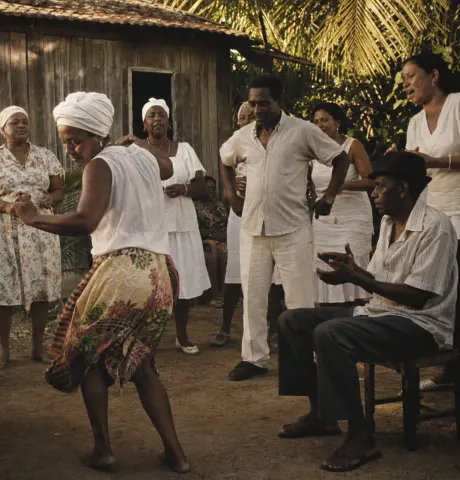 The history of Samba schools in Rio de JaneiroDive into the fascinating origins of the Samba schools in Rio de Janeiro. Learn how social protest and Afro-Brazilian rhythms evolved into a global cultural treasure.
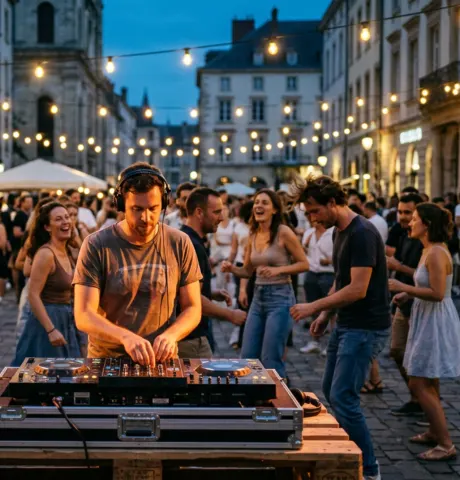 Samba Music Trends: How the sound is evolving todaySamba is more alive than ever. We take a look at the current music trends in 2026 and show you how electronics and tradition are merging.