Youth sports5 minutes

Dance club vs. dance association: Where do young people train better?

By Mary De LucaUpdated

In a nutshell
  • The classic youth dance group in a private dance school focuses on the social aspect, the joy of movement, and making new friends without any pressure to perform.
  • A registered dance sports club places its emphasis on athletic and technical training with licensed instructors and prepares you specifically for tournaments.
  • Dance schools often offer more modern locations and more flexible leisure events, while clubs are usually significantly more affordable due to their non-profit status.
  • For teenagers who want to dance in tournaments and earn official licenses, membership in a dance sports club is the necessary step.

The decision between a dance studio and a sports club shapes your future in dance. Find out which environment best suits your goals, your budget, and your idea of leisure time.

DefinitionLead and Follow

Lead and Follow refer to the two roles in partner dance, where one person dictates the direction of movement and figures, while the other responds sensitively to them. This distribution of roles is the basis for dancing together, both in the recreational classes of dance schools and in the competitive sports of clubs.

The fundamental differences between the two dance worlds

If you want to continue after your first student dance course, you are facing an important decision: Should it be a youth dance circle in a private dance school, or are you drawn to a registered dance sports club (TSV)? Both paths offer completely different frameworks for your new hobby. In a private dance school, the social aspect is usually in the foreground. Here, you meet people your age in a relaxed atmosphere, improve your steps from the basic course, and dance without performance pressure. The groups are often organized more flexibly, and the program covers a wide range of social dances.

A dance sports club, on the other hand, is organized as a non-profit and focuses much more strongly on athletic and technical training. If you want to know which dances await you in the classic introduction, the overview of the student dance course will help you further. In the club, you usually train under the guidance of licensed coaches who pay very close attention to posture, footwork, and rhythm. While the fun of movement and the party afterwards are the focus in the dance school, the club is about continuous improvement and athletic discipline.
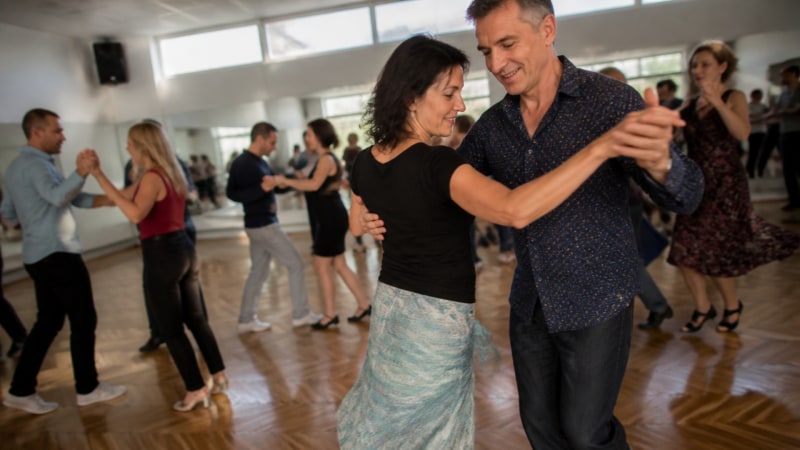
In sync together: During training, you will quickly see whether you prefer a relaxed community or precise technical coaching.

Myths about competitive sports and recreational fun

A common prejudice is that clubs are only for determined competitive athletes and that there is no real standard in dance schools. Both assumptions fall short. Even in a dance sports club, there are recreational groups for teenagers where fun is the priority, without you ever having to compete in a tournament. The difference lies much more in the structure of the training. In a club, the details are refined: every step is analyzed, the dance posture is trained intensively, and physical fitness is strengthened. This can seem strenuous to some teenagers, but it quickly leads to visible progress.

In a private dance school, on the other hand, lessons are often structured in a more playful way. Here, you quickly learn new figures to look good on the dance floor and move with confidence. The social component is extremely high: events, themed parties, and group excursions are an integral part of the program. If you are unsure which path and which dance style best suits your personality, you can take the dance personality test for teenagers in advance to gain more clarity. In the end, your personal motivation determines which environment appeals to you more at udansa.

The direct comparison for your decision

This is for you if you...

  • Focus on quick fun and social events
  • Want to try out many different dance styles easily
  • Use modern studios with flexible class times
  • Work specifically on technique, posture, and fitness
  • Benefit from affordable membership fees through club structures

This is probably not for you if you...

  • Want to aim for a competitive sports career right away
  • Want to meticulously refine your footwork
  • Have the lowest possible budget for membership fees
  • Are only looking for casual party dancing without performance pressure
  • Want to use modern studios with flexible class times
  • Want to volunteer in club life

At a dance school, you learn to move confidently at any party. In a club, you learn how to master your body as a true sports instrument.

Dance teacher and youth coach, Frankfurt am Main

Costs, structure, and the path to competitive dance

Besides the training content, practical factors like costs and flexibility play a decisive role in your choice. Private dance schools are financed through monthly fees or course charges, which are usually higher, but often offer modern facilities, air conditioning, and a wide range of catering options. A dance sports club is often significantly cheaper as a non-profit organization, since it is supported by membership fees and voluntary commitment. However, members and often parents are expected to get involved in club events or tournaments, for example by selling cakes or helping with organization.

If you dream of competing in official tournaments one day, you can hardly avoid joining a club. You can only obtain a competition license through a registered dance sports club that is affiliated with the German Dance Sport Association. For a simple introduction and your first taste of the tournament scene, the guide First dance tournament for teenagers offers valuable tips. So, think carefully about whether you are aiming for a professional athletic career or are simply looking for a social hobby where you can dance with friends on the weekend.

Two ways for your dancing hobby

Dance school

The Youth Dance Circle

Casual fun with friends

Here you meet people your age in a relaxed club atmosphere. The focus is on parties, fast figure combinations, and shared experiences after school.

Club

The dance sports club

Athletic ambition and technique training

Here you can specifically improve your technique, stamina, and posture. Perfect for everyone who wants to challenge themselves athletically and perhaps dreams of competitions.

Frequently Asked Questions

  1. A dance course at a dance school is usually more expensive, as it is a private business. Clubs are non-profit and often offer very affordable annual or monthly fees.

Dance courses for teenagers near you

Find the right start in your region now and discover your new hobby.

View all matching courses

Find your perfect dance spot

On udansa, you can easily find suitable dance groups, clubs, and dance schools in your area to fully enjoy your hobby. Connect directly with like-minded people and get started on the dance floor!

Find your perfect dance spot