

Find your dance club for more fun
Whether you are preparing for a dance badge, looking for a formation, or simply want to meet like-minded people your age: on udansa you will find the right dance schools, clubs, and dance partners for your journey.
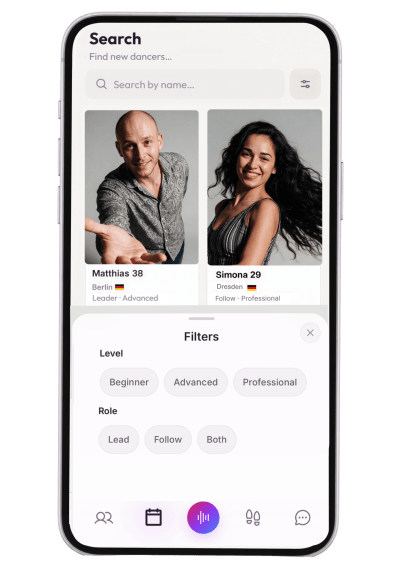

If you continue after your first dance course, you will discover a whole new world of team spirit, athletic ambition, and new friendships. Here, you will learn how to firmly integrate dancing into your free time with udansa.
The German Dance Badge DTA is an official award for amateur dancers, which is presented after a successful practical examination at various proficiency levels.
After the first student dance course, many young people face the question of what comes next. Those who have mastered the first steps quickly realize that dancing can be much more than just a mandatory program for the graduation ball. For many, dancing as a hobby for young people becomes a true passion. A dance club for students offers the perfect setting to keep at it. Here you meet peers who share your enthusiasm and learn new figures and techniques in a relaxed, yet motivating atmosphere.
Joining a permanent dance circle for young people is the logical next step after the basics. Unlike the time-limited beginner course, a club or dance circle runs indefinitely. This means that you can practice week after week without pressure, improve your posture, and deepen your knowledge of new dance styles. Many dance schools offer special memberships that allow you to train flexibly several times a week. If you are looking in a specific city like the capital, it is worth taking a look at models like the dance school flat rate in Berlin to get the most out of your free time.
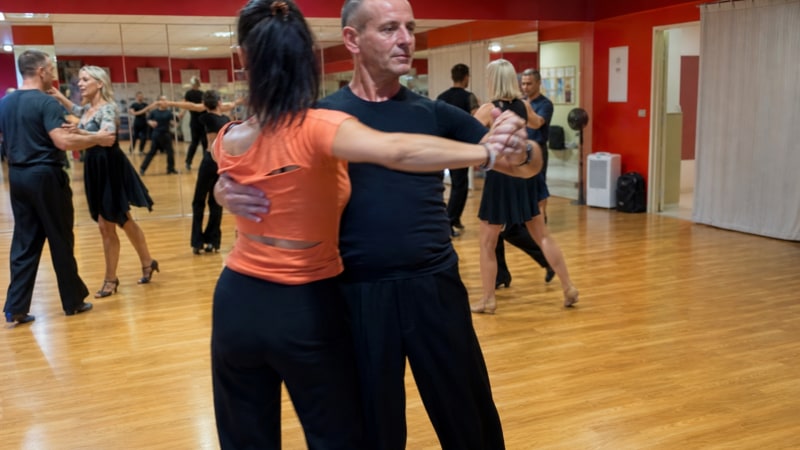
If you want to set yourself athletic goals, you will find the perfect challenge in the classic medal system. The German Dance Badge (DTA) is the official badge of the General German Dance Teachers Association (ADTV) and is divided into the levels Bronze, Silver, Gold, and Goldstar. In every exam, you present a fixed number of dances in front of an examiner. It is not about intense competitive sports, but rather about demonstrating that you have internalized rhythm, step sequences, and good posture.
Preparing for these badges brings groups in dance schools closer together. You correct each other, look forward to the exam day together, and celebrate the success afterwards. If you want to know what such a path looks like in detail, you can find out about special medal courses in Berlin that will guide you step by step from the World Dance Program to the Gold medal. Every passed badge is visible proof of your progress and motivates you to tackle the next level.
Use video recordings of your practice rounds at the club. When you see yourself dancing, you will understand your instructor's corrections much faster and can work specifically on your posture.
In the youth club, it is not just about the right steps, it is primarily about the community and growing together through new challenges.
If dancing as a couple is fun for you, but you are looking for real team spirit, formation dancing for youth is the perfect choice. Here, you do not dance as an individual couple, but form a solid unit on the floor with six to eight other couples. The synchronicity of all movements, the precise changes in formation, and the shared choreography to captivating music create a very special dynamic. In a team, you learn to rely on others blindly, which strengthens cohesion enormously.
For those who want to go even further, the door to tournament sports opens. Dance sport for youth offers structured competitions where you can measure yourself against others in various performance classes. Your first dance tournament for youth is an exciting experience: the glittering outfits, the concentrated atmosphere in the hall, and the adrenaline before entering the floor make this sport unique. Whether in recreational sports or real tournament sports, dancing promotes discipline, fitness, and self-confidence in a way that hardly any other hobby can offer.
Having fun and learning together
Here, the shared experience is the main focus. You train once a week in a fixed group, learn new figures without any pressure to perform, and spend your free time with peers.
Ambition and sporting success
This is about precision, athleticism, and competition. You train several times a week, refine every detail of your technique, and compete against other couples or formations at tournaments.
For the German Dance Badge, you perform a set number of dances in front of an official examiner. You are evaluated on your sense of rhythm, correct step sequences, and proper posture, with the primary focus being on the joy of dancing.
Find the right dance circle or club for young people and get started.
Sunday · 14:30-16:00 · Nov 15, 2026 - Jan 17, 2027
Limbach-Oberfrohna
Sunday · 14:30-16:00 · Sep 6 - Nov 8
Limbach-Oberfrohna
Sunday · 14:30-16:00 · Nov 15 - Nov 29
Limbach-Oberfrohna
