
Find your Zumba class
Find the best Zumba classes near you on udansa and get carried away by the infectious rhythms in the studios of your city.



By Mary De LucaUpdated
Find the best Zumba classes near you on udansa and get carried away by the infectious rhythms in the studios of your city.
Zumba is not an ordinary workout to dull beats. It is the sophisticated interplay of global rhythms that turns the fitness class into an energetic dance party, which challenges the body and frees the mind.
Dembow refers to the characteristic, syncopated rhythm pattern of Reggaeton. This driving beat is based on a heavy bass hit followed by two faster hits and serves as the engine for particularly intense Zumba intervals.
Behind the seemingly effortless party atmosphere of a Zumba class lies a precisely thought-out musical concept. Zumba music is not just background sound, but the central control element of the entire workout. It is based on the principle of interval training, where phases of high intensity alternate with active recovery phases. Instead of looking at a monotonous stopwatch, your body reacts quite intuitively to the tempo changes of the songs. A fast, driving track pushes your pulse up, while the subsequent, rhythmically softer song allows your heart rate to drop in a controlled manner, without the flow of movement being interrupted.
The magic lies in the direct coupling of musical structure and movement. Every song is produced or selected in such a way that verses, choruses, and bridge passages dictate clear choreographic changes. When the beat kicks in, your body knows immediately when the intensity is increasing. This acoustic guidance makes the training extremely accessible, especially for beginners. By the way, those who are enthusiastic about modern beats will also find great offers in other areas, as our overview of Hip Hop and street dance in Dresden shows, where a sense of rhythm is also the top priority.
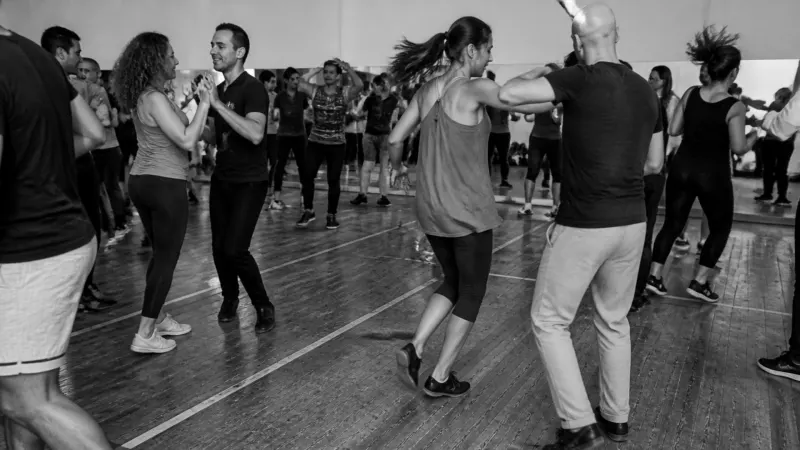
The musical DNA of Zumba rests on four Latin American pillars that set the tone in almost every class. In first place is Zumba-Salsa with its typical eighth-note rhythm, which invites you to perform quick, lateral steps and hip movements. Directly alongside it, Zumba-Cumbia provides an earthy, flowing dynamic with its swaying, almost riding rhythm from Colombia, which is ideally used for warming up or for coordinative transitions. These traditional sounds form the foundation upon which the energy of the class is built.
For the modern, powerful peaks in training, Zumba-Reggaeton takes care of things. With its distinctive, driving dembow beat, this style brings an urban, club-ready atmosphere into the studio that encourages deep squats and powerful arm movements. This mix is often complemented by Merengue, whose extremely fast two-four time pushes the step frequency to the maximum. It is precisely this variety of Zumba-Rhythms that ensures the workout engages all muscle groups and never becomes mentally boring.
Like this
Don't do this
In Zumba, the music is the actual trainer, because the beat tells the body exactly how fast it needs to move without using any words.
A professional Zumba playlist follows a strict dramaturgy that resembles a classic sine curve. The class begins with a moderate warm-up, usually accompanied by flowing Cumbia or Salsa sounds, to mobilize the joints and warm up the muscles. Afterwards, tracks with high and medium intensity alternate systematically. Each of the selected Zumba songs fulfills a precise function in the tension arc, before the class ends with a slow cool-down and stretching exercises to gentle, often pop-oriented sounds.
The challenge for instructors is to find the perfect balance between well-known global hits and special Zumba productions. The mix of familiar radio songs and surprising, international rhythms keeps motivation high. Through this acoustic variety, physical exertion is processed differently by the brain: you perceive the workout not as a strenuous chore, but as a dynamic dance experience where time flies by.
The roots of the workout
Traditional sounds like Salsa and Cumbia bring elegance and fluid hip movements to the class. They improve coordination and create a lively, classic Latin American dance atmosphere.
The power of the street
Urban beats like Reggaeton and Hip-Hop bring powerful, deep movements and pure energy. They challenge your thigh and core muscles and bring modern club vibes to the dance studio.
Classic Zumba music is based on about 70 percent Latin American rhythms like Salsa, Cumbia, Merengue, and Reggaeton. The remaining 30 percent usually consists of international sounds like Hip-Hop, Soca, Bollywood sounds, or current pop remixes.
The songs are the heart of the workout because their tempo changes dictate the intensity of the exercises. Fast songs drive the pulse up, while slower tracks serve as active recovery phases, which enables perfect interval training.
Yes, instructors use both official tracks produced exclusively for Zumba instructors and commercial hits from the charts. The mix of well-known radio songs and special Zumba rhythms ensures the best atmosphere in the class.
Let the rhythms carry you away and find the right studio for your workout now.
ZumbaLimbach-Oberfrohna · Germany
ZUMBA® Fitness ClubTuesday · 18:45 · Oct 27
Limbach-Oberfrohna
 Which Zumba rhythm suits you? The music quizFind out which music style best fits your training goals with our Zumba rhythm quiz. Take the test and get moving!
 The 10 Best Zumba Songs: Classics for Your WorkoutAre you looking for the ultimate Zumba classics for your next workout? We present the ten most legendary songs that should not be missing from any class.
 Zumba Music Trends 2026: The Latest Beats for Your ClassMusic in Zumba classes is evolving rapidly. Discover the most exciting sound trends for 2026 and how they can enrich your workout.
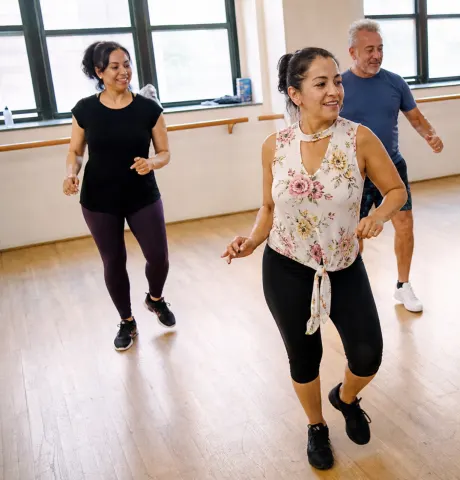 Zumba Cumbia: Understanding the Colombian rhythmDiscover the fascinating world of Cumbia in Zumba. This guide shows you how to understand the Colombian beat and master the signature steps with ease.
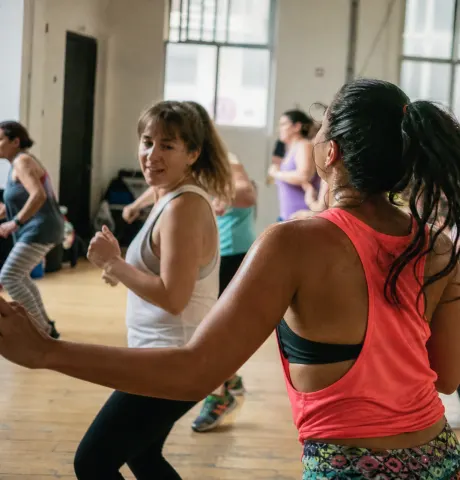 Zumba Reggaeton: Urban beats for maximum energyDiscover the untamed power of Reggaeton beats in Zumba. Learn how the distinctive dembow rhythm takes your fitness to a new level.
 Zumba Merengue: Master the fast beat with easeLearn how to instantly identify the fast Merengue beat in your Zumba class and perfectly synchronize your steps with the music.
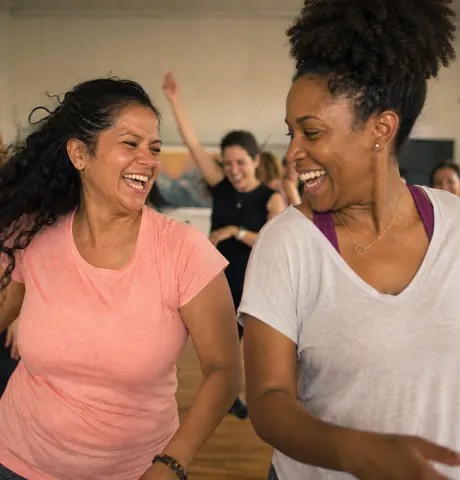 Zumba Soca: Caribbean rhythms for an explosive vibeDiscover the explosive power of Soca in your Zumba training. This guide shows you how fast Caribbean beats challenge your stamina and bring pure joy to your workout.
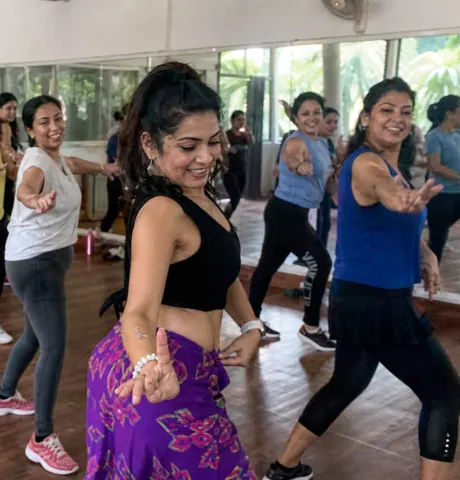 Zumba international rhythms: The world in your workoutDiscover how Zumba uses international rhythms like Bollywood and Flamenco to make your workout more varied and effective.
 Find free Zumba music: The best legal sourcesAre you looking for the perfect beats for your Zumba workout at home without spending money? We show you the best legal and free sources for danceable rhythms.
 Zumba music structure: The 32-count formula explainedThe 32-count formula is the key to every Zumba workout. Learn how the music is structured and dance perfectly on beat from the very first second.
 Optimizing Zumba sound at home: The sound guideWith the right volume and bass settings, you can bring the real Zumba class feeling straight to your home, without any trouble with your neighbors.
 Zumba songs for warm-up and cool-down: The best tracksThe perfect framework for your workout: Discover the best slow Zumba songs to optimally warm up your body and help you wind down after training.
 Zumba vs. Jazzercise: Comparing the MusicLearn how the music styles of Zumba and Jazzercise differ. Our guide compares Latin polyrhythms with modern pop charts to help you find your perfect workout.