Dance culture5 minutes

Ballhaus Berlin: Tradition and dance in three historic buildings

By Mary De LucaUpdated

In short
  • The Ballhaus Berlin on Chausseestraße is famous for its working 1930s table telephones and today offers ball nights, shows, and dance parties.
  • At Clärchens Ballhaus in Mitte, couples dance Tango, Swing, Salsa, and Discofox in the historic mirrored hall following its 2024 reopening.
  • The Ballhaus Rixdorf in Neukölln features a traditional wooden hall with a stage and serves as a central venue for Tango festivals and milongas.

Amidst stucco decorations, mirrored halls, and vintage desk telephones, the Berlin ballroom scene combines living dance tradition with varied dance evenings for couples and the curious.

DefinitionBallroom

A ballroom is a traditional public dance and entertainment venue with a large dance hall and wooden parquet floor, which has its origins in the 19th and early 20th centuries. It differs from modern nightclubs through its architectural focus on partner dance and social gatherings.

Berlin's dance palaces with over a hundred years of history

Berlin's ballhouse culture dates back well over a century and continues to shape the city's dance life today. Unlike closed dance sports clubs or pure nightclubs, historic dance palaces offered a space from the very beginning where social dancing, live music, and making new contacts were the focus. Anyone entering historic halls in Berlin encounters a living continuity: couples move to partner dances on sprung parquet floors, while chandeliers and stucco-decorated galleries preserve the ambiance of past decades.

Among the best-known testaments to this era today are the traditional Ballhaus Berlin on Chausseestraße, Clärchens Ballhaus in Mitte, and the Ballhaus Rixdorf in Neukölln. While other cities often lost their historic dance establishments or fundamentally rebuilt them over the course of the 20th century, these three Berlin venues have been preserved as authentic places of dance. Each of them has retained its own character and appeals to different dancers.

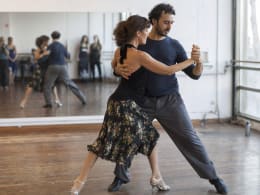
On the wooden parquet of historic dance halls, following the line of dance ensures free space for fast turns.

Three Berlin dance halls and their dance profiles

The three major addresses of the Berlin dance hall scene differ significantly in their atmosphere and orientation. If you want to go out specifically to dance, you will benefit from a look at the special features of each individual venue:

  • Ballhaus Berlin: The building on Chausseestraße looks back on roots in the early 20th century. A well-known relic of dance culture is the functioning system of numbered table telephones from the 1930s, which is considered the last of its kind in a Berlin dance hall. People dance here at dance hall nights, parties, and stage shows in a classic circular hall with a surrounding gallery.
  • Clärchens Ballhaus: Opened in 1913 on Auguststraße in Berlin-Mitte as Bühlers Ballhaus, the traditional venue has been welcoming guests again since September 2024 following extensive renovations. While there is a restaurant on the ground floor, couples dance in the historic mirror hall on the upper floor. The dance spectrum ranges from Swing and Tango to Salsa and Discofox, complemented by regular dance evenings and workshops.
  • Ballhaus Rixdorf: Located on Neukölln's Kottbusser Damm, this traditional dance venue is characterized by a spacious hall with a wooden floor and its own stage. The house has established itself as a fixed meeting point for Milongas and Tango festivals and hosts, among other things, the renowned Berlin Festival Milonguero.

Etiquette and behavior in the historical ballroom

That is how it works

  • Bring dance shoes or shoes with smooth leather soles
  • When dancing progressive dances, move in a circle along the outer lane
  • Ask politely and say a quick thank you after dancing together

Don't do this

  • Walk onto the wooden floor with dirty street shoes
  • Stop in the fast outer lane and block the flow of dance
  • Leave the dance floor without a quick word to your dance partner

A historic ballroom demands that dancers show respect for the floor and the shared flow of the dance, but in return, it gives them an incomparable sense of space.

Dance instructor for Ballroom and Latin

Parquet, dance direction, and ballroom etiquette

A visit to a Berlin ballroom follows different unwritten rules than a club visit. The halls are characterized by parquet floors that allow for smooth turning and gliding. To protect the floor and perform turns in a way that is gentle on your joints, footwear with smooth leather soles or dance shoes with chrome leather soles, which should only be put on in the cloakroom, is recommended. Street shoes often carry dirt and small stones onto the wood, which permanently damage the surface.

On the dance floor, the classic dance direction for progressive dances like Waltz or Tango is counter-clockwise. Couples on the outer lane move forward quickly, while stationary turns and figures take place more in the center of the hall. In partner dances, it is considered good manners to politely ask for a dance, to thank your partner after two or three dances, and to clear the floor. If you are looking for a suitable companion for ballroom dances or Tango, you can make contacts in advance via partner exchanges for Tango dancers or similar dance partner networks.

Two faces of Berlin's ballhaus culture

Partner dance

Classic dance evening

Firm steps and technique on the dance floor

In the mirror hall of Clärchens Ballhaus or at tango events in the Ballhaus Rixdorf, clear dance styles take center stage. Dancers pay attention to the direction of dance, clean leading and following, and the etiquette of the respective dance style.

Ambience

Sociable ballroom night

Nightlife in historic halls

At the ballroom nights in the Ballhaus Berlin or at mixed dance evenings, musical styles, show elements, and casual dancing blend together. Here, the focus is on sociable interaction and the historic atmosphere of the rooms.

Frequently Asked Questions

  1. The Spiegelsaal at Clärchens Ballhaus hosts workshops and dance evenings featuring Tango, Swing, Salsa, and Discofox. The spectrum combines classic partner dances with Latin American rhythms and Swing dances.

Dance courses for partner dance in Berlin

Learn ballroom, Tango, or Swing for your next visit to the ballhouse.

View all matching courses

Find your dance partner for Berlin

On udansa, you can arrange to meet suitable dance partners for stylish ballroom evenings and find current dance courses directly in Berlin.

Find your dance partner for Berlin