Argentine TangoGo dancing in Berlin

Milongas in Berlin: Dance Argentine Tango in style

5 minutes
In a nutshell
  • A milonga in Berlin takes place in historic dance halls like Ballhaus Rixdorf or Clärchens Ballhaus, as well as outdoors during the summer.
  • On the dance floor, all couples move counter-clockwise in lanes to ensure a smooth flow of dance without collisions.
  • Invitations are traditionally made non-verbally through eye contact and a confirming nod, which allows both sides a discreet choice.
  • Dancing usually happens in blocks of three to four songs, which are clearly separated by short musical breaks for changing partners.

Berlin's tango scene spans from time-honored ballrooms to summery open spaces on the riverbank. If you understand the unwritten rules of the dance floor, you will quickly find your place on the city's dance floors.

DefinitionMilonga

A milonga is a social dance evening for Argentine Tango, as well as the name for the fast, cheerful predecessor dance in two-four time. At the event, tandas alternate with short musical interludes.

Understanding classic halls and Berlin dance venues

If you want to go dancing Tango in Berlin, you are entering a scene rich in tradition with very different styles. A milonga in Berlin ranges from a dance hall steeped in history to dance floors right by the water. To choose the right evening, it is worth taking a look at the musical focus and the setting of the venue in advance. Some hosts value traditional Tango music from the Golden Age with clear dance sets, while modern arrangements and neo-Tango are played on other evenings.

One of the best-known historical addresses is the Ballhaus Rixdorf on Kottbusser Damm in Neukölln, whose hall with a classic wooden floor and stage is regularly used for milongas as well as events like the Berlin Festival Milonguero. Likewise, the Hall of Mirrors in the traditional Clärchens Ballhaus in Mitte attracts dance enthusiasts. If you are new to the city or want to get back into it after a break from dancing, you can find like-minded people for Tango on udansa so you do not have to visit such evenings alone.
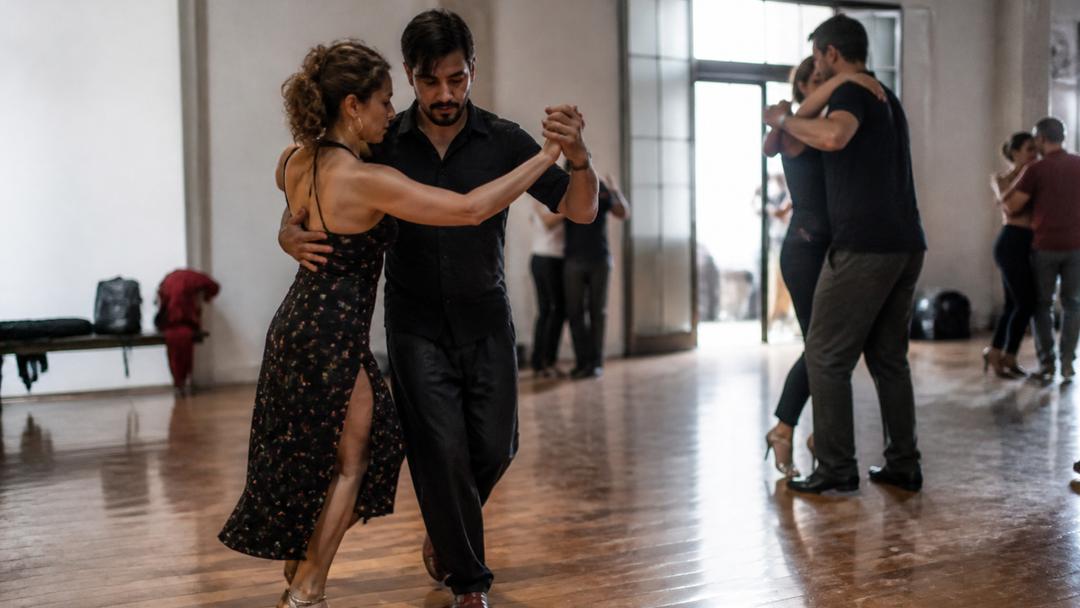
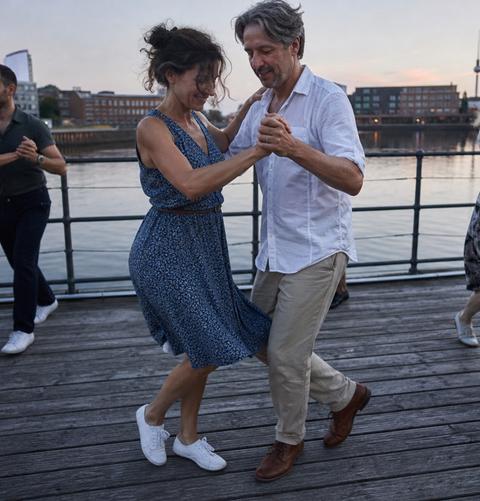
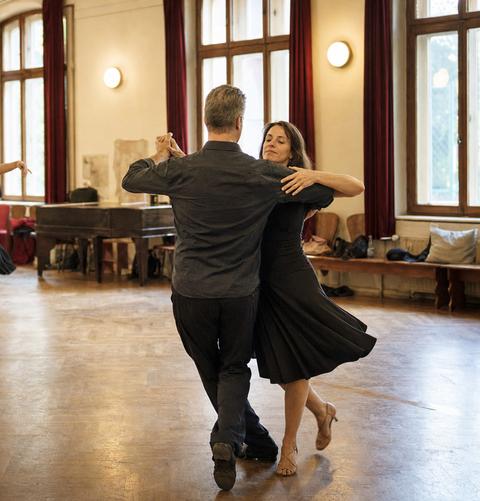
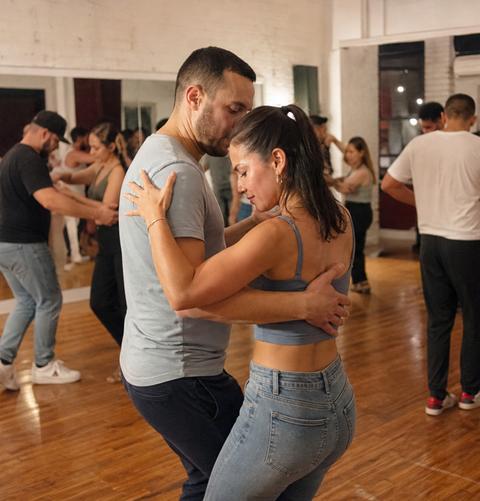
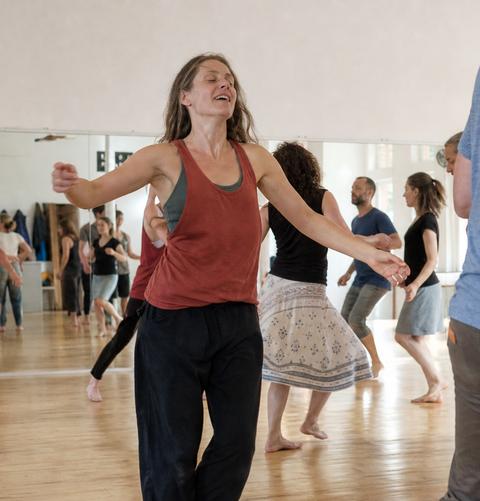
In the ronda, tango couples maintain their distance and carefully follow the track counter-clockwise.

Open-air Tango by the river and on terraces

During the warm months, a noticeable part of the Berlin tango scene moves outdoors. Tango Argentino under the open sky has a visible presence in Berlin at striking locations: dancing takes place, for example, at the beach bar in Monbijoupark directly on the banks of the Spree opposite the Bode Museum. Other popular open-air dance floors are offered by the banks of the Spree in front of the Paul-Löbe-Haus in the government district or the terrace of the Neue Nationalgalerie. For open-air events, whether they take place depends on the weather, which is why they are moved indoors at short notice in case of rain or cold.

The ground outdoors often requires different preparations than the parquet in a studio. On stone, smooth pavement, or wooden planks, many dancers use older shoes or special leather soles to perform turns in a way that is gentle on the joints. Suggestions for suitable equipment and practical accessories can be found in overviews such as Tango Argentino gift ideas, which also provide guidance for your own everyday dancing.

Behavior at the milonga: recommendations and no-gos

How to make the evening a success

  • Follow the flow of dance in the outer lane in a counter-clockwise direction
  • Ask for a dance through eye contact and wait for a nod
  • Politely say thank you after a tanda and leave the dance floor
  • Adjust your step size to the crowding on the floor

Typical missteps

  • Cutting straight across the center of the dance floor
  • Walking directly up to a table and loudly asking for a dance
  • Continuing to dance through the transition music without being asked
  • Forcing expansive moves despite a crowded dance floor

The best dance is not created by gaining space, but by breathing together to the beat of the music in a confined area.

Dance instructor for Argentine Tango

Mastering the ronda and dance flow at a milonga

A successful Argentine Tango party in Berlin depends on observing dance floor etiquette. At a busy milonga, the dance flow moves counter-clockwise in concentric lanes, the so-called ronda. If you stay in your lane, you avoid collisions and allow the couple behind you to dance in a relaxed manner. Couples do not overtake by cutting across the center, but instead adapt their step size to the available space.

Likewise, the traditional eye contact, the invitation via mirada and cabeceo, shapes the atmosphere off the dance floor. You seek eye contact with a person across the room: a nod signals acceptance, looking away signals a polite refusal without any awkward moments. A series of usually three to four tracks by the same orchestra, called a tanda, is ended by a cortina, a short piece of non-dance music. This break is the natural signal to say thank you and leave the dance floor before a new round begins.

Dance space compared: Ballroom or open air

Ballroom

Focused on fine parquet

Protected space with elegant wooden parquet

In the hall, oiled wooden parquet ensures perfect comfort for turns with classic tango shoes. The atmosphere is weather-independent, focused, and characterized by the acoustics of historical rooms.

Open air

Urban backdrop on the banks of the Spree

Dance floors on riverbanks and cultural venues

Under the open sky, you dance on stone, terraces, or wooden piers with a view of the cityscape. Sturdier footwear and windproof clothing are a must in changeable weather.

Frequently Asked Questions

  1. For a classic milonga, many dancers wear smart evening attire, elegant dresses, or dress trousers. At summer open-air events, the dress code is usually more casual, although freedom of movement for footwork always comes first.

Bernhard De Lucaudansa editorial team ·
Share
Know-how for the floor

From the guide

View all articles